Choose a Desert Through the Adventure It Makes Possible
The word desert can bring a single image to mind: a ridge of sand beneath a wide sky. Yet an adventure traveler may be drawn just as strongly to sandstone valleys, weathered mountain ranges, a striking salt landscape, or the experience of moving between an arid region’s communities and viewpoints. The best desert destinations in the world offer different relationships with those surroundings. Some lend themselves to a guided camp stay, others to outings from a practical town base, and others to a more deliberate overland journey. Compare them through the experience you want rather than through the drama of the photograph. Your choice should account for terrain, travel pace, local expertise, comfort, and the effort of reaching the region. A destination becomes compelling when its landscape and its practical travel format support the same purpose, leaving you time to appreciate what makes it distinct.
A: A researched base-and-outings arrangement can provide varied experiences without changing accommodation daily.
A: Compare the route, facilities, meals, group format, and amount of activity within the actual daily schedule.
A: Include the complete approach and onward journey, rather than only the hours spent sleeping at camp.
A: Its official tourism overview presents varied arid landscapes and culturally significant settings that call for thoughtful visiting.
A: Their routes, operator approach, group arrangement, inclusions, and accommodation can create distinct experiences.
A: Choose a manageable selection that serves your interests and creates worthwhile contrast.
A: The right facilities and routine help travelers remain curious and engaged throughout the stay.
A: Research the specific region and activity; conditions, access, and responsibilities may differ.
A: Read the park’s current visitor and safety guidance before choosing dates or activities.
A: Its landscape and practical trip format should support an ordinary day you would enjoy, beyond the headline photograph.
Wadi Rum for Sandstone Valleys and a Guided Stay
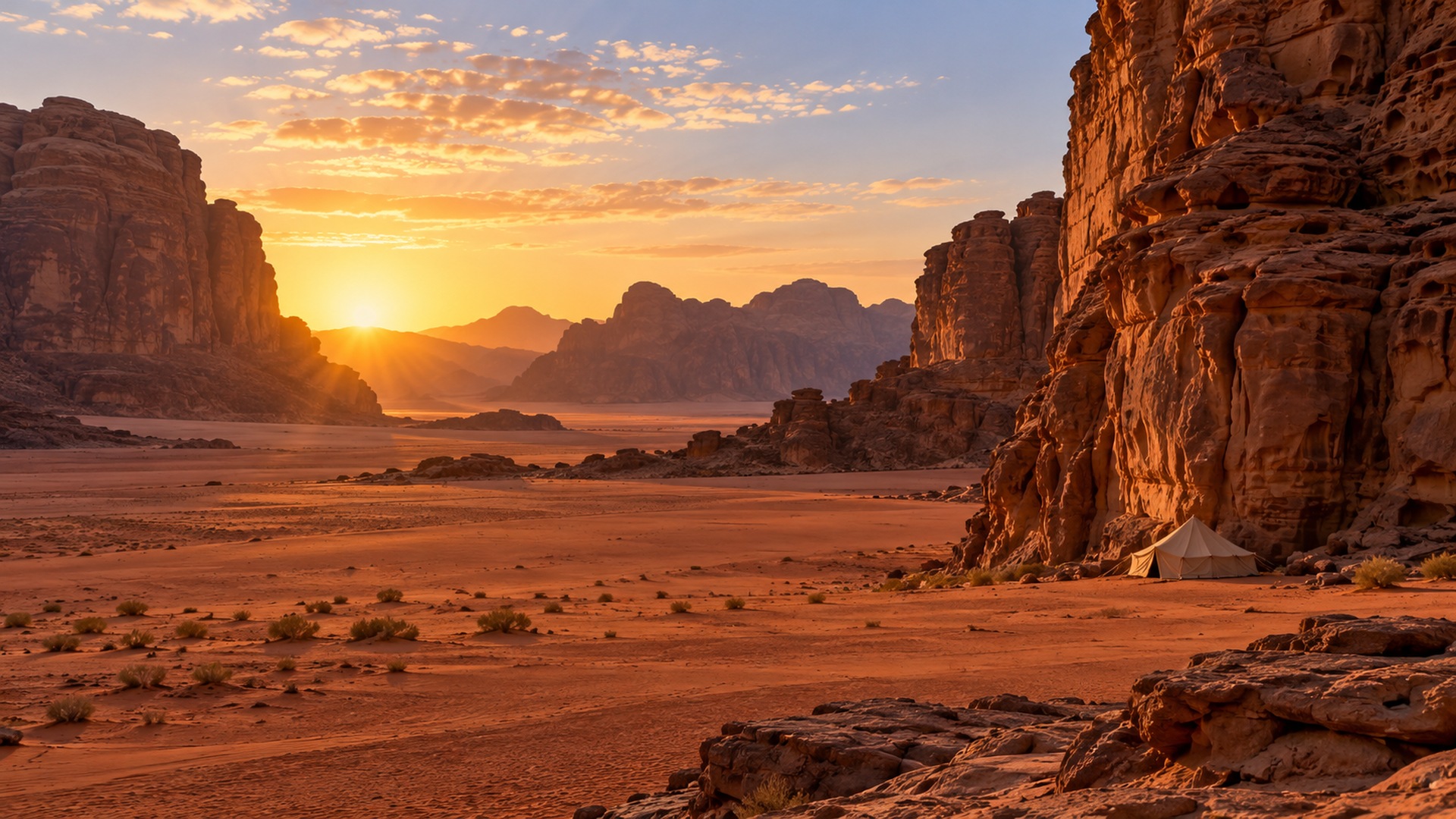
Wadi Rum is a strong starting point for travelers attracted to rock formations and the experience of staying within a desert setting. The Jordan Tourism Board’s Wadi Rum overview introduces its sandstone landscape. Use that introduction to identify the experience you want, then examine the specific operator and camp arrangement. The scenery may be the reason to go, but the format determines how you spend time within it.
A guided stay can reduce the need to organize each movement independently. Compare the actual route, group arrangement, camp facilities, and included meals rather than assuming that every desert package works similarly. Ask how much time is spent traveling, walking, and remaining at the camp. A clear daily description helps you choose the level of activity and comfort that suits your group.
Moroccan Dunes for a Camp-Oriented Journey
Morocco’s official tourism site presents Merzouga and other desert areas as possibilities for exploring the country’s south. For a traveler whose central image is sand dunes, this is a useful region to investigate. Decide whether the aim is a brief desert experience within a broader Moroccan route or a stay with more time devoted to the landscape. That choice affects how much travel you should accept on either side of the visit.
Give a Moroccan Desert Route Enough Time
A camp night can look simple on an itinerary while requiring a substantial sequence of connections. Trace the complete journey from your previous base to the desert arrangement and onward to the next stop. Include the practical pauses and the pace the operator expects. Avoid treating the overnight highlight as if it occupies only the hours between dinner and breakfast.
Ask what distinguishes the camp options you are considering. Sleeping arrangements, sanitation, meals, transfer formats, and the amount of guided activity can vary between offers. Compare those details with your own expectations. A more elaborate property does not automatically create a more meaningful stay, and a simpler format should still be understood clearly.
If the journey includes locally hosted encounters, look for a respectful explanation of their context. Understand who is hosting and what participation involves. Ask before photographing people and accept the host’s boundaries. The surrounding communities are part of the place, rather than a decorative element added to the dune experience.
Atacama for a Town Base and Contrasting Outings
San Pedro de Atacama gives northern Chile’s desert choice a settled town base and a defined outing to compare: Valle de la Luna. Chile Travel introduces the town and Moon Valley landscape, making a valley visit a clearer starting point than an undefined tour of the entire Atacama. Compare that day’s approach, time on site, and return with any more distant excursion you are considering. Nearby valley scenery and an Altiplano outing should not be assumed to have the same altitude, preparation, or daily workload. Choose the actual sequence through your interests and the provider’s assessment, with time at the base rather than a different long transfer every morning.
Prioritize a few experiences that provide meaningful contrast. A holiday can become tiring when each day is treated as another opportunity to collect a distant location. Ask providers about the pace and practical requirements of the proposed sequence. Leave room at the base so that the landscape encounters do not blur into a succession of transfers.
Australia’s Red Centre for Landscape and Cultural Context
A Red Centre visit can be made concrete through Uluṟu-Kata Tjuṯa National Park and the Mala walk at Uluṟu. Parks Australia describes the route from the Mala carpark toward Kaṉtju Gorge and the ranger-guided version of that walk. Investigate the current guided arrangements as a way to connect landscape with interpretation rather than treating the rock as an isolated photographic object. Accommodation in the Yulara area and the complete journey into the park need to be considered together. Check the park’s current access, weather, walking, cultural, and photography guidance for your intended visit. This is a defined national-park experience within a much larger inhabited region, not a claim that one walk represents every part of the Red Centre.
Death Valley for a Deliberate Park-Based Visit
Death Valley offers identifiable landscapes to compare through a park-based visit, including Badwater Basin’s salt-flat setting and Zabriskie Point’s badlands view. National Park Service visitor information identifies both, giving the day a clearer purpose than simply visiting a place known for extremes. Research the Furnace Creek-area services and the actual roads connecting the selected stops, then use current park conditions and safety guidance to decide whether the dates and activities are appropriate. A viewpoint-focused visit and a longer walk are different plans. Do not let an attractive light or photography schedule override heat, access, or the group’s practical limits.
Build the visit around a practical base and a small number of appropriate experiences. Understand the access and services on which the day depends. Keep changes possible when current conditions require them. A satisfying park adventure can be conservative in its scope while still offering a powerful encounter with the landscape.
Separate the Destination From the Package
Two travelers can visit the same desert and return with very different experiences because they chose different operators, routes, and accommodation. Read each offer as a complete arrangement. Examine the daily sequence, group size, included services, and responsibilities left with guests. A destination recommendation should lead to this closer comparison rather than replace it.
Ask specific questions about the experience you value most. If quiet at camp matters, investigate the setting and routine. If walking is central, request a clear account of the outings. If cultural learning motivates the journey, look for appropriately hosted experiences with a transparent context. Detailed answers help you choose through substance.
Compare terms as well as the activity description. Understand how a change in conditions affects the itinerary and what happens if a connection is delayed. Keep written records of the important inclusions and contacts. A clear arrangement gives you more freedom to appreciate the place once you arrive.
Keep Each Region’s Advice Specific
Do not transfer a timing recommendation, equipment assumption, or access rule from one desert to another. Research the actual place and planned activity through current official guidance and local providers. The environment, seasonal conditions, and visitor arrangements can differ. Treat each region as a new planning exercise even if you have previous desert experience.
Ask for the supplies and equipment responsibilities attached to the exact outing. Confirm what the operator provides and what the traveler must bring. Consider transfers and overnight routines as well as the main activity. Specific preparation is more useful than an oversized general packing list with unclear relevance.
Let the Landscape Set the Character of the Trip
Choose through the contrast you most want to understand: Wadi Rum’s sandstone setting, a Moroccan dune-and-camp journey, a San Pedro base with a defined valley outing, Uluṟu’s interpreted park landscape, or Death Valley’s salt-flat and badlands scenes. These are different scopes as well as different terrains. A camp package, a town-based excursion, and a national-park visit allocate transport, guiding, meals, and independent time differently. Write those responsibilities beside the landscape interest before comparing prices, and let the destination’s current guidance shape the permitted experience. The selected place should determine the trip’s character rather than provide a backdrop for unrelated activities.