Use the Road to Reach Days You Will Remember
A road-trip adventure in the United States can begin with the car, but it rarely becomes memorable through driving alone. You may remember a red-rock walk in Utah, a forest day on the Olympic Peninsula, a booked marine excursion from an Alaska base, or the contrast between South Dakota’s open prairie and wooded hills. These journeys offer different ways to move between places and different reasons to stay long enough to experience them. Choose a region through the outdoor days you want to build, then make the driving route support those days. A national list of attractions can tempt you to cross large distances, but a coherent regional trip often leaves more room for discovery. The strongest route connects a manageable set of bases with activities suited to your interests, current conditions, and experience, while treating arrival, rest, and practical access as part of the adventure’s foundation.
A: Only if the available time supports the experiences you want; a selected regional route may provide greater depth.
A: The actual entrances, access roads, and chosen outings determine how the driving days work.
A: Its reporting time, location, and preparation needs can make arrival nearby the previous day useful.
A: The prairie, geological settings, hills, and visitor experiences can create different kinds of days.
A: Consider the preparation, current conditions, timing, and practical support each centerpiece requires.
A: When the moves add limited value or remove the time and flexibility needed around important activities.
A: Include vehicle, accommodation, travel to the region, chosen outings, and costs outside those bookings.
A: Share interests and responsibilities, discuss the schedule, and leave room to respond to comfort and conditions.
A: No; a focused journey can provide substantial outdoor experiences with more usable time in the places selected.
A: The holiday’s purpose, current access, booked commitments, and the group’s actual needs.
Utah’s Red-Rock Country for a Park-Based Journey
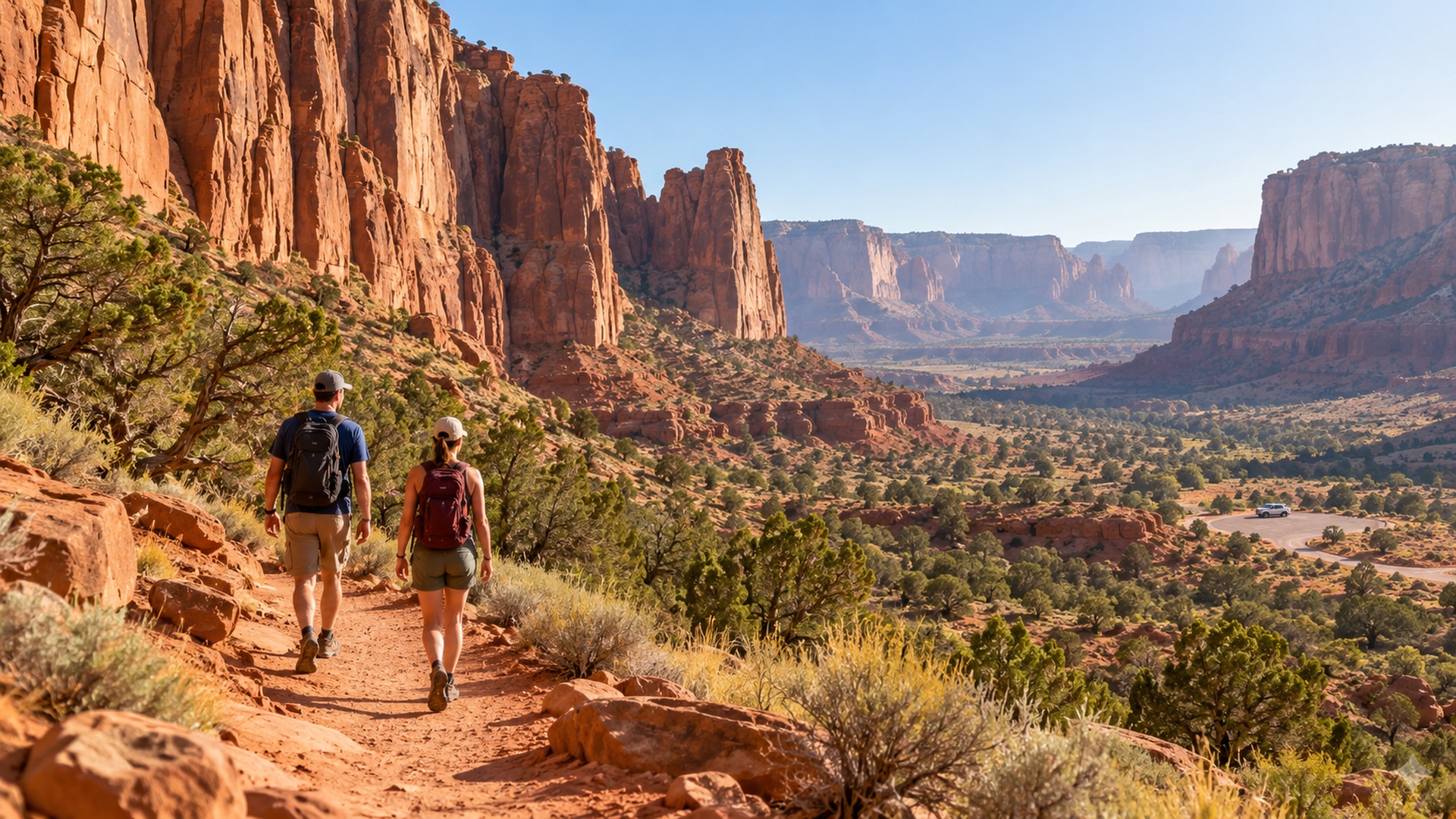
A Utah route sketch can begin in Moab for Arches and Canyonlands, continue toward the Capitol Reef area, then use separate bases for Bryce Canyon and Zion. Visit Utah’s Mighty 5 itinerary provides the named park framework to research. Moab is a practical first comparison because the two nearby park interests can be assessed without immediately moving rooms. For an illustrative ten-day holiday, decide which parks receive full exploration days before dividing the rest among transfers and arrival or departure. That allocation is not a required itinerary, and leaving out a park can improve a shorter trip. Check each park’s current access and activity requirements independently; being on the same route does not make all five visits interchangeable.
A regional route can work particularly well when you distinguish a driving day from a walking day. Getting between overnight bases requires one kind of attention; exploring a trail requires another set of decisions about access, conditions, and personal suitability. Research the actual outings through park information and choose ones that fit the group. An appealing rock formation in a gallery should not be the only reason to accept a demanding activity you have not assessed.
Use the overnight plan to protect your favorite park experience. A nearby base and a manageable arrival can make the next day simpler than a distant room that adds substantial travel before the outing. Read current park alerts, entry arrangements, and activity requirements for the dates you intend to visit. The complete itinerary should explain how you reach the experience, what it requires, and how the group will spend the rest of the day afterward.
The Olympic Peninsula for Several Landscapes Within One Region
An Olympic Peninsula sketch can move from a Port Angeles-area base toward Lake Crescent, then use the Forks area to research the Mora coast and Hoh Rain Forest before continuing toward the southern coast. The National Park Service’s Olympic trip ideas identifies those separate visitor areas. Lake Crescent, Rialto Beach in the Mora area, and the Hoh forest provide concrete contrasts between lake, shore, and forest interests. They require different access roads and their own conditions checks, so an illustrative five-day trip should select its priorities before adding a whole peninsula circuit. Use the specific outing’s guidance for trail and coastal timing rather than treating a road arrival as permission to explore anywhere. A base change earns its place when it supports a visit you want to spend time making.
Choose a few priorities instead of assuming every part of the peninsula belongs in one rapid circuit. A traveler drawn to forest walking may want a different base arrangement from someone focused on the coast or another park area. Give each desired outing its own research, including current access, the character of the activity, and the conditions that affect it. The resulting itinerary can still offer contrast while remaining centered on a manageable set of outdoor days.
Southcentral Alaska for a Journey With Substantial Centerpieces
A bounded Alaska starting route links Anchorage with Girdwood and Seward along the Seward Highway, then returns toward Anchorage according to the onward travel plan. Travel Alaska’s Anchorage itinerary identifies Girdwood along that highway, while its Southcentral route includes Seward and boat excursions into the Kenai Fjords setting. Compare an illustrative five-day visit focused on these bases with the much broader official twelve-day Southcentral journey. The shorter sketch should not inherit every stop from the longer one. If a Seward excursion is the centerpiece, give it a separate day with preparation and a confirmed meeting arrangement. Current road conditions, excursion availability, and your arrival and departure determine the actual sequence.
Separate the Alaska Excursion From the Transfer Day
A booked boat trip, guided outing, or other substantial experience should shape the surrounding schedule. Confirm the reporting time, location, provider requirements, and change arrangements before fixing a distant overnight base. Look at whether arrival the previous evening would make the activity more manageable, and give the group room afterward rather than automatically adding a long drive. An excursion can be the adventure’s centerpiece when the route is designed to support it.
Compare what the proposed journey asks you to manage. Vehicle collection, regional distances, services along the actual route, and the final return all need clear attention. Do not read a suggested tourism itinerary as a guarantee that every activity will operate or that each segment fits your dates. Check current arrangements with the responsible provider and use the route ideas to frame questions rather than replace them.
Choose an Alaska trip you can afford in complete terms. The vehicle, accommodation, activities, and travel to start the journey belong in the same comparison, along with any fees or transport outside the quoted excursion. If the cost is too high, simplify around the main experience instead of reducing every stay until all days become transfers. A focused regional route can still offer a strong sense of adventure without demanding that one holiday contain the state’s entire appeal.
South Dakota for Contrast Between Prairie and Hills
A western South Dakota route can connect a Badlands visit near Wall with the Rapid City and Custer areas of the Black Hills. Travel South Dakota’s regional road-trip guide introduces that contrast, and its Black Hills drive identifies Rapid City, Mount Rushmore, and Custer State Park. Use an illustrative four-day allocation to decide whether you want a full Badlands day, a transfer-and-learning day, and settled time in the hills. Do not interpret the example as enough time for every attraction or trail. Custer State Park is a distinct wildlife-and-landscape interest to research, while a memorial or interpretive visit asks for a different pace. Choose the sequence through the time you want at each place, with current operating and road information determining the final route.
A clear route can introduce prairie, geological scenery, and wooded hills without making every day identical. Consider pairing a substantial outdoor day with a lighter travel or learning day, depending on your interests and current access. Research the individual sites rather than assuming a regional tourism feature provides the information needed for each outing. A road journey works well when its variety arises from meaningful experiences instead of a rapid succession of brief roadside stops.
Choose South Dakota Stops With Room for Interpretation
Some places deserve time to understand the landscape or the story a visitor site presents. Avoid budgeting only the moment required to take a photograph, especially where a visit includes an interpretive center, a walk, or several distinct viewing areas. Check operating arrangements and allow the group to decide which parts of a stop matter. A regional adventure can combine outdoor discovery with learning when the itinerary gives both a legitimate place in the day.
Prepare for a Road Trip That Includes Outdoor Participation
Organize the vehicle for repeat daily use and keep the essentials for each chosen outing accessible. Follow manufacturer guidance for vehicle preparation and obtain appropriate help with unfamiliar needs. For activity preparation, use the relevant park or provider’s instructions instead of a single generic packing list that assumes all environments are alike. Your route can move through different settings, but the requirements for a particular outdoor day should remain specific and understandable.
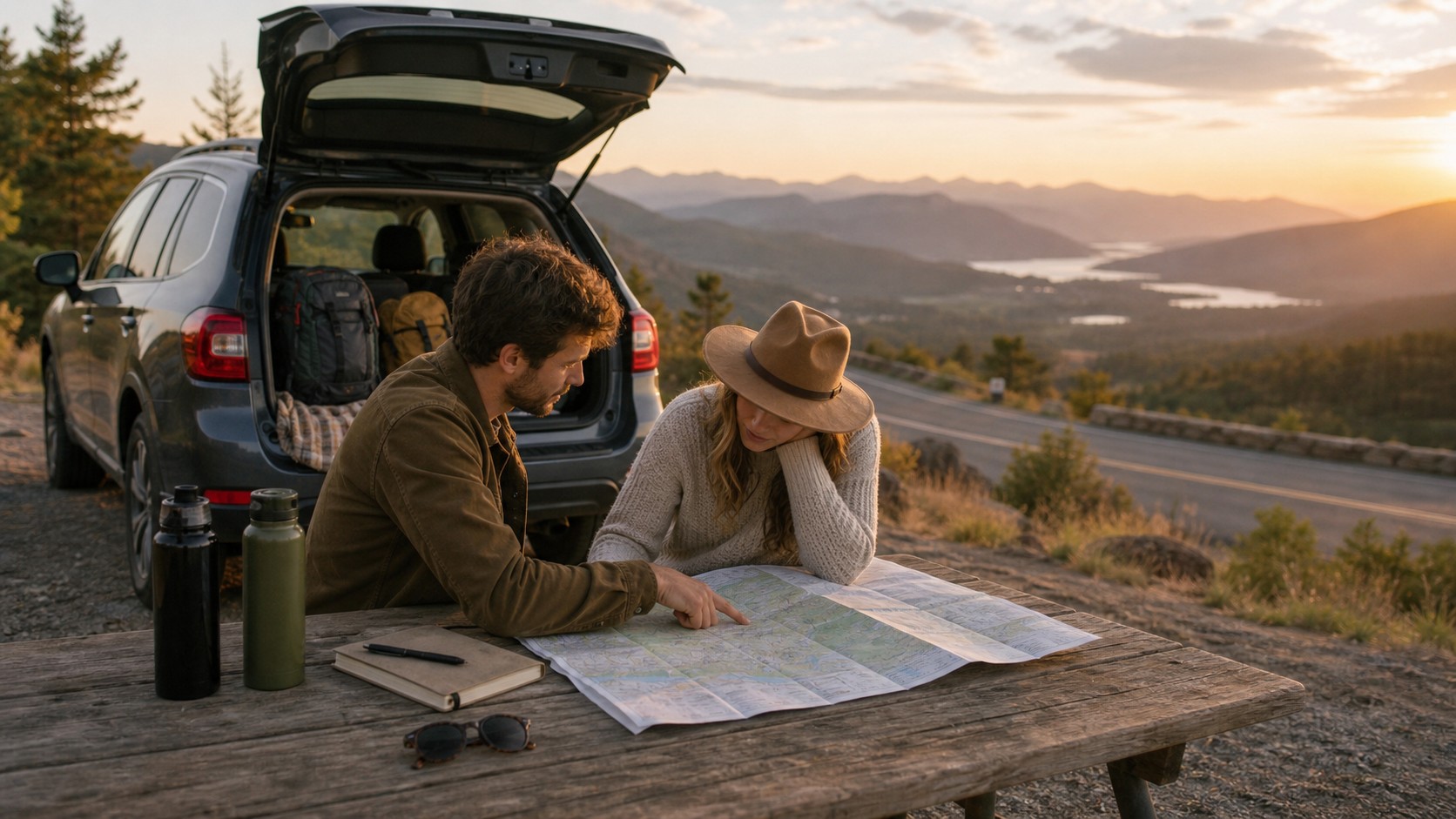
Share responsibilities so one person is not simultaneously driving, navigating, managing reservations, and deciding every stop. Review the next day together while parked or at the overnight base, and discuss how the group is feeling. A well-supported driver and a clearly understood outing help the experience begin with attention available for discovery. Ordinary organization is part of making a road trip enjoyable across several days of changing places.
Give the final travel day the same care as the first adventure day. Vehicle return, connecting transport, luggage, and any fuel or charging requirement need adequate time. Avoid placing a distant optional stop ahead of an important departure commitment. An adventure feels more satisfying when it finishes coherently, with the group remembering the experiences rather than the rush created by a route that never accounted for its ending.
Let the Regional Journey Become Your Own
During the trip, remain open to changing emphasis as you learn what everyone enjoys. A shorter walk or an extra hour in an interpretive setting may contribute more than one additional driving segment. Keep current conditions and booked commitments in view, but let the purpose of the holiday guide the discretionary choices. An unforgettable USA road trip often comes from a manageable region explored with attention, where the road connects experiences rather than occupies almost all the time available for them.