Choose a Road That Leads to the Adventure You Want
The best road trip for an adventure traveler is not necessarily the longest, the most remote, or the one with the most dramatic bends. It is a journey that connects you with the places and activities you actually want to experience, while leaving enough time to get out of the car. A route around Iceland, across part of New Zealand’s South Island, along Australia’s Great Ocean Road, or through Norway’s Lofoten Islands offers a different relationship between driving and discovery. Some journeys invite a broad circuit; others reward concentrating on one stretch and its nearby environments. Compare them through the kind of adventure you enjoy, the season and conditions you can work with, and the ordinary travel arrangements you are prepared to manage. The road supplies access and continuity, but the memorable part of the journey may happen during a walk, a coastal pause, or an unhurried day based in one place.
A: No; it can be a manageable route that connects you with meaningful outdoor and regional experiences.
A: Compare usable holiday time with the priority areas, overnight progression, and room needed for conditions.
A: Choose the activities you most want, then select bases and driving segments that support them.
A: Yes; selected bases and unhurried stops can provide a coastal experience beyond simply driving through.
A: Each adds travel and visit time, so choose them according to real interests and the daily schedule.
A: The activity has its own access, conditions, preparation, and suitability requirements.
A: Confirm current conditions and actual operating arrangements through the responsible authority or provider.
A: They can support a priority activity, reduce packing, or create room to respond to conditions.
A: Examine complete travel time, activity opportunities, practical demands, and how ordinary days would feel.
A: It can preserve the experiences you value while giving them enough time to enjoy.
Iceland’s Ring Road for a Journey Through Changing Landscapes
Iceland’s Ring Road is a defined circuit on Route 1, rather than a general suggestion to drive around a country. Visit Iceland describes the loop as approximately 1,322 kilometers. A clockwise research sketch from Reykjavík can identify the south coast around Vík, eastern fjord country, the northern region, and the return toward the capital; the selected overnight stops depend on your interests and current access. For illustration, compare ten days for a circuit with a shorter holiday concentrated in one region, then test both against the activities you want to include. That allocation is a planning example, not a verified minimum or a promise about conditions. Favor the circuit when changing landscapes are the purpose and you have time beyond driving.
Give an Iceland Circuit Time to Breathe
Choose a few priority areas and build overnight stops around the time you want to spend there. If a landscape or activity is central to the trip, avoid placing it at the end of a day already crowded with driving and several other visits. Consider what a shorter regional journey could provide if the full circuit would leave little flexibility. You can still experience meaningful variety without requiring every part of the island to fit inside one holiday.
Weather and road arrangements deserve current checks for the actual journey. Treat a route’s reputation as inspiration, not evidence that it is suitable on every date or with every vehicle. Ask the rental provider about permitted roads and equipment, and consult the responsible road and travel authorities before departure and during the trip. When conditions require a change, revise the route around practical access and remaining time instead of trying to preserve the original circuit at all costs.
Keep outdoor ambitions separate from the driving plan. Reaching a landscape by road does not establish that a particular walk or activity is appropriate for your experience and conditions. Research the individual outing, arrange suitable support where needed, and leave time for preparation and rest. A road trip can connect adventures effectively when each activity receives attention rather than being treated as an automatic extension of arriving nearby.
Christchurch to Queenstown Through South Island Alpine Lakes
A defined South Island option is the Christchurch-to-Queenstown alpine-lakes journey through the Mackenzie region and onward toward Central Otago. Tourism New Zealand’s Alpine Lakes itinerary presents a seven-day, approximately 600-kilometer route. Use the published sequence to investigate stops around Lake Tekapo and the alpine-lake setting, then choose which activities deserve a settled night or an extra day. The attraction differs from an island circuit: you follow one direction toward Queenstown rather than trying to see every coast. Confirm one-way rental arrangements and your departure plan alongside the route. The official itinerary provides an illustrative holiday shape, not evidence that every activity fits your group or remains available on your dates.
Think about whether you prefer several nights in one base with varied outings or a journey that changes accommodation more frequently. An activity-led plan often benefits from enough time in a place to respond to conditions or enjoy a slower day. Discuss the itinerary with providers of any booked outing before fixing distant overnight stops. A road connection that looks convenient may still leave an uncomfortable margin for the start time and preparation the activity actually requires.
Australia’s Great Ocean Road for Coastal Adventure at a Manageable Scale
The Great Ocean Road provides a bounded Victorian coastal journey between Torquay and Allansford, with Lorne, Apollo Bay, and the Twelve Apostles among recognizable research stops. Victoria’s official outdoor guide identifies the route and those coastal landmarks. Compare an illustrative three-day journey with a longer stay that gives a selected town or park area more time; neither should be treated as the road’s required duration. A possible overnight plan uses Apollo Bay before continuing toward the western limestone coast, with current accommodation and access checks determining the actual stops. This option suits a holiday centered on coastal scenery at a smaller geographic scale than Iceland’s circuit. Include the approach and return journey separately when deciding how much time you really have.
Allow time to leave the vehicle at appropriate stopping places and experience a location without immediately moving on. The distinction between seeing a coast from a road and spending part of a day there is meaningful. Research access, parking, local conditions, and any individual walking or water activity you hope to add. Attractive scenery alone cannot confirm that an exposed shore or an unfamiliar outing suits your plans on the day you arrive.
Consider the trip’s connection with Melbourne or other arrival arrangements. Rental collection, the first driving segment, and the return journey occupy real time, especially if you are also adapting to travel fatigue or unfamiliar driving. Keep the first day manageable and learn the vehicle and local requirements before making a dense sightseeing plan. The coastal experience will be more enjoyable when the road trip begins with clear practical arrangements instead of immediate pressure to reach every highlight.
Lofoten for a Road Trip Shaped by Islands and Detours
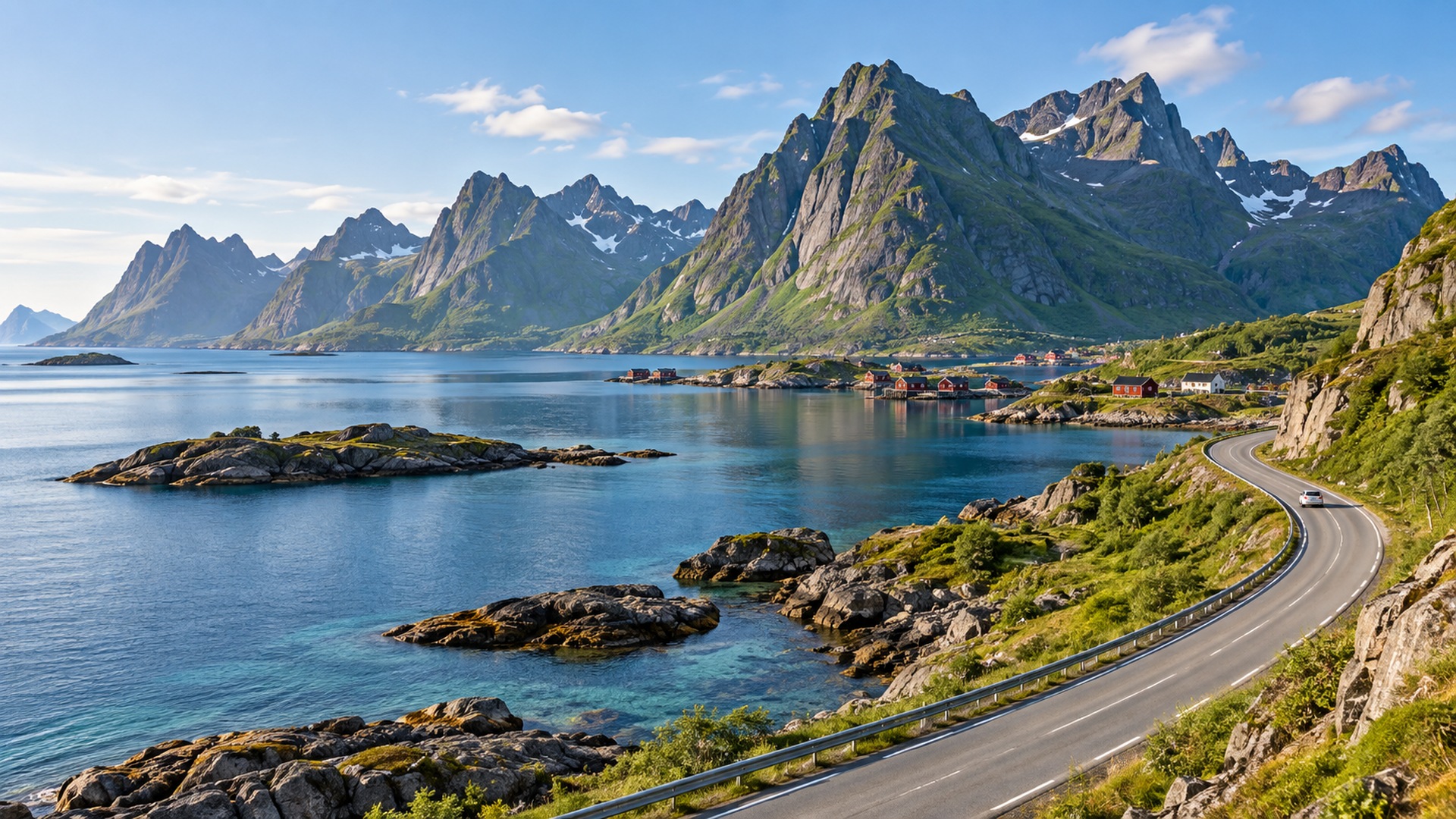
A usable Lofoten route sketch follows the E10 west from the Svolvær area toward Å, choosing side visits rather than adding every detour automatically. Visit Lofoten’s driving information identifies Å at the western end of the E10, while its car-holiday guide includes the Norwegian Fishing Village Museum there. Compare a settled Svolvær base with an illustrative four-day trip using a second overnight area farther west. The latter may reduce repeated driving if the chosen visits justify moving accommodation. Those days are an example for testing your own plans, not a guarantee of suitable weather, access, or activity conditions. Choose this route for an island-and-village landscape whose side visits interest you as much as the road itself.
Choose overnight locations through the experiences you want nearby. A base can make it easier to slow down, revisit a view in different conditions, or separate driving from an outdoor activity. Study your arrival and departure connections carefully, including any transport arrangements your particular route requires. An island journey needs a complete travel plan, not merely a scenic-road segment placed between assumed connections.
Choose Outdoor Stops With the Same Care as Overnight Bases
Identify a handful of activities or places that will make the road journey feel like an adventure to you. Research each through the relevant destination manager or activity provider, checking current access and requirements. Decide which needs a reservation and which can remain flexible. This creates a route with real experiences at its center, while avoiding a plan that names many outdoor possibilities without providing time or suitable arrangements for any of them.
Build Practical Flexibility Around the Main Experience
Weather or operating changes may affect an outing more than the road itself. Choose an alternative that still connects with your interests, and understand how a changed activity affects the rest of the route. Staying more than one night in a priority area may provide useful room, depending on the journey, while a daily accommodation change can reduce it. Read reservation terms so the flexibility in your imagination matches the flexibility of the bookings you actually make.
Use current official information when revising travel decisions. A broad tourism itinerary helps introduce a region but cannot establish today’s road status or whether a particular outing should proceed. Check the authority or provider responsible for the actual segment and follow their guidance. A well-prepared road trip can adapt without losing its purpose because it has enough clarity to distinguish an essential experience from a detour that can sensibly wait.
Pick the Journey You Have Time to Enjoy
Choose the route whose defining experience fits the time you can protect. An Iceland circuit asks a different geographic commitment from the Great Ocean Road, while the Christchurch–Queenstown example follows one direction rather than circling an island. Lofoten rewards deciding which villages and side visits deserve time away from the E10.
Write the first overnight place, the main activity days, and the final departure before adding smaller stops. Use current road and transport information to test that sequence, especially where a rental return or ferry limits flexibility. Shorten the route when the important experiences otherwise become hurried arrivals.
Leave enough attention for what the road connects. A conversation, a familiar landscape in different light, or an extra hour at a selected stop can make the journey personal. The strongest choice gives those experiences time while leaving the driver a realistic and manageable day.