Pack for the Route, Then Organize for the Day
An expedition packing list becomes useful when every item has a reason to travel with you. Spread the equipment out before filling the bag and ask which conditions, tasks, or responsibilities each piece supports. The answer should come from the specific route and the operator’s requirements, because a hut-based trek, a supported camp journey, and a technical climb do not need identical kits. Buying everything associated with mountaineering can create an expensive load without solving the actual problems of your itinerary. A better system distinguishes personal essentials from shared equipment, separates frequently used items from overnight gear, and leaves you able to find things when the surroundings are less orderly than your living room. This guide helps you organize those decisions, but the final list should be confirmed with the expedition leader before departure, especially where technical equipment, cold conditions, or remote camps change what is required.
A: No; use the route-specific operator list and clarify accommodation, conditions, technical needs, and responsibilities.
A: Choose capacity around the confirmed personal and shared load, then assess fit with the bag actually packed.
A: First establish terrain and technical requirements, then choose suitable footwear with time to test the fit.
A: Not necessarily; ask how shared components are transported and whether participants receive an allocation.
A: Protection depends on conditions and equipment; organize important dry contents appropriately and rehearse wet-weather access.
A: Agree on inspection timing and replacement arrangements with the operator before the group leaves.
A: Keep mandatory items and discuss an excessive load with the leader rather than silently deleting essentials.
A: Include relevant lighting, medication, clothing, and personal items you may need without unpacking the whole shelter.
A: Confirm the group's communication plan and your responsibilities with the leader instead of assuming a personal device solves coverage limitations.
A: Rehearse a normal stop with the fully loaded bag, including retrieval, repacking, and comfortable movement.
Establish What You Are Responsible for Carrying
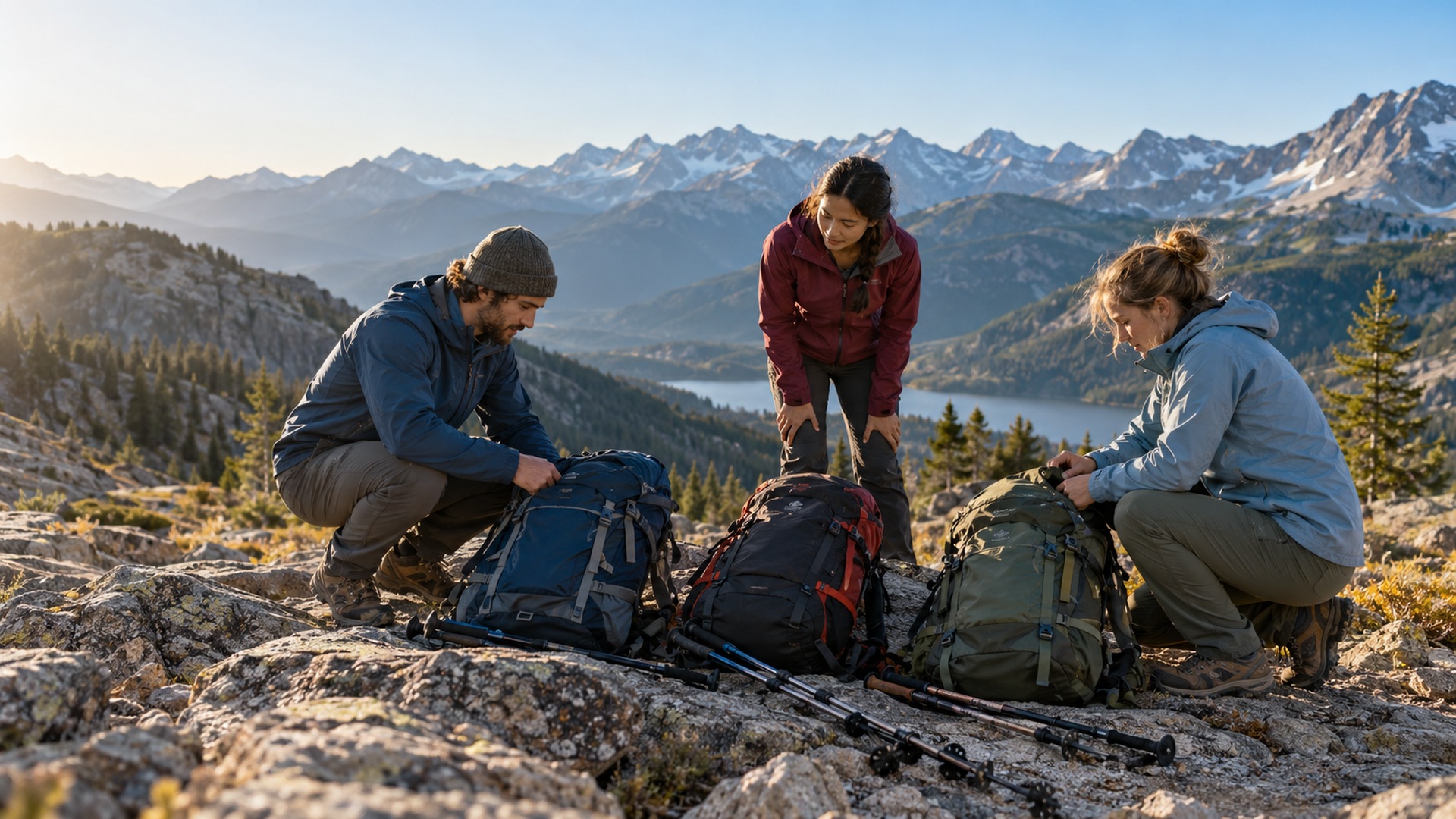
Begin with the operator’s current equipment list and mark each item as personal, supplied, rented, or shared. Ask whether supplied equipment is carried by participants and whether you need space for part of the group load. A traveler who arrives with a full personal pack may have difficulty accommodating an assigned shelter component or food allocation. Responsibility should therefore be clear before you choose a bag, because pack capacity depends on the actual load rather than on the destination’s reputation or the size most often recommended in a generic shopping list.
Choose Footwear by Terrain and Fit
Footwear should match the route’s surfaces and technical requirements as well as your feet. Ask the leader what level of support, protection, and compatibility is required, particularly if the itinerary involves snow, ice, or specialist equipment. Do not select boots solely because they look more substantial than your ordinary walking shoes. Fit, prior testing, and suitability for the actual activity are more useful than appearance, and a technical boot that meets a climbing requirement may feel and function differently from a comfortable shoe intended for straightforward trails.
Test the chosen footwear during appropriate preparation walks, including descents and the socks you expect to use. Notice pressure, movement inside the shoe, and how fit changes after several hours. Resolve persistent problems early enough to obtain advice and test adjustments. Keep the sock arrangement simple and familiar rather than introducing an elaborate new combination at departure, because an untested change can alter fit just when replacing equipment becomes difficult.
Build Clothing Around Movement and Stops
Organize clothing as a working system that supports walking, resting, and the expected weather. Your list may include a next-to-skin layer, insulating pieces, protection against wind or precipitation, and accessories suited to the route, but the exact combination needs to follow the leader’s requirements. Check that the pieces fit together and that sleeves, cuffs, hoods, and zips remain usable with the pack and other equipment. Several individually good items can become an awkward system if they restrict movement or cannot be adjusted quickly when effort and conditions change.
Match the Sleep System to the Overnight Plan
Ask how accommodation changes across the itinerary before choosing sleeping equipment. A staffed hut, a supported tent camp, and an independent moving camp create different responsibilities and may have different bedding requirements. Confirm expected conditions with the operator, along with the sleeping bag, mattress, liner, or other items they require or supply. Avoid interpreting a broad marketing phrase such as comfortable camp as an equipment specification, because overnight comfort depends on details the booking description may never mention.
Check the entire sleeping arrangement rather than focusing only on one rating or product claim. Fit, ground insulation where applicable, condition, familiarity, and compatibility all affect how the system works. If equipment is rented, ask when you can inspect it and how a problem will be handled before the group leaves. Personal preferences also matter: a setup you can organize easily and sleep in comfortably may be more practical than a technically impressive item whose operation feels awkward every evening.
Keep the nighttime routine in mind when packing smaller essentials. Lighting, personal medication, suitable overnight clothing, and items you may need during the night should be accessible without disturbing the entire shelter. Choose an organization method you can recognize in low light and explain to a companion if necessary. A quiet, repeatable routine helps preserve rest, which makes thoughtful packing part of expedition readiness rather than merely a question of carrying fewer kilograms.
A Working Checklist for a Supported Mountain Trek
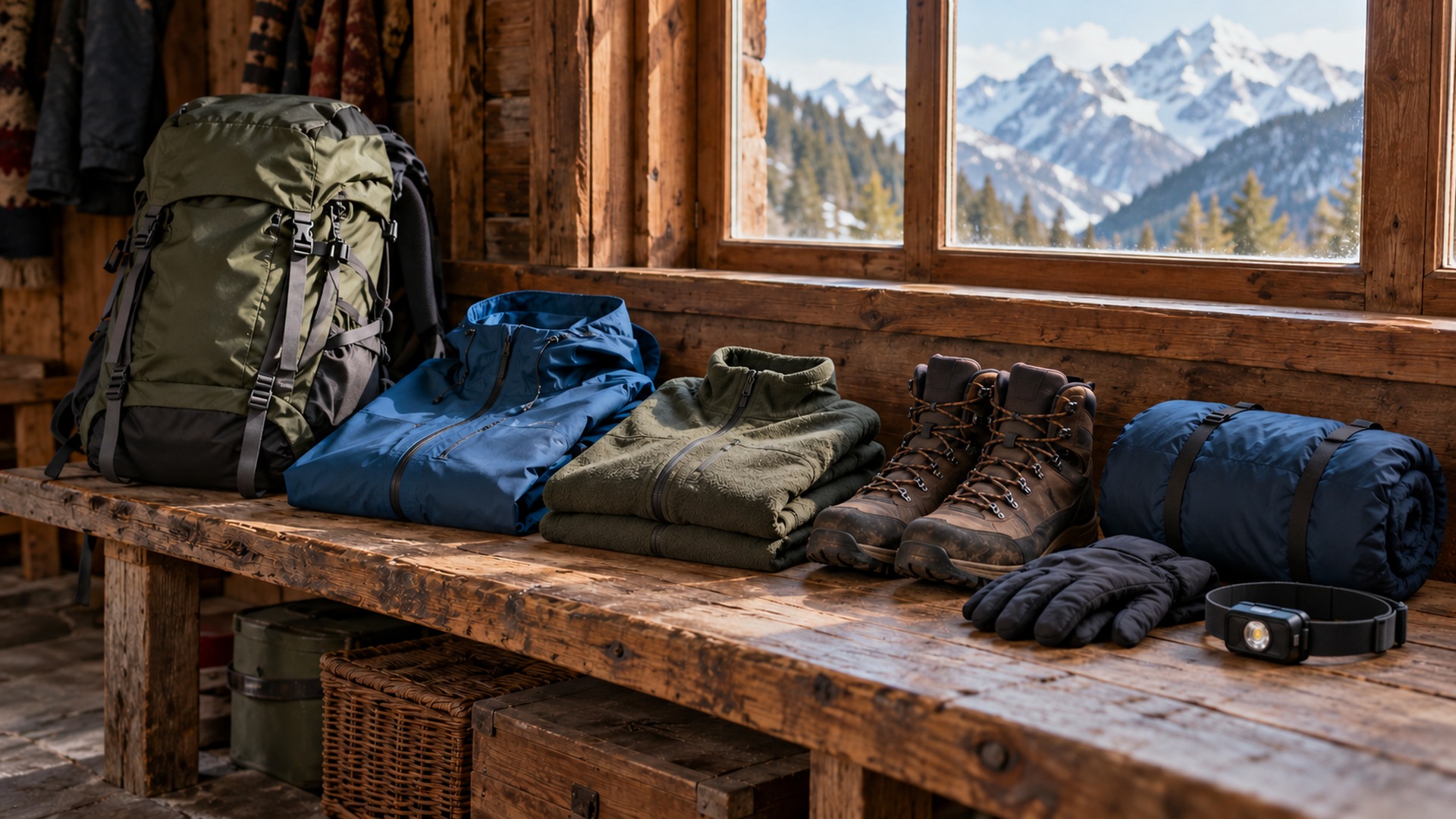
Use this consolidated checklist as a conversation with the leader for a supported, nontechnical trek. Mark each line as packed, supplied, rented, or unnecessary for the confirmed itinerary. It is not a universal mountaineering kit: glacier travel, technical climbing, severe cold, and independent remote camping require a different, professionally specified list. Quantities and specifications should follow the route and the operator’s written requirements.
- Footwear: tested walking footwear, familiar socks, and camp footwear only where useful.
- Clothing: next-to-skin layers, insulation for stops, weather protection, and required head and hand protection.
- Carrying system: fitted pack, suitable internal water protection, and space for an agreed shared allocation.
- Overnight items: the specified sleeping bag, mattress or liner, with supplied bedding recorded explicitly.
- Day essentials: the agreed water containers, familiar walking snacks, sun protection, and accessible lighting.
- Personal needs: prescribed medication, relevant health information, and hygiene and waste items matching the facilities.
- Records and power: offline itinerary, operator and home-contact details, insurance information, documents, and the charging arrangement actually available.
Organize Food, Water, and Personal Essentials
Clarify which meals are provided and what you need to supply during movement. Personal snacks should be familiar, practical to access, and suitable for the environment and your preferences. Ask how drinking water is obtained and managed on the itinerary, including who carries any required treatment equipment and what participants are expected to do. Avoid packing an assortment of unfamiliar products solely because they are marketed for expeditions, since preparation walks offer a better opportunity to learn what you can use comfortably.
Personal essentials deserve the same clarity as large equipment. Carry necessary medication in accordance with individual medical advice, keep relevant information accessible, and understand how the group handles hygiene and waste. The National Park Service trip planning guide encourages matching equipment and personal needs to the actual activity. Use that principle to check for overlooked necessities, while confirming local requirements and the operator’s arrangements rather than assuming that every mountain setting provides the same facilities.
Pack Communications and Documents Deliberately
Separate the devices you bring for convenience from the communication equipment the group relies on. Ask the leader how communication works on the route, what limitations exist, and whether you have any responsibility for charging or carrying shared equipment. A phone may serve useful functions without providing dependable reception, so keep important documents available offline and do not confuse a familiar device with a complete emergency plan. Include only the accessories and power arrangements that suit the itinerary, checking practical compatibility before the travel day.
Keep identity documents, permit information where relevant, insurance records, operator contacts, and transport details protected and accessible. Share the appropriate itinerary and contact expectations with your trusted person at home. A document is useful when it can be found and understood at the moment it is needed, so choose a simple system rather than placing important information across many apps or loose bags. If something changes, update the relevant copies so that your records and home contact reflect the current plan.
Consider how equipment travels to the destination as well as how it moves on the mountain. Check airline baggage and restricted-item rules directly with the carrier for items you intend to transport, and ask the operator about local availability where travel restrictions create difficulties. Keep essential personal items accessible within the rules applicable to your journey. A well-organized mountain pack still needs a sensible arrival strategy, particularly when an itinerary leaves little time to replace delayed or unsuitable equipment.
Review the Packed Bag Before Departure
Perform a final check against the confirmed list with the bag actually loaded. Inspect closures, fit, accessibility, waterproof organization, and the remaining capacity for shared items. Remove duplicates that have no clear purpose, but do not discard required equipment simply to reach an arbitrary weight target. If the complete load is unexpectedly heavy or difficult to manage, discuss it with the leader while there is time to revise rentals, responsibilities, or suitable equipment choices rather than hoping the problem will become easier on the first walking day.
Finish by practicing the routine of an ordinary stop: take the pack off, retrieve protection and food, put the items away, and resume movement. That small rehearsal often reveals the difference between a list that looks complete and a system that functions comfortably. Your expedition kit should support attention to the environment and the group, with familiar equipment serving clear tasks. When the packing is coherent, you carry fewer unresolved questions into the mountain and spend less time searching for the things you already brought.