The Cost Depends on the Route You Actually Book
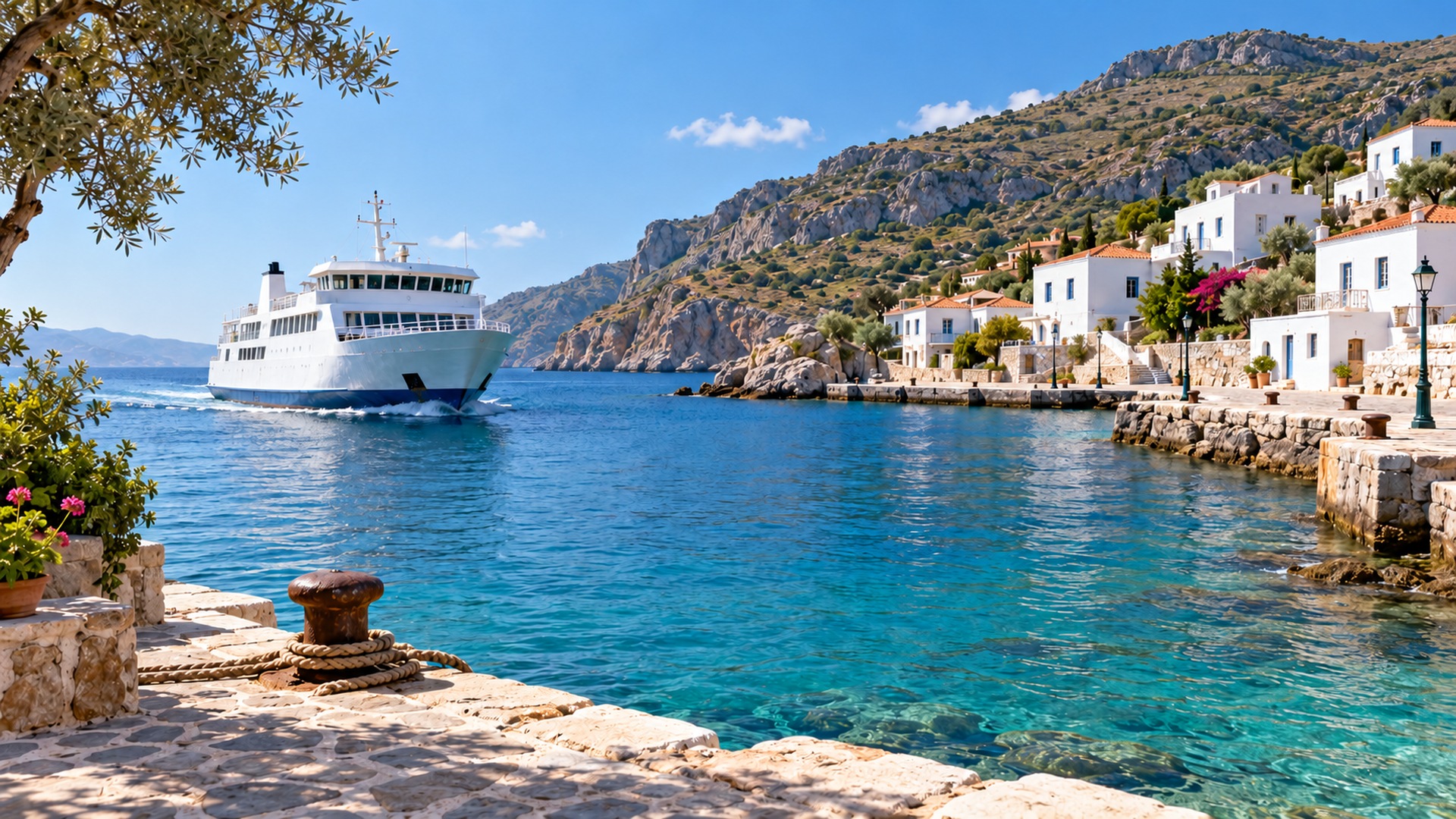
An island-hopping vacation has no useful universal price because the same phrase can describe a pair of modest town stays, a resort chain with coordinated transfers, or a longer journey carrying a vehicle between islands. The amount you need depends on the destination, dates, group, accommodation, and the number of moves. Start with a complete route and obtain current quotes for its important parts. Then add the ordinary expenses that make each day work: reaching the port, eating between connections, moving locally, and paying for the experiences that motivated the trip. A clear budget distinguishes the whole group’s costs from each traveler’s share and makes package inclusions visible. It also considers what a changed connection could mean for the remaining bookings. The aim is a defensible estimate for your own holiday, with assumptions you can explain and adjust before paying.
A: Dated package starting offers and official ferry fares provide scoped references; their currencies, inclusions, travel dates, and pricing units must remain explicit.
A: Use the actual occupancy and number of nights at each base, then combine the stays and confirmed extra charges.
A: Port access, arrival transfers, local movement, vehicles, and other arrangements not included in the specific ticket.
A: Compare its current coverage and restrictions with the individual arrangements needed for your intended route.
A: Read the particular offer; accommodation and meal arrangements may be priced separately.
A: No; they are invented numbers showing how quantities, categories, and shared totals are calculated.
A: Its location may create repeated transport or meal-access costs that need inclusion in the comparison.
A: Agree which costs are shared and how, while keeping individual choices separate where appropriate.
A: It may affect linked accommodation, transfers, or onward travel whose terms create additional expenses.
A: It shows actual route quantities, current quotes, clear inclusions and exclusions, and assumptions that can be updated.
Begin With Dates, Travelers, and a Defined Route
A meaningful estimate needs a travel period, a group size, and a sequence of overnight stops. Write down those details before collecting prices. A sample rate for a different month or room arrangement may be interesting, but it does not describe the holiday you are planning. Keep the assumptions consistent while comparing options.
Count accommodation nights separately from days on the islands. Include the arrival and departure gateway if the route needs those stays. Record each crossing and the transfers at either end. This creates the structure on which the remaining costs depend.
List Every Crossing as Its Own Cost
Obtain the current price for each service, date, and traveler arrangement on the route. Record whether the quote covers all passengers and any vehicle you intend to carry. Check luggage and other relevant terms through the operator’s own information, such as Jadrolinija’s local-service questions and answers. Avoid assuming that a price from one service describes a different crossing. The transport total should be built from the actual itinerary.
Use Dated Real Prices as Scoped Reference Points
Published examples checked on 14 October 2026 show why the trip format matters. G Adventures advertised Journeys: Discover the Greek Islands as an eight-day Athens-to-Santorini trip from USD 2,549 per person. Its ten-day Athens and Walking in the Greek Islands journey advertised a starting price of USD 4,199. These are commercial starting offers, not a market-wide price range. Confirm the applicable departure, room basis, inclusions, exclusions, and current price before using either in a booking budget.
A separately arranged crossing has a much narrower scope. Gozo Channel’s standard passenger fare was EUR 4.65, with its ticket information describing one round trip. Two adults at that standard fare would therefore allocate EUR 9.30 for the covered crossing, not for accommodation, transport to the ports, meals, or an entire Malta-and-Gozo holiday.
Keep those units separate. A package per person and a round-trip ferry fare cannot be compared as if each buys a complete equivalent vacation. Keep the original currency and checking date beside each figure.
Add the Journeys on Either Side of the Ferry
A ferry ticket does not necessarily include reaching the terminal or continuing to the next accommodation. Investigate those transfers through the property, operator, or suitable local transport information. Confirm the arrangement at the time you expect to arrive. A late arrival can create a different practical choice from a midday one.
Record whether a transfer is charged for the vehicle, the group, or each passenger. Clarify the luggage arrangement if it affects the choice. Include the departure transfer as well as the arrival. Repeated small journeys can become a meaningful part of a multi-island budget.
Budget Meals Through the Stay’s Actual Routine
Determine which meals are included and which you will purchase separately. A town stay with several ordinary dining choices differs from a resort arrangement with a required meal plan. Tourism Fiji’s Yasawa island-hopping guidance illustrates why transfers, accommodation, and meal arrangements need separate attention. Read the specific offer’s current terms rather than assuming every advertised pass has identical inclusions. Estimate meals through the format your own booking requires.
A Clearly Labeled Illustrative Calculation
Imagine two travelers spending six nights across two island bases, reached through a mainland gateway. The four hypothetical crossings are gateway to island A, island A back to the gateway, gateway to island B, and island B back to the gateway. This example assumes the gateway transfers work without an overnight stay; if they do not, that accommodation must be added. Suppose rooms cost 120 currency units per night, totaling 720, and the pair pays 90 units together for each crossing, totaling 360. These invented figures demonstrate arithmetic and a defined route assumption; they are separate from the dated real prices above.
Now suppose the pair allows 70 units per day for meals across seven travel days, totaling 490 units. Add 160 units for their planned local transfers and 200 units for selected activities. The subtotal is 1,930 units for both travelers, or 965 units each when split equally. Their actual cost could be very different because every number must be replaced with the arrangements they choose.
The example excludes reaching the initial gateway, insurance, any required personal equipment, and a margin for changes or optional spending. Those exclusions need their own lines before the result becomes a complete holiday estimate. It also assumes equal sharing, which may not suit every group. The useful lesson is to calculate from explicit quantities and inclusions rather than treat the illustrative subtotal as a recommended budget.
Add Travel to and From the Island Gateway
Include the journey that gets the group to the start of the island route and home again. Investigate its luggage terms and any necessary overnight stay. A relatively modest island circuit can still require a substantial approach journey. Compare the complete vacation before judging a destination through local ferry or room prices alone.
Understand What a Changed Connection Could Cost
Identify the route dependency whose change could affect the most important booking. Review the actual terms of the connected transport and accommodation. Consider whether a gateway buffer reduces the pressure around an onward journey. Choose the arrangement through the real consequences rather than a universal buffer rule.
Think about the expenses that might arise from a changed arrival, such as an additional local transfer or another overnight stay. Do not assume an operator, property, or insurer will automatically cover them. Read the relevant terms and ask for clarification where the trip depends on an answer. This gives a practical basis for an appropriate financial margin.
Separate Shared Costs From Individual Choices
Accommodation and private transfers may be shared differently from meals or activities. Agree on the allocation before booking arrangements that commit the group. Record which expenses belong to everyone and which remain personal. A clear split prevents a trip total from becoming a misleading per-person claim.
For unequal room use or different activity choices, discuss a fair approach directly. Avoid assuming every expense must be divided by the same number. Keep the agreed arrangement simple enough to follow during the trip. Clarity supports both the budget and the group’s comfort.
Record the currency attached to each quote. If you need a home-currency estimate, use a current conversion source and acknowledge the payment arrangements and any applicable fees. Recheck important totals before committing money. A conversion used early in planning is an estimate rather than a permanent guarantee.
Reduce Cost by Changing the Expensive Decision
Look for the decisions that contribute most to the actual total. You might reduce moves, choose a more convenient base, adjust the travel dates, or reconsider a room arrangement. Compare the resulting itinerary as well as the new price. A smaller total is only useful if the revised holiday still serves the group’s interests.
Avoid treating every convenience as expendable. A suitable transfer or a clear coordinated arrangement may be worth paying for if it removes substantial difficulty. Equally, an extra island with little usable stay time may be a weak use of both money and effort. Prioritize through the holiday you want, rather than through an automatic search for the lowest rate in each category.
Finish With a Budget You Can Update
Share the relevant assumptions with companions before payment. Everyone should understand the main commitments, personal choices, and margin for uncertainty. Then use the budget to make the trip more coherent, rather than to fill every available hour with another expense. The cost of an island-hopping vacation becomes understandable when the journey, the daily routine, and the calculation all describe the same plan.