Begin With What You Hope to Understand
A cultural expedition becomes meaningful when its purpose is more specific than seeing as much as possible. You might want to understand a craft, explore how food connects with local life, or learn how a neighborhood’s history appears in its present routines. Those questions can shape a journey with depth, provided the people and places involved remain more than illustrations for a visitor’s story. Start with curiosity and choose experiences that hosts genuinely offer, with clear arrangements and enough time to listen. Immersive travel does not promise instant belonging or unrestricted access. It gives you an opportunity to engage thoughtfully with a place while accepting the limits of a short visit. A good plan balances hosted encounters, independent observation, practical comfort, and time to reflect. Its success depends on the quality of attention you bring as much as the activities you book.
A: A specific learning question helps select places and hosts while leaving room for unexpected understanding.
A: A visitor can learn meaningfully while acknowledging the limits of a short stay.
A: Read who hosts it, what participation involves, which boundaries apply, and how its practical arrangements work.
A: Explain your learning interests, preferred depth, comfortable pace, and relevant participation needs.
A: It provides room to observe appropriate public settings and connect the explanations you received.
A: Ask separately and follow the person’s or provider’s answer.
A: Focus on the particular practice or work being shared rather than asking one person to explain an entire culture.
A: Guiding, hosted activities, practical transport, accommodation, meals, and any confirmed materials or entrance arrangements.
A: Use the agreed contact and terms, communicate respectfully, and choose a suitable alternative if needed.
A: What you learned, what surprised you, and what remains uncertain, without claiming a definitive account of the place.
Choose a Learning Theme You Can Follow
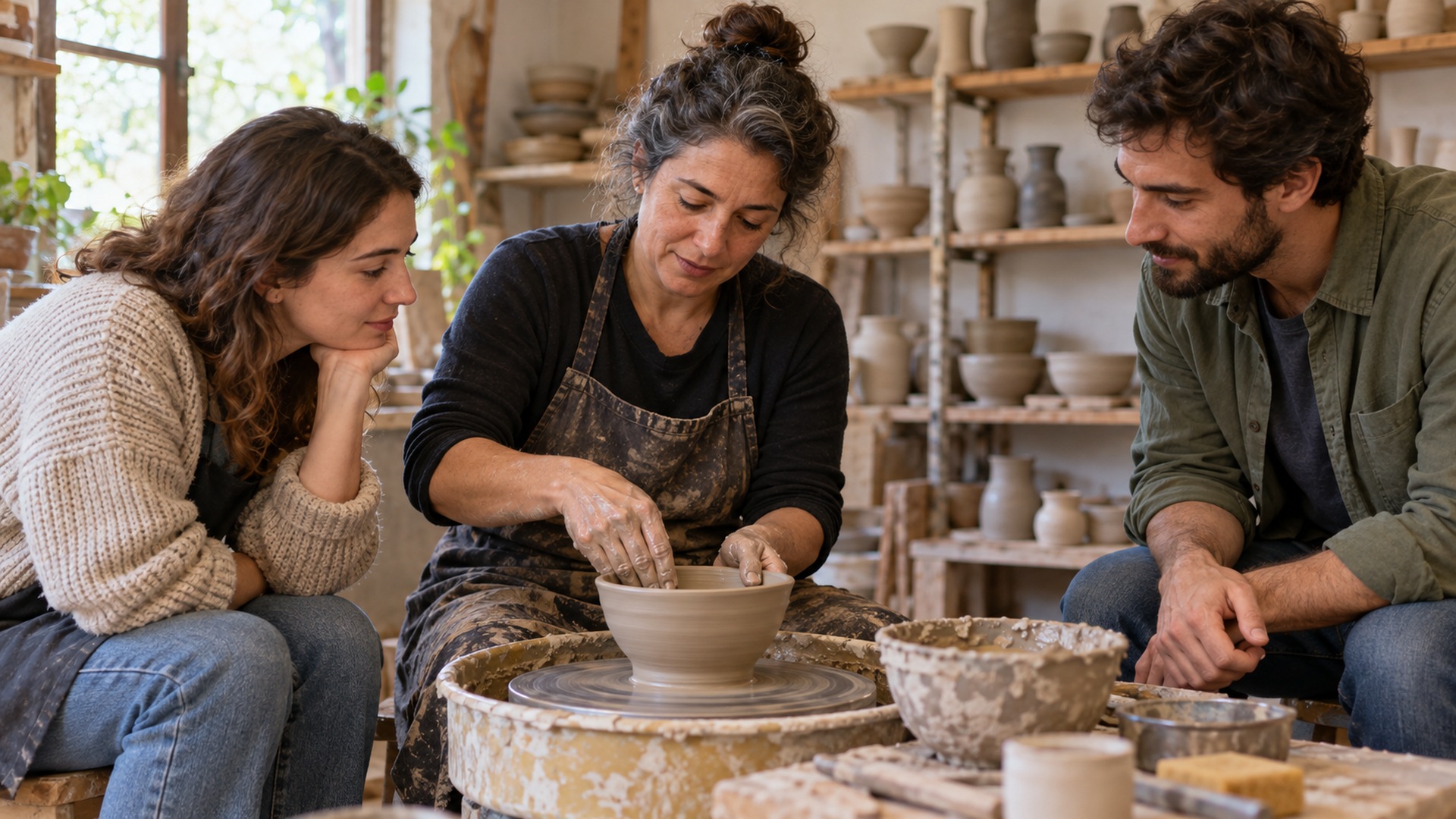
Turn an interest into a question that connects actual visits. For example, a Kyoto textile theme might ask how a woven pattern is made and what a short introduction can reveal about the process. The Nishijin Textile Industry Association lists a handweaving experience, providing a real institution and offered activity to investigate. Begin with its explanatory material, confirm the current session and language arrangements, and leave independent time afterward to consider what you noticed. This is a worked planning theme, not a promise that one workshop represents every Nishijin practitioner or makes a visitor an authority on the craft.
Keep the question open enough to learn something unexpected. A useful theme encourages attention without requiring every encounter to confirm an idea formed at home. Research a little background and note what you still do not understand. Those uncertainties can guide conversations and help you recognize the limits of your first impressions.
Discuss the theme with companions. Someone may share the interest but prefer shorter hosted sessions or more independent time. Agree on a core that everyone wants to pursue, then allow different activities where the route supports them. A cultural trip should remain enjoyable for the actual group rather than become a course designed around one traveler alone.
Research the Place Through Several Perspectives
Read reliable destination information alongside work by local writers, institutions, or practitioners relevant to the theme. Look for context that explains how the place functions now, as well as its historical appeal. Avoid relying entirely on a travel description that presents culture as a collection of picturesque customs. A broader starting point helps you ask more thoughtful questions and notice the difference between a visitor experience and ordinary life.
Let Hosts Define What They Offer
A workshop, guided walk, or community-hosted visit should have a clear account of who is inviting you and what participation involves. Ask what guests do, what they learn, and which boundaries apply. UNESCO’s ethical principles for living heritage emphasize community roles, dialogue, and consent. For a traveler, a practical starting habit is to understand the invitation rather than assume access.
Consider the host’s own description when choosing between offers. A well-explained activity may be more valuable than a vague promise of authenticity. Look for an appropriate relationship between the advertised experience and the people providing it. Clear arrangements let you participate with realistic expectations.
Balance Hosted Encounters With Independent Time
In the Kyoto weaving example, place the confirmed hosted session where you can arrive with attention and leave without rushing toward another reservation. Beforehand, note one process question from the institution’s explanation; afterward, compare that question with what the instructor actually showed. Independent time might involve revisiting an offered display, looking more carefully at a permitted public shop, or simply recording the distinction between something you observed and something you inferred. A shop visit remains a commercial setting, so do not assume it adds a free lesson. The hosted and independent parts should inform one another without demanding additional access from people who have not offered it.
Keep these periods connected to your theme without turning them into another task list. You might notice how a craft appears in contemporary shops or how a market relates to everyday meals. Observe carefully and resist drawing large conclusions from a brief scene. Independent time is an opportunity for attention, not proof that you now understand the entire place.
If traveling with others, allow room for different responses. One person may want to talk through an encounter immediately, while another prefers quiet reflection. Shared meals can provide a natural place to compare observations without requiring agreement. The trip becomes richer when companions can notice different things.
Prepare Questions That Invite Explanation
Ask about the specific practice, place, or work the host is sharing. A focused question such as how a material is chosen can lead to a more useful conversation than a demand to explain a whole culture. Let the host decide how much detail to offer. Pay attention to the answer before moving to the next question.
Avoid turning curiosity into an interrogation. A person providing a visitor experience still has boundaries and ordinary responsibilities. Ask whether a sensitive or personal subject is appropriate rather than assuming the booking gives permission. Accept a brief answer or a change of subject without pressure.
Understand Participation Before the Session Begins
Confirm the activity’s practical requirements directly with the provider. A cooking session, craft workshop, performance, or hosted meal can involve different levels of participation. Ask about language, physical demands, relevant access needs, and any materials or clothing instructions. Explain important requirements honestly so the host can tell you whether the format suits them. A clear exchange before booking helps both sides prepare for a comfortable encounter.
Ask About Photography as a Separate Choice
Do not assume that permission to attend includes permission to photograph people, work, or a particular setting. Ask the host what is appropriate and follow the answer. If a person declines, keep the camera away and remain engaged with the experience. The encounter can be valuable without an image to share.
Consider how photography affects your attention. Pausing continually to arrange a shot can interrupt listening or participation. Decide which moments are better experienced directly. A thoughtful visitor gives the host and the activity room to proceed without becoming responsible for a photographic result.
If you later describe the encounter publicly, keep the account accurate and proportionate. Distinguish what one host shared from claims about a whole community. Avoid adding a dramatic explanation you did not receive. Your account should reflect the limits of the visit as well as what you enjoyed learning.
Leave Time to Reflect and Revisit
Keep a small record of what you learned, what surprised you, and what remains uncertain. A brief reflection can help connect a workshop with a later visit or a guide’s explanation with something you notice independently. Avoid turning this into a requirement to produce a definitive account of the destination. The record should support your own attention.
Use flexible time to revisit a public place or return to an experience where another visit is appropriate and available. Familiarity with a small area can reveal details you missed initially. It does not remove your visitor role, but it can make the journey feel less hurried. Let repetition deepen observation rather than assume novelty is always more valuable.
Measure Immersion Through Attention and Understanding
A cultural expedition should leave you with better questions, a clearer sense of context, and respect for what you still do not know. You do not need to leave feeling like an insider. A short visitor experience can be meaningful when it is appropriately hosted and approached with care. Its value lies in the encounter itself and the understanding it begins.