Start With an Experience That Welcomes a Newcomer
You do not need extensive background knowledge to begin enjoying cultural travel. A well-chosen first experience gives you a clear invitation, useful explanation, and a level of participation that feels comfortable. It might be a guided neighborhood walk, a museum visit organized around one subject, an introductory craft session, or a cooking class whose host explains the routine. The best choice depends on your interests and how you like to learn. Some travelers enjoy making something with guidance; others prefer to observe and ask questions. Begin with a manageable encounter rather than a promise to understand an entire culture in one day. Check the language, pace, practical requirements, and what guests are actually invited to do. A thoughtful introduction can leave you curious and more confident, while helping you approach later experiences with clearer questions and respect for the people hosting them.
A: Match your curiosity and learning preferences with a clearly described guided, institutional, or hosted experience.
A: Choose one theme and spend time with the objects or ideas that interest you rather than attempting the whole collection.
A: Ask the provider about the actual format and beginner suitability before selecting the session.
A: The menu, participation, language, practical requirements, and any relevant dietary arrangements.
A: Knowing what stops and purchases are involved keeps the experience transparent and expectations clear.
A: Check current organizer information, audience guidance, and any available context that helps you listen attentively.
A: A clear account of the host, invitation, routine, conversation format, and practical arrangements.
A: Watching carefully can be valuable, especially when the format is a demonstration or performance.
A: You can remain fully engaged and enjoy a meaningful encounter without collecting images.
A: Notice what interested you and follow the next question through appropriate hosts, institutions, or public exploration.
A Guided Neighborhood Walk Gives Places Context
Mercat Tours’ Secrets of Edinburgh’s Royal Mile is a concrete example to investigate when a guided historical walk suits your learning style. The provider identifies a defined route and theme, rather than promising access to an entire culture. Compare the current format, language, walking demands, and included visits with the day you want. A first introduction can help you connect visible places with an account of their history, then decide what to revisit independently. Choose through the actual tour description and your interests; this example is not a claim that a commercial walk offers every local perspective or makes the visitor an insider.
A Museum Visit Can Start With One Good Question
A first museum visit can begin with a bounded question rather than a determination to cover every room. At Istanbul’s Museum of Turkish and Islamic Art, the carpet collection provides a concrete example: choose a few works and look for how the institution explains their materials, patterns, and contexts. Read the labels or offered interpretation before assuming a design has the meaning you first imagined. Check current visitor information and the interpretive options you would actually use. The aim is a clearer first encounter with a subject, leaving you with another question worth pursuing rather than a claim to have completed it.
Consider a guided introduction or other suitable interpretation if the subject is unfamiliar. Read the format and language arrangements rather than assuming every visitor tool works in the same way. A clear explanation can give you enough context to notice details independently. Choose the option that supports your curiosity without overwhelming the visit.
Give yourself time to remain with a few objects or ideas. A first museum experience can feel richer when you slow down instead of trying to complete the entire collection. Discuss what caught your attention with companions if they enjoy that conversation. Different responses can help you see more without requiring everyone to reach the same conclusion.
An Introductory Craft Session Makes Learning Tangible
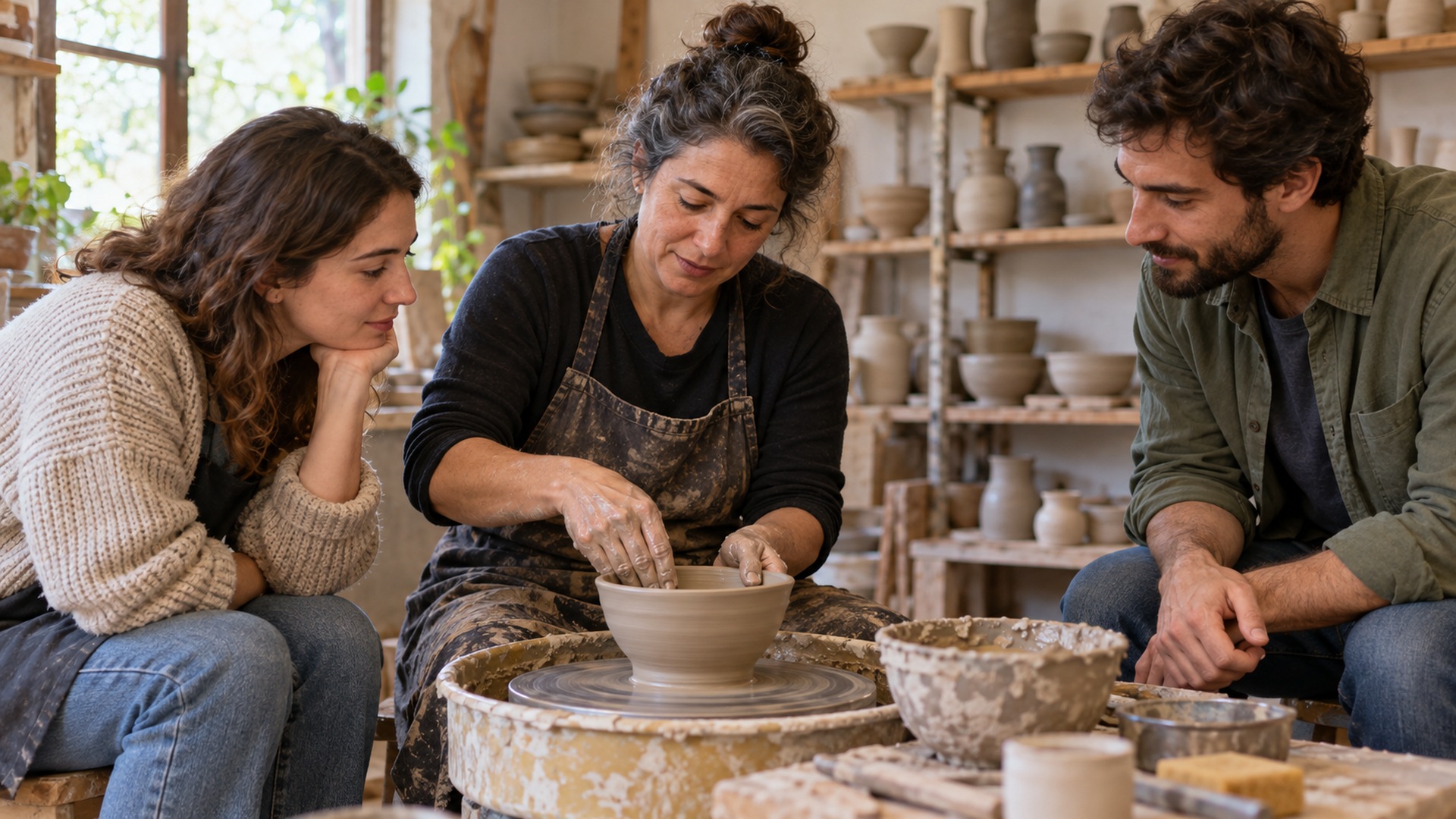
A clearly offered craft activity can suit travelers who enjoy learning through their hands. Japan’s official tourism description of the Kyoto Handicraft Center provides one example of a visitor setting with introductory activities to investigate. Consult the current provider information for the particular session. Ask what beginners do, what materials are supplied, and what practical instructions apply. Choose the experience for the learning process rather than the expectation of producing a perfect souvenir.
A Cooking Class Connects Food With Explanation
A cooking session can make a first cultural experience approachable through a familiar daily activity. Choose a host who explains the menu, participation format, language, and practical arrangements. Ask what guests prepare and how the session proceeds. A clear description is more useful than a general promise of traditional food.
Communicate relevant dietary requirements directly before booking and ask whether the particular arrangement can accommodate them. Confirm any important materials or equipment instructions. Keep the conversation tied to the actual session. Clear expectations let both guests and host prepare appropriately.
Listen to the context the host offers without expecting one meal to represent an entire country. A dish can connect with a particular household, region, or practitioner’s approach. Ask focused questions about the ingredients or process being demonstrated. This keeps the conversation grounded in the encounter you are actually having.
A Guided Market Visit Can Explain Everyday Exchange
A market visit can be rewarding when the guide’s role is to explain the setting and help you participate appropriately. Ask what the visit involves and whether it includes particular hosted stops or purchases. Consider the pace and how the group moves through working spaces. The people there should be approached through their ordinary roles rather than treated as scenery.
Keep buying choices deliberate. You can appreciate an explanation without assuming every encounter requires a purchase, and you should understand any commercial arrangement attached to the tour. Ask the provider to clarify what is included in advance. A transparent format helps you enjoy the visit with fewer uncertainties.
A Public Performance Offers a Different Way to Listen
A suitable public performance can introduce music, dance, theater, or another cultural expression through an established visitor setting. Research the organizer’s current programme, access arrangements, and audience guidance. Read any available context before attending if it helps you appreciate the experience. Follow the actual instructions about photography or recording. The performance deserves attention on its own terms, rather than become a backdrop for a visitor’s photograph.
A Hosted Meal Needs a Clear Invitation
When researching a hosted meal, understand who organizes it and how the host describes participation. Ask what guests are invited to do, how conversation is supported, and which practical arrangements apply. A welcoming experience should be understandable before arrival. Avoid choosing solely through language suggesting privileged access to private life.
Let the host guide the routine once you arrive. Ask when something is unclear and accept boundaries around personal subjects or photography. A meal can be enjoyable through ordinary hospitality and conversation without becoming an effort to prove cultural closeness. The invitation determines the experience.
Keep your expectations proportionate afterward. One person or household can share a meaningful perspective without representing everyone in the destination. Describe what happened accurately and leave room for what you do not know. That care helps the encounter remain an exchange between people rather than a general conclusion about a culture.
Bring Questions That Fit the Specific Encounter
You do not need an elaborate list of questions to participate thoughtfully. Notice what the host is explaining and ask a focused follow-up when it interests you. Questions about a material, technique, place, or choice can invite useful detail. Allow the answer to guide the conversation.
Treat Photography as a Separate Part of Participation
Ask what photography is appropriate before taking images of people or work. Follow the host’s or institution’s actual guidance and keep the camera away when permission is not given. Do not assume that paying for an activity settles the question. A first cultural encounter can be memorable without a photograph.
Consider whether the camera is affecting the experience. You may enjoy a session more fully when you set it aside during explanation or practice. Choose appropriate moments only where the setting permits them. Attention to the encounter is more important than collecting evidence that you attended.
Let the First Activity Open the Next Question
Use the response to the activity to choose what comes next. An Edinburgh history walk might prompt a return to one public site; a carpet collection might lead to more reading about a material or pattern; a Kyoto craft introduction might make another process interesting. Those are possible learning directions, not extra visits you must obtain from the same host. Notice whether explanation, quiet observation, or making something held your attention, then select another appropriate offered experience if you want one. Cultural confidence can grow through choices that fit how you enjoy learning, with enough room to recognize the limits of a first impression.