Start With Judgment Before Summits
Mountain climbing can look intimidating from the outside because the word climbing covers everything from guided alpine walks to serious technical ascents. Beginners do not need to start with extreme objectives, expensive gear walls, or dreams of the highest peaks. They need a clear progression, honest self-assessment, good instruction, and respect for mountain conditions. The best first climbing experiences teach movement, pacing, weather awareness, equipment basics, altitude care, and the discipline to turn around when a route is not right. A beginner who learns patiently will enjoy the mountains longer than one who rushes toward danger for a dramatic story. This guide is for travelers who want the adventure of mountain climbing without pretending that enthusiasm replaces preparation.
A: Choose a clear, supported objective that teaches pacing, terrain awareness, and descent discipline without stacking too many new risks.
A: Beginners should be able to handle sustained uphill walking, uneven footing, a loaded pack, and a controlled descent.
A: A guide is wise when terrain, altitude, snow, exposure, permits, or local logistics exceed your experience.
A: Start with footwear, layers, rain protection, sun protection, navigation, headlamp, food, water, and route-specific safety gear.
A: It can be, but conservative objectives, instruction, weather awareness, and turnaround discipline reduce avoidable risk.
A: Choose gradual itineraries, pace slowly, hydrate, eat, sleep well, and take symptoms seriously instead of pushing through.
A: Yes, many mountain objectives are nontechnical, but route choice, weather, fitness, and judgment still matter.
A: Turn around for worsening weather, timing problems, altitude symptoms, injury, route uncertainty, or group fatigue.
A: Practice loaded hiking, descents, layering, foot care, basic navigation, and any route-specific equipment skills.
A: Progress gradually, learn from each objective, seek instruction, and add only one major new challenge at a time.
What Mountain Climbing Means for Beginners
For a beginner, mountain climbing usually begins somewhere between hiking and technical alpinism. You may start on steep trails, rocky ridges, snowfields, scrambling routes, or guided introductory climbs that use helmets, harnesses, ropes, or crampons. The important distinction is not whether the trip looks impressive. It is whether you understand the terrain, the skills required, and the consequences of mistakes.
Many new climbers confuse mountain climbing with summit collecting. A summit can be satisfying, but the broader skill is learning how to move safely through mountain terrain. That includes choosing routes, pacing the day, reading weather, managing layers, eating before energy drops, protecting feet, communicating with partners, and recognizing when conditions are no longer suitable.
The first goal should be competence, not speed. A beginner who builds steady habits on modest objectives is preparing for years of better adventures. Mountains reward progression because each layer of experience makes the next challenge more meaningful. The early climbs are where you learn how your body reacts to cold starts, nervous energy, loose footing, and the small decisions that shape a long day.
Build Fitness That Matches Real Terrain
Mountain fitness is different from general gym fitness. Climbing days often involve long uphill movement, uneven footing, loaded packs, thin air, cold starts, hot afternoons, and demanding descents. Beginners should train legs, lungs, balance, core strength, and durability. Stairs, hills, long hikes, step-ups, lunges, loaded walks, and back-to-back outdoor days are more useful than short intense workouts alone.
Downhill strength deserves attention. Many beginners focus on getting up, then discover that tired descents are harder on knees, ankles, and concentration. Practice walking downhill with control, using trekking poles if appropriate, and keeping enough energy for the return. The mountain day is not finished at the high point.
Training should also test gear and routine. Wear the boots, pack, layers, and snacks you plan to use. Learn what rubs, overheats, leaks, or annoys you before the actual climb. Small discomforts become big problems when the day is long. A two-hour local hill walk with the real pack can reveal more useful information than another perfect workout indoors.
Learn Skills Before the Route Demands Them
Beginner climbing skills should be learned in low-consequence settings before they are needed in exposed or remote terrain. Scrambling, basic rope awareness, helmet use, foot placement, snow travel, crampon walking, ice axe handling, and simple navigation can all be introduced gradually. Not every first climb requires every skill, but any skill that might be needed should be practiced before the trip.
Instruction matters. A qualified guide, climbing school, mountaineering club, or experienced mentor can shorten the learning curve and correct habits before they become dangerous. Watching videos is useful for vocabulary, but it does not replace supervised practice. Mountain movement is physical, and feedback is part of learning.
Beginners should also learn how to ask good questions. What terrain will we cross? What skills are assumed? How exposed is the route? What happens if weather changes? Where can we turn around? The answers shape both preparation and confidence. A beginner who asks clearly is not slowing the group down; they are helping the whole team understand the plan.
Choose a First Objective That Teaches Well
A good first mountain climb should feel exciting but understandable. It should have a clear route, manageable elevation gain, reasonable weather window, appropriate support, and a difficulty level that matches your current training. The ideal first objective teaches mountain habits without making every mistake serious. It may be a guided alpine summit, a nontechnical high peak, a classic scramble, or a snow skills weekend that includes a modest climb.
Avoid choosing a first objective only because it is famous. Popular peaks can still be serious, crowded, loose, exposed, or affected by altitude. Lesser-known beginner routes may provide better instruction, safer pacing, and more room to learn. The best first climb is the one that helps you understand what kind of climbing you actually enjoy.
Consider the whole day, not just the summit grade. Start time, approach distance, descent length, water access, bathrooms, road conditions, permits, and weather exposure all shape the beginner experience. A route that looks easy on paper can feel difficult if these details are ignored. Beginners should also notice how easy it is to stop or shorten the day. A route with clear exit points, visible landmarks, and established descent options usually teaches better than one where the only plan is to keep going.
Gear Should Support Decisions, Not Replace Them
Beginner climbers do not need to buy everything at once. They need the right gear for the chosen route and the knowledge to use it. Good footwear, layers, rain protection, sun protection, gloves, headlamp, navigation tools, first-aid basics, food, water, and emergency communication may matter more than specialized equipment on many early objectives. Technical gear should match actual terrain.
If a route requires a helmet, harness, rope, crampons, ice axe, avalanche equipment, or glacier kit, beginners should not simply rent the items and hope the guide handles everything. Understand what each piece does, how it fits, and what role it plays in the plan. Gear is part of a system, not a costume.
Pack weight is another beginner lesson. Carrying too little can be unsafe, but carrying too much makes movement harder and slows the group. A good packing list balances warmth, water, food, emergency needs, and realistic terrain. Practice with the loaded pack before the climb. The best beginner pack is boring in the right way: everything has a purpose, and nothing is there only because fear made the list longer.
Altitude Changes the Rules
Altitude can affect beginners even when they are fit. Headache, nausea, unusual fatigue, poor sleep, dizziness, and loss of appetite can all appear when the body has not adapted. The safest beginner itineraries gain elevation gradually, include rest or acclimatization when needed, and avoid turning summit ambition into pressure.
Hydration, food, pacing, and sleep help, but they do not guarantee immunity. Beginners should learn the basic symptoms of altitude illness and agree before the climb that symptoms will be taken seriously. A summit is never worth ignoring warning signs. The mountain will remain there for another attempt.
The best high-altitude first experiences are conservative. They give travelers time to learn how their body responds before committing to more remote or technical objectives. Keep notes after the trip about sleep, appetite, headaches, pace, and recovery. That record can guide future objectives far better than memory shaped only by summit excitement and post-trip pride after returning home from the climb itself safely.
Weather Is Part of the Climb
Mountain weather is not background information. It is one of the central conditions of the climb. Wind, lightning, snow, heat, cold, fog, rain, and changing visibility can turn an otherwise reasonable route into a poor decision. Beginners should learn to read forecasts by elevation and timing, not only by the nearest town.
Local knowledge is valuable. Guides, rangers, hut keepers, and experienced local climbers often understand patterns that broad forecasts miss. Afternoon storms, morning ice, snow bridges, river crossings, and wind exposure can all be highly specific to a route. Beginners should treat these details as part of route selection.
A canceled or shortened climb is not failure. It is practice in judgment. The ability to accept weather honestly is one of the first real climbing skills. Beginners who learn this early develop a healthier relationship with the mountains because they stop treating every changed plan as a personal defeat. Weather is not an opponent; it is part of the route.
Guides, Partners, and Group Dynamics
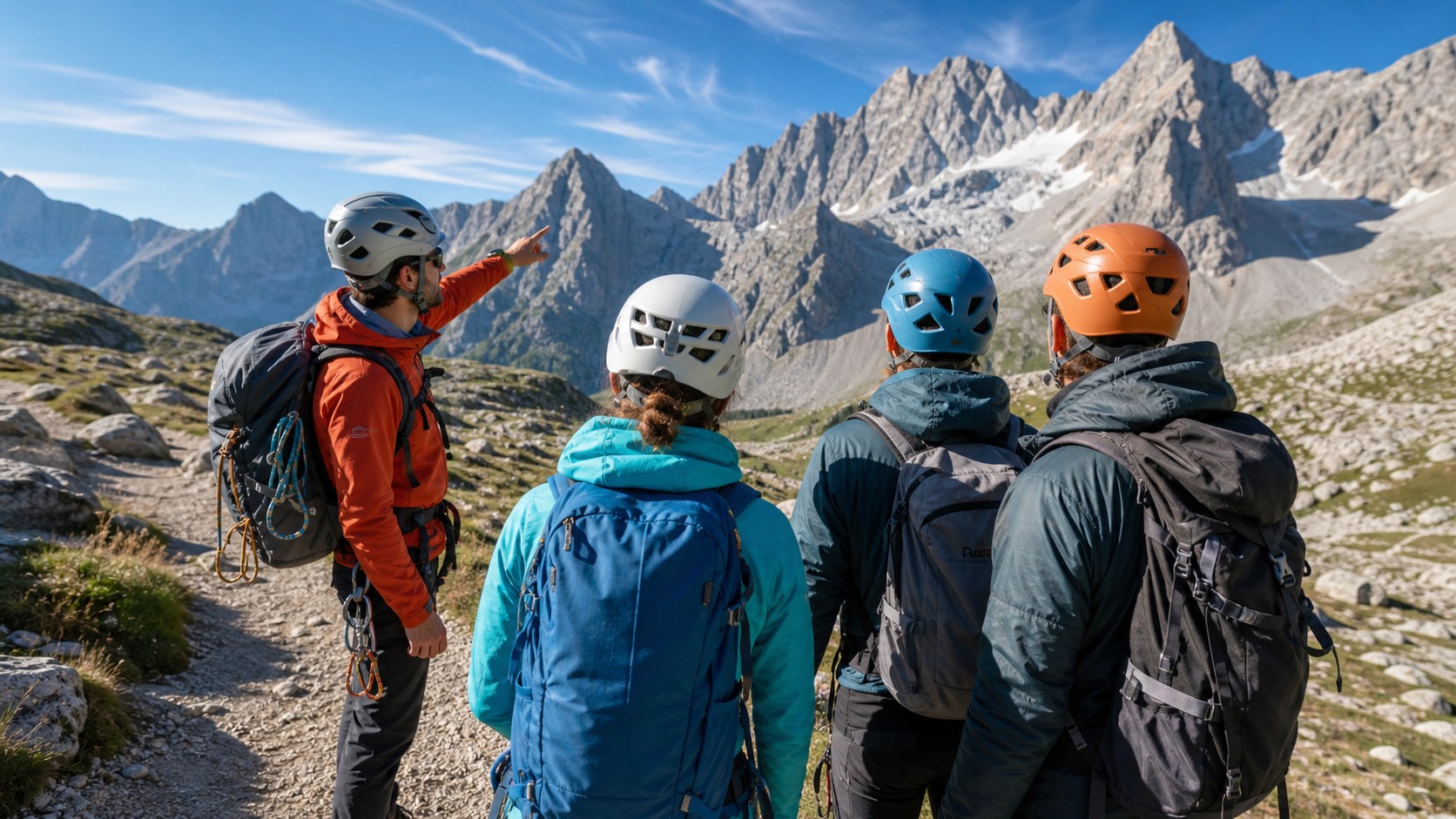
Beginners should choose partners and guides carefully. A good guide explains the plan, sets a realistic pace, checks understanding, watches conditions, and makes conservative decisions. Good partners communicate honestly about fatigue, fear, symptoms, and expectations. A mountain group is only as strong as its willingness to pay attention to one another.
Group mismatch can create problems. If one person wants a fast summit push while another is learning basic movement, the day can become tense or unsafe. Talk about goals before the climb. Decide whether the priority is education, scenery, summit success, skill practice, or simply a first experience.
The best beginner groups normalize questions. Nobody should feel embarrassed to ask about footing, layers, breaks, or turnaround timing. Curiosity is safer than pretending. The mountains are already demanding enough without adding silence, pride, or unclear expectations to the route.
Turnaround Decisions Protect Future Climbs
Every beginner should understand that turning around is part of climbing. Weather, timing, altitude symptoms, injury, route confusion, rockfall, snow conditions, or group fatigue can all change the plan. Making that decision early is usually easier and safer than waiting until options narrow.
A turnaround plan should be discussed before departure. What time is too late to continue? What symptoms stop the climb? Who has authority to call it? What route is safest for descent? These questions may sound heavy for a beginner trip, but they reduce emotional pressure when decisions matter.
The most experienced mountain travelers often have the least dramatic attitude about turning back. They understand that a safe return is not the opposite of success. It is the condition that makes the next climb possible.
A Smart Beginner Progression
A strong beginner progression might begin with long hikes, then add scrambling, then a guided snow skills course, then a nontechnical summit, then a high-altitude trek or simple alpine climb. The exact path depends on local terrain and personal goals, but the principle is consistent: add one new challenge at a time. Do not combine first altitude, first snow, first exposure, first overnight, and first technical gear on the same trip.
Keep a simple record after each climb. Note what worked, what hurt, what gear failed, when energy dropped, how weather affected the day, and which skills felt uncertain. This helps the next objective become smarter rather than merely bigger.
Mountain climbing is rewarding because growth is visible. The same slope that felt intimidating at first may later feel familiar. The same weather that once caused panic may become information. The same summit dream may become less important than the craft of moving well. That is when a beginner starts becoming a climber. Progress is not only about harder peaks; it is about calmer decisions in more complicated places.