Famous Mountain Treks Are Famous for Different Reasons
The world’s most famous mountain treks are not interchangeable bucket-list items. Some are famous for altitude, some for cultural history, some for hut systems, wildlife, glaciers, ancient paths, or the simple drama of walking for days beneath huge peaks. Everest Base Camp, the Inca Trail, Kilimanjaro, the Tour du Mont Blanc, Torres del Paine, the Annapurna region, and other celebrated routes all ask different things from travelers. A trek that is perfect for one person may feel crowded, too high, too structured, or too remote for another. The best choice depends on the kind of mountain experience you want: a physical challenge, a cultural journey, a scenic circuit, a first high-altitude test, or a classic route that deserves its reputation when approached with patience.
A: Tour du Mont Blanc sections, supported Himalayan foothill routes, or guided lower-altitude classics often suit prepared first-timers.
A: No, but altitude, cold, distance, and pacing make it a serious trek that requires preparation.
A: It combines mountain walking, archaeological sites, cloud forest, stone paths, and a dramatic arrival at Machu Picchu.
A: Yes. The route is nontechnical, but summit altitude and pacing make it demanding.
A: The Tour du Mont Blanc and many Dolomites routes are strong choices for huts, food, villages, and scenery.
A: Choose shoulder seasons, early starts, less common variants, smaller groups, and routes with multiple lodging options.
A: Some require guides or licensed operators, while others can be self-guided if your experience and logistics are strong.
A: Train with long hikes, hills, loaded packs, descents, back-to-back days, and any altitude or terrain-specific preparation.
A: Yes, when the route fits your goals and you approach it with patience, preparation, and respect.
A: The best treks combine physical effort, changing landscapes, cultural context, and enough time for the journey to deepen.
Everest Base Camp for Himalayan Scale
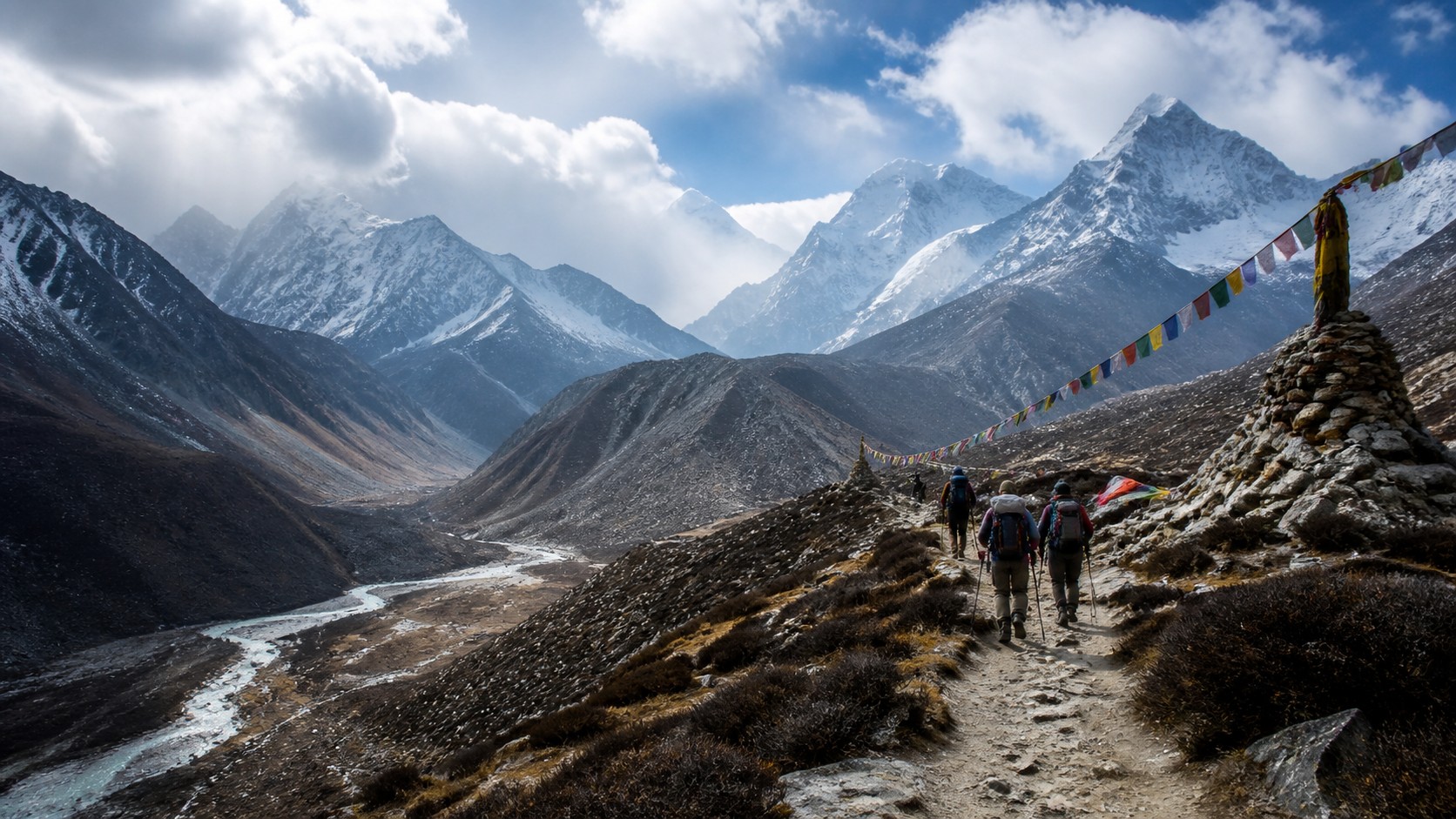
Everest Base Camp is famous because it gives trekkers access to the scale of the Himalaya without requiring technical climbing. The route moves through Sherpa villages, suspension bridges, monasteries, stone paths, and high valleys before reaching the world beneath Everest. The appeal is not only the final viewpoint. It is the gradual sense of entering a landscape where mountains dominate every conversation, meal, and morning.
The challenge is altitude and pacing. The trek is not technically difficult for most fit hikers, but the elevation makes rushing unwise. Good itineraries include acclimatization days, conservative gains, and enough time for the body to adapt. Travelers should choose operators carefully, respect local communities, and remember that the return journey is part of the trek, not an afterthought.
Everest Base Camp suits travelers who want cultural depth with their mountain scenery. It is popular, yes, but it remains powerful when trekked with respect, patience, and realistic expectations.
The Inca Trail for History and Arrival
The Inca Trail in Peru is famous because the walk itself is part of the historical experience. Stone paths, cloud forest, passes, ruins, and changing vegetation build toward the final arrival at Machu Picchu. Few treks have such a strong sense of narrative. The destination is known around the world, but the trail gives that destination a slower, more embodied meaning.
Permits and guide requirements shape the planning. Travelers need to book well ahead, train for steep steps and altitude, and understand that the route can feel demanding even though it is relatively short. The trail is not only a scenic approach; it is a protected cultural corridor. Treating it that way makes the journey richer.
The best trips leave room for the smaller moments between famous sites. Mist lifting from the forest, a guide explaining how stonework fits the mountainside, or a quiet pause near a ruin can matter as much as the postcard arrival. Travelers who rush toward Machu Picchu miss much of what makes the route endure.
The Inca Trail is best for travelers who want a compact trek with history, landscape, and a dramatic finish. Those who dislike fixed permits or busier classic routes may prefer alternative Andean treks, but the original remains famous for good reason.
Kilimanjaro for a Nontechnical Summit Goal
Mount Kilimanjaro attracts trekkers because it offers a famous high summit without technical climbing. The mountain rises through several ecological zones, from cultivated foothills and forest to moorland, alpine desert, and the cold summit zone. That progression gives the trek a strong sense of movement. Each day feels different.
Kilimanjaro’s difficulty is often underestimated. The summit is very high, and altitude is the defining challenge. Longer routes with better acclimatization are generally wiser than compressed itineraries that appear convenient. Summit night can be cold, slow, and mentally demanding. Reaching the top is exciting, but a safe descent matters just as much.
This trek suits travelers who want a clear objective and are willing to train for endurance, patience, and altitude. It is not a technical climb, but it is still a serious mountain experience.
Tour du Mont Blanc for Alpine Variety
The Tour du Mont Blanc is famous for its variety. The route circles the Mont Blanc massif through France, Italy, and Switzerland, linking valleys, passes, villages, huts, meadows, glaciers, and mountain views. Unlike a summit-focused expedition, this trek is about movement through a living alpine landscape. Food, lodging, language, and trail culture are part of the appeal.
It is also flexible. Trekkers can choose guided or self-guided versions, hut stays or hotels, full circuits or shorter sections. That flexibility makes it one of the best famous treks for people who want dramatic scenery without extreme altitude. The challenge comes from repeated elevation gain, long days, and the discipline to pace yourself across the whole route.
Because the route passes through settled valleys as well as high country, it rewards travelers who enjoy contrast. One day may feel pastoral and sociable, while the next brings a steep climb toward a pass with glaciers across the skyline. That shifting tone keeps the circuit from feeling repetitive.
The Tour du Mont Blanc is ideal for travelers who want comfort, scenery, and a classic European mountain rhythm. It can be crowded in peak season, so timing and lodging choices matter.
Torres del Paine for Patagonia’s Weather and Drama
Patagonia’s Torres del Paine routes are famous for wind, granite towers, lakes, glaciers, and weather that can change the mood of a day in minutes. The W Trek and longer circuits give travelers access to some of the most dramatic landscapes in South America. The scenery can feel almost theatrical, but the walking remains grounded in practical decisions about layers, timing, and conditions.
The main challenge is not extreme altitude. It is weather, logistics, and demand during popular seasons. Campsites and refugios can book out early, and wind or rain can reshape plans quickly. Travelers should prepare for rough conditions even when forecasts look friendly.
Torres del Paine is best for hikers who want big scenery and can stay flexible. The famous views are extraordinary, but the trek is more satisfying when travelers accept Patagonia’s unpredictability as part of the experience.
Annapurna and Nepal’s Other Classic Routes
The Annapurna region shows why Nepal is more than one famous trek. Annapurna Base Camp, sections of the Annapurna Circuit, Mardi Himal, and other routes offer villages, terraced fields, forests, high ridges, and enormous mountain faces. The region can feel more varied and culturally layered than travelers expect if they look beyond a single headline itinerary.
Road development has changed some classic routes, so planning matters. Trekkers should research current trail conditions, transportation options, altitude profiles, and whether a chosen route still delivers the walking experience they want. A good local operator or current route report can make a major difference.
This is also a region where pacing shapes connection. Tea house stops, conversations over dal bhat, and gradual changes in vegetation give the trek a human scale beside the mountain scale. Choosing a slightly less hurried itinerary can make the route feel less like a checklist and more like a journey through lived-in valleys.
Annapurna treks are excellent for travelers who want Himalayan scenery with several difficulty levels. They reward thoughtful route choice rather than automatic reliance on an old reputation.
The Haute Route and Other High Alpine Classics
The Haute Route between Chamonix and Zermatt is one of the great alpine journeys, especially in its trekking versions that move between high passes, huts, valleys, and views of major peaks. It is more demanding than many casual walking holidays but less technical than serious alpine climbing when planned as a trek. The reward is a strong sense of crossing through high mountain country.
High alpine classics require weather awareness and fitness. Snow conditions, pass closures, hut reservations, and route variants can all matter. Trekkers should be honest about exposure, long descents, and the ability to handle consecutive demanding days. The Alps make logistics efficient, but they do not remove mountain seriousness.
These routes suit hikers who want a step beyond easier hut walks. They combine culture, comfort, and challenge in a way few regions can match.
Laugavegur, Dolomites, and Treks With Distinct Atmosphere
Some famous treks stand out because their landscapes feel unlike anywhere else. Iceland’s Laugavegur route crosses volcanic color, hot springs, black sand, snow patches, and wide open terrain. The Dolomites offer pale towers, rifugios, via ferrata culture, meadows, and dramatic passes. These treks prove that fame can come from atmosphere as much as elevation.
Distinctive routes often require specific preparation. Iceland demands weather flexibility, river-crossing awareness on some itineraries, and respect for fragile volcanic terrain. The Dolomites require hut planning, comfort with steep trails, and decisions about whether to include protected climbing routes. The route’s personality should guide packing and expectations.
These trips are especially good for travelers who remember texture and mood. The color of mineral hills, the sound of boots on limestone, the smell of a hut dinner after a wet day, or the sudden clearing of cloud can become the strongest memory. A route does not need the world’s highest peaks to feel iconic.
These treks are ideal for travelers who want mountain drama with a strong regional identity. They are famous because the setting feels unmistakable.
How to Choose Among Famous Treks
Start with the experience you want rather than the name you recognize. If altitude is the dream, Everest Base Camp or Kilimanjaro may fit. If history matters, the Inca Trail is hard to match. If comfort and variety appeal, the Tour du Mont Blanc or Dolomites may be better. If weather drama and wild scenery call to you, Patagonia or Iceland may be worth the extra planning.
Then consider season, crowds, permits, support, fitness, altitude, and how much structure you want. Famous routes are famous partly because many people want them at the same time. A great experience often depends on booking early, choosing shoulder dates, starting early in the day, or selecting a route variant that protects the mood.
The best trek is not the one with the biggest reputation. It is the one whose difficulty, culture, scenery, and rhythm match the traveler standing at the trailhead.
Famous Does Not Mean Easy
Popularity can create a false sense of safety. A famous trek may have lodges, guides, signs, or established camps, but weather, altitude, injury, stomach illness, fatigue, and crowd pressure still matter. Travelers should prepare seriously even when a route appears mainstream. Training, insurance, gear, acclimatization, and route knowledge are not optional decorations.
Responsible travel matters too. Famous treks can strain trails, water systems, waste management, porters, guides, and local communities. Choose operators with fair labor practices, respect local rules, carry out waste where required, and treat cultural places with care. A famous route remains worth experiencing only if travelers help protect what made it famous.
It also helps to define success before the trip begins. On mountain treks, a strong decision to rest, descend, change plans, or skip a crowded viewpoint can be wiser than forcing the itinerary. The travelers who enjoy classic routes most are usually the ones who treat judgment as part of the adventure.
When approached well, the world’s classic mountain treks still deliver something rare. They combine effort, landscape, story, and time in a way that ordinary sightseeing cannot. You do not just see the mountains. You enter their rhythm one day at a time.