Scuba Diving Starts With Calm, Not Bravery
Scuba diving can look intimidating from the surface, but the beginner path is designed to slow everything down. Good instruction teaches you how to breathe steadily, equalize your ears, manage buoyancy, communicate with hand signals, and solve small problems before they become stressful. The goal is not to act fearless. The goal is to build enough comfort that the underwater world becomes quiet, interesting, and manageable. A first scuba journey usually begins with a discovery dive or open-water certification course, then grows through easy reef dives, patient guides, and honest self-awareness. Beginners do best when they choose calm conditions, reputable instructors, simple gear decisions, and dive sites that match their current confidence.
A: You need basic water comfort and course-required swim ability, but you do not need to swim like an athlete.
A: It is enough to try scuba under close supervision, but certification is needed if you want to keep diving more independently.
A: Signal your instructor, pause, breathe slowly, and ascend if needed. Good beginner diving allows room for nerves.
A: It should not hurt when you equalize properly. Ear pain means you should stop descending and address the pressure.
A: Start with a well-fitting mask if you want, then wait until you understand your diving habits before buying major gear.
A: Training limits vary by agency and course, but early dives should stay conservative and matched to conditions.
A: Many divers use prescription masks or contact lenses, but you should discuss fit and comfort before the dive.
A: Follow your training agency and dive operator guidance, and leave a conservative surface interval before flights.
A: The best first destination has warm calm water, good visibility, patient instructors, and simple dive logistics.
A: Dive regularly in easy conditions, practice buoyancy, ask for feedback, log what you learn, and stay within your limits.
Start With the Right First Experience
Beginners usually enter scuba through one of two doors: a discovery dive or a certification course. A discovery dive is a supervised introduction that lets you try scuba without committing to full training. It is useful if you are curious, traveling, or unsure how you will feel underwater. A certification course is more complete. It teaches skills, safety procedures, planning, equipment use, and open-water practice so you can continue diving within your training limits.
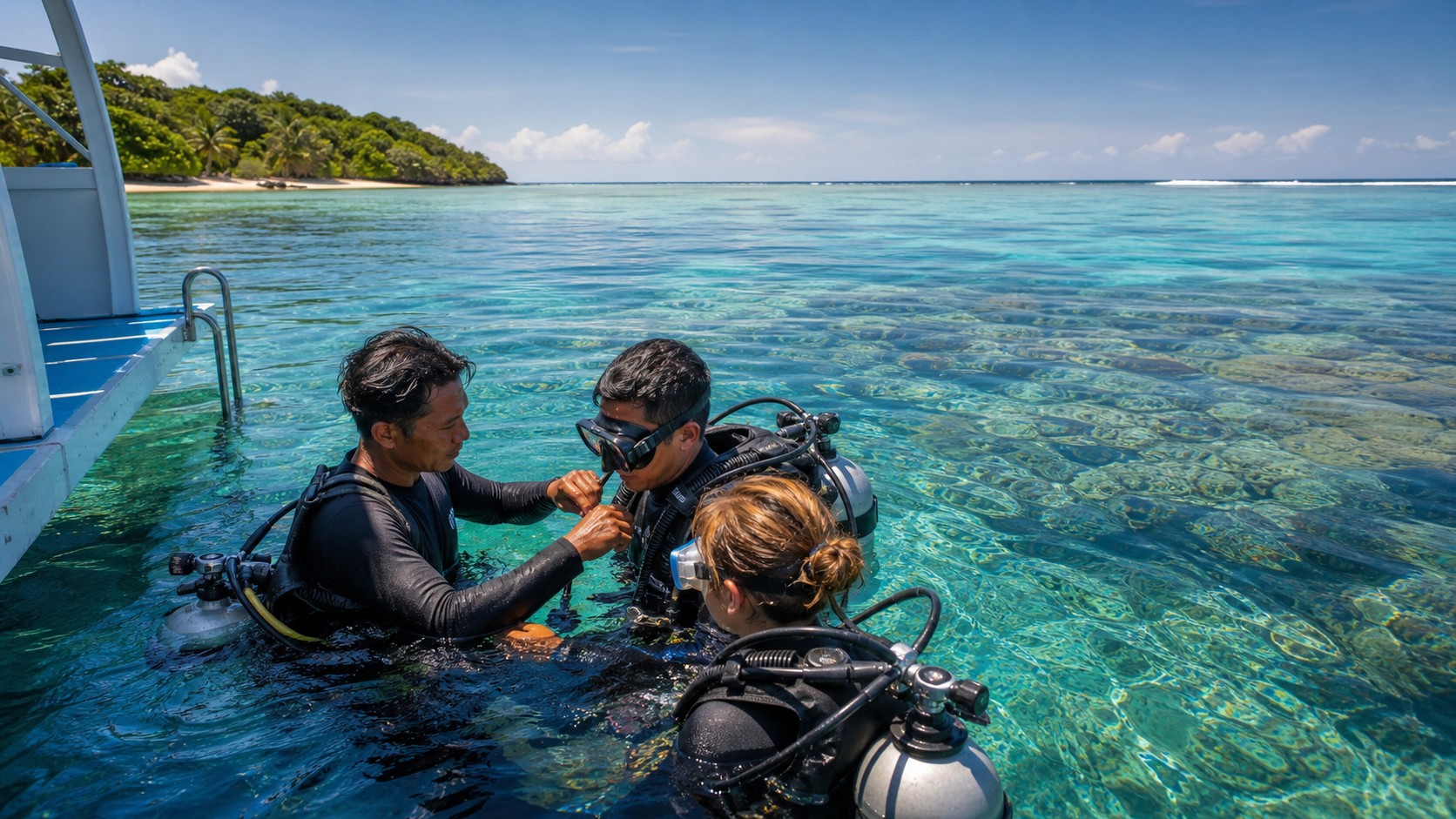
A discovery dive should still feel structured. The instructor should explain the gear, signals, breathing, equalization, and what will happen if you feel uncomfortable. The water should be calm and shallow enough for a controlled first attempt. If the briefing feels rushed or the group looks too large, that is a reason to pause.
A full certification is the better choice if you already know you want to keep diving. It takes more time, but it gives beginners a foundation that makes future trips safer and more enjoyable. It also helps you understand what good dive leadership looks like.
Whichever path you choose, do not measure success by depth. A calm shallow dive where you breathe well and notice marine life is a better beginning than a deeper dive that leaves you tense. Confidence is built through repeatable comfort, not dramatic first-day achievements.
Understand What Certification Actually Gives You
Open-water certification is not a badge that means every dive is appropriate. It means you have learned entry-level skills and can dive within the conditions, depth limits, and supervision expectations of your training. Beginners should think of certification as permission to keep learning, not permission to ignore judgment.
The course usually includes knowledge development, confined-water skills, and open-water dives. You learn how pressure affects air spaces, why slow ascents matter, how to clear a mask, how to recover a regulator, how to check air, and how to communicate. These skills may feel awkward at first, which is normal. Repetition is the point.
Choose an instructor whose pace helps you understand the skill instead of merely performing it once. A good course gives you time to ask why a procedure matters, what it should feel like when done correctly, and how to recognize small problems early. That kind of teaching becomes valuable long after the course ends.
Many new divers benefit from doing the academic portion before travel, then completing water training in a destination with good conditions. Others prefer finishing everything close to home so vacation dives can feel more relaxed. The right choice depends on schedule, budget, water comfort, and learning style.
Breathing, Buoyancy, and Equalizing Are the Big Three
The first skill that changes scuba from strange to comfortable is breathing. You breathe through your mouth, slowly and continuously, without holding your breath. At first the sound can feel loud inside the regulator, but many divers come to find it calming. A steady breathing rhythm helps control stress and supports buoyancy.
Buoyancy is the art of neither sinking into the reef nor floating upward unintentionally. Beginners often use their hands too much or kick constantly because they have not yet learned how breath, weights, and the buoyancy compensator work together. A patient instructor will help you slow down and make smaller adjustments.
Equalizing protects your ears as pressure changes. You should equalize early and often, especially while descending. If your ears do not clear, stop descending, signal your buddy or guide, rise slightly, and try again. Pushing through ear pain is one of the clearest beginner mistakes to avoid.
These skills improve together. Calm breathing supports buoyancy, good buoyancy reduces frantic movement, and relaxed movement gives you more attention for equalizing and awareness.
Choose Beginner-Friendly Dive Conditions
A first dive trip should be built around easy conditions. Warm water, good visibility, mild currents, straightforward entries, and experienced beginner guides all make a difference. A famous dive site is not automatically a good beginner site. Some famous sites involve current, depth, boat traffic, overhead environments, or fragile reefs that are better saved for later.
Look for destinations and operators that clearly welcome new divers. Bonaire, parts of the Caribbean, the Florida Keys, Cozumel’s easier sites with the right guide, Hawaii’s beginner reefs, and many Red Sea resort areas can be friendly when conditions align. The specific dive shop matters as much as the destination.
Ask direct questions before booking. How many divers are in a beginner group? What is the maximum depth? Is there a checkout or refresher option? What happens if someone feels anxious? Are rental masks available in different sizes? The answers reveal the operator’s culture.
Boat logistics also affect beginner comfort. Short rides, stable ladders, clear entry instructions, and a crew that helps with gear can make the first day feel organized instead of chaotic. If shore diving is available, ask whether the entry is sandy, rocky, current-prone, or better suited to experienced divers.
A good beginner site leaves you with attention to spare. You should have enough mental space to notice fish, coral, sand ripples, light, and your own breathing.
Gear Decisions Should Stay Simple at First
New divers do not need to buy everything immediately. A well-fitting mask is often the best first purchase because leaks can ruin comfort quickly, and masks are personal. Fins, snorkel, and exposure protection may follow if you know you will dive regularly. Regulators, buoyancy compensators, computers, and wetsuits can usually wait until you understand your preferences.
Rental gear should still be treated seriously. Check that the mask seals, the fins do not pinch, the buoyancy compensator inflates and deflates, the gauges are readable, and the exposure suit fits well enough to keep you comfortable. Ask questions during setup. Good crews expect beginners to ask.
A dive computer is useful once you are certified and diving more independently, but it does not replace training or attention. Beginners should understand depth, time, air pressure, ascent rate, and safety stops rather than outsourcing awareness to a screen.
The best early gear choice is the one that removes distraction. Comfort helps you learn.
Learn the Safety Habits Before They Feel Urgent
Scuba safety is built from ordinary habits repeated every dive. Check your gear. Listen to the briefing. Stay with your buddy or assigned guide. Monitor your air. Equalize before discomfort builds. Ascend slowly. Protect the reef. Signal early if something feels wrong. None of these habits are dramatic, but together they keep a dive calm.
Beginners should also understand that calling a dive is allowed. If you feel unwell, anxious, cold, seasick, or unsure, you can choose not to dive. Good dive teams respect that decision. Pressure to continue when you are uncomfortable is a poor sign.
The buddy system is not decorative. Buddies should know each other’s signals, air status, and comfort level. Even on guided dives, staying aware of the person near you builds responsibility.
The safest new divers are not the boldest. They are the ones who communicate early, stay within limits, and keep learning.
Respect the Reef and the People Guiding You
Beginner divers sometimes focus so hard on themselves that they forget the environment. That is understandable, but reef awareness matters from the first dive. Do not touch coral, chase marine life, stand on reef, stir up sand, or collect souvenirs. Good buoyancy is not only a personal skill; it is a conservation skill.
Dive guides and instructors also deserve respect. They are managing people, conditions, boats, equipment, and environmental rules at the same time. Listen closely, arrive on time, be honest about experience, and tip where tipping is customary. A respectful diver makes the whole boat safer.
Photography should come later if it distracts from control. Many beginners enjoy the dive more when they leave the camera behind and focus on breathing, trim, marine life, and the guide’s signals. Once buoyancy improves, photos become easier and less disruptive.
Marine life encounters are better when they are not forced. Let turtles, rays, sharks, fish, and other animals move naturally. The best underwater memories usually come from patience rather than pursuit.
Build Confidence After Certification
After certification, choose easy dives for a while. Repeating calm reef dives is not boring; it gives your body time to make skills automatic. The more relaxed you become with breathing, buoyancy, and awareness, the more you will see. New divers often discover that confidence grows through simple dives done well.
A refresher is wise if months or years pass between dives. Specialty courses can help later, but they should match real goals. Peak performance buoyancy, underwater naturalist, navigation, nitrox, or boat diving may be more useful early than chasing advanced labels for their own sake.
Dive with people who support careful progress. A buddy or guide who respects your pace can make a beginner feel capable, while an impatient group can turn manageable nerves into pressure. The social environment around a dive often affects confidence as much as the site itself.
Keep a log of conditions, gear, weights, exposure suit, what felt good, and what felt difficult. That small habit helps you learn from each dive instead of starting over every trip.
Scuba becomes more rewarding when confidence and humility grow together. The ocean is generous, but it is never something to treat casually.
Plan Your First Dive Trip Around Ease
For a first scuba-focused vacation, reduce friction wherever possible. Stay near the dive shop, avoid tight flight schedules after diving, choose a hotel that understands wet gear, and leave rest time between boat mornings. If traveling with non-divers, pick a destination with beaches, food, nature, or culture they will enjoy too.
Remember the no-fly guidance after diving. Divers generally leave a surface interval before flying, and many agencies recommend more time after multiple dives or repetitive dive days. Plan the final day for beach time, sightseeing, or gentle snorkeling instead of squeezing in one more tank.
Budget for the unglamorous pieces as well as the dream dives. Certification fees, marine park charges, rental gear, tips, transportation, prescription mask rental, seasickness medication, and extra rest days can all affect the real cost. A trip with enough margin usually feels safer and more relaxed.
A successful beginner scuba trip is not measured by the number of dives alone. It is measured by whether you came home safer, calmer, more curious, and ready to return underwater with better awareness and a steadier sense of judgment.