Snowboarding Feels Awkward Before It Feels Smooth
Snowboarding has a different learning curve from skiing. Both feet are attached to one board, the body stands sideways, and the first day often includes plenty of sitting, sliding, falling, and laughing at how strange balance can feel. That awkward beginning is normal. The goal is not to master carving immediately. The goal is to learn how to stand, fall safely, skate with one foot out, control edges, stop on heel and toe sides, use beginner lifts, and link gentle turns without panic. A good snowboarding start depends on lessons, patient terrain, protective clothing, realistic energy, and the willingness to repeat simple movements until they finally click.
A: Snowboarding can feel awkward at first, but lessons and gentle repetition make balance and edge control easier.
A: A lesson is strongly recommended because snowboarding basics are difficult to guess safely from watching others.
A: An instructor or rental shop can help you test whether regular or goofy feels more natural.
A: Falls are common, but protective gear, soft snow, good instruction, and controlled terrain can reduce soreness.
A: Wear waterproof outerwear, warm layers, helmet, goggles, gloves or mittens, and snowboard socks.
A: Beginners learn to stop using heel-side and toe-side edges before linking turns smoothly.
A: They can feel awkward at first because one foot is unstrapped, but skating practice and beginner lifts help.
A: Move up only when you can stop, turn both ways, skate, unload lifts, and stay calm on easy terrain.
A: Yes, but beginners may need separate lesson time and simple meeting plans instead of full-day group riding.
A: Take lessons, repeat easy drills, rest before exhaustion, ask for one cue at a time, and practice linked turns patiently.
Take a Snowboard Lesson Early
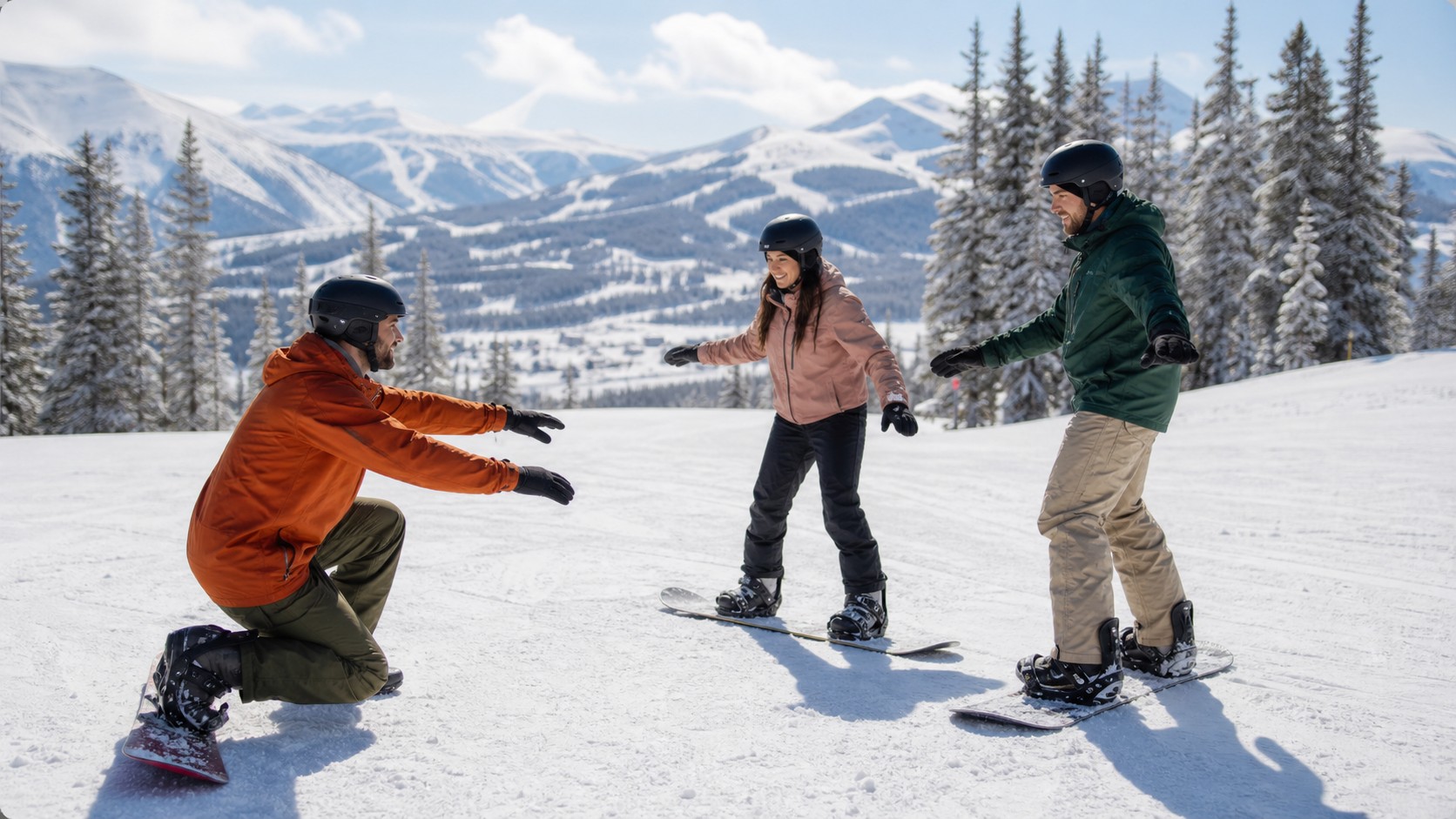
A snowboard lesson helps beginners understand the sideways stance before frustration takes over. Instructors teach skating, one-foot gliding, getting up, falling safely, heel-side stops, toe-side stops, basic turns, and lift unloading. These skills are difficult to guess from watching experienced riders.
Friends may mean well, but snowboarding is easy to explain badly. A confident rider may forget how awkward the first hours feel or may take a beginner onto terrain that is too steep. A lesson creates a controlled progression and protects the relationship from becoming a coaching argument.
Group lessons can work well for beginners who like seeing others struggle through the same stage. Private lessons can help nervous adults, mixed athletic backgrounds, or travelers with limited time. The best format is the one that keeps instruction calm and specific.
Book lessons early during busy winter weeks. Snowboard instructors and beginner sessions can fill quickly, especially at resorts with strong holiday demand.
Choose Your Stance Without Overthinking It
Snowboarders ride with one foot forward. Left foot forward is called regular, and right foot forward is called goofy. Beginners sometimes worry too much about choosing correctly before they start. Instructors can help test natural stance, and rental shops can adjust bindings if needed.
A stance should feel balanced enough to learn, not perfect immediately. Your dominant foot, skateboard or surf experience, and how you naturally slide can offer clues, but the first lesson will reveal more than theory.
Do not be embarrassed if the first guess feels wrong. Many beginners need a little time to understand whether discomfort comes from true stance mismatch, boot fit, fear, or simply the unfamiliar sideways position. A calm instructor can help separate those issues.
Binding angles and width also affect comfort. Beginners do not need aggressive setups. A neutral, forgiving stance chosen by a knowledgeable rental technician or instructor is usually enough for the first days.
If something feels painfully awkward, ask. Small setup changes can make skating, standing, and turning easier.
Learn to Fall and Get Up
Falling is part of beginner snowboarding, so learning to fall matters. Try to avoid catching yourself with stiff straight arms. Keep movements compact, protect wrists, and listen to instructor guidance about falling on forearms, knees, or padded areas depending on the situation.
Wrist guards, impact shorts, and knee pads can help some beginners feel more willing to practice. They do not make falls meaningless, but they can reduce fear and soreness. A helmet is standard and should fit correctly.
Getting comfortable on the ground sounds strange, but it helps. Beginners spend time sitting to strap in, kneeling to reset, and rolling to stand. If those movements feel less embarrassing, the whole day becomes less tense.
Getting up can be surprisingly tiring. Many riders find it easier to roll onto the toe-side edge and stand from hands and knees, while others first practice from the heel side. The best method depends on mobility, slope angle, and instruction.
A beginner who can fall calmly and get up efficiently saves energy for the skills that matter. That is why these basics are worth practicing rather than rushing past.
Understand Edges Before Chasing Speed
Snowboarding is built around edge control. The heel edge and toe edge let the board grip, slow, stop, and turn. Catching the wrong edge is one of the classic beginner falls, and it happens when the downhill edge digs into the snow unexpectedly.
Instructors usually teach side slipping, falling leaf movements, and controlled stops before linked turns. These drills may not look stylish, but they teach the relationship between pressure, board angle, and speed. Skipping them can make later turns feel scary.
Think of edges as a volume dial rather than an on-off switch. Too little edge and the board runs away; too much edge and movement becomes jerky. Beginners improve when they learn to adjust pressure gradually.
Speed should come after control. Beginners who point the board straight downhill too early often panic and fall hard. A better approach is to learn how to move across the slope, stop, reset, and gradually let turns connect.
Edges are the language of snowboarding. Once they make sense, the board starts feeling less like a plank and more like a tool.
Practice Skating and Lift Unloading
Skating means moving with one foot strapped in and the other foot pushing on the snow. It is essential for flat areas, lift lines, and getting away from chairlift unloading zones. Beginners often dislike skating at first, but it makes the mountain much easier to navigate.
Chairlifts can be stressful because snowboarders unload with one foot out. Practice one-foot gliding on a gentle slope before taking a chair. Keep the free foot placed against the board, look where you want to go, and glide away from the unloading area before sitting down to strap in.
Strapping in efficiently also helps the day flow. Move to the side of the run, sit or stand where you are visible, clear snow from the binding, and take a breath before joining traffic. Rushing this small routine often creates bigger awkwardness.
Tell lift staff if you are new, and ride beginner lifts before more crowded chairs. Falling while unloading happens, and staff are used to helping. The important thing is to move clear when safe and stay predictable.
Lift confidence grows through repetition. A beginner who handles the lift calmly has much more energy for riding.
Dress for Sitting in Snow
Snowboard beginners spend more time sitting, kneeling, and getting up than experienced riders. Waterproof pants, warm gloves or mittens, a good jacket, base layers, helmet, goggles, and a neck warmer matter. Cotton layers are a poor choice because they hold moisture and chill quickly.
Gloves are especially important. Hands touch the snow constantly while strapping in, pushing up, and recovering from falls. Waterproof mittens may be warmer than gloves for some beginners, while wrist guards may require a compatible fit.
Layering should leave room for movement. Snowboarding asks for bending, twisting, sitting, standing, and reaching bindings. Clothing that feels fine in the lodge can feel restrictive once you start moving on snow.
Boots should feel snug but not painfully tight. Snowboard boots are usually more comfortable than ski boots, but heel lift, pressure points, or poor lacing can still affect control. Ask the rental shop for help if your foot moves too much or goes numb.
Comfort is not vanity. Staying dry and warm gives you more patience for repetition, which is exactly what snowboarding requires.
Pick Terrain That Lets Skills Click
Beginner snowboard terrain should be gentle, wide, and uncrowded. A slope that is too flat can be frustrating because the board stalls, while a slope that is too steep creates speed before the rider has control. The ideal learning area has enough pitch to glide slowly and enough room to stop safely.
Avoid narrow cat tracks early. Snowboarders need confidence in edge changes and speed control before long flat traverses or crowded connector runs feel manageable. Ask instructors which green runs are truly friendly for new snowboarders.
Snow texture matters too. Soft groomed snow is kinder than icy hardpack, while heavy wet snow can grab the board and tire beginners quickly. If conditions are difficult, keep goals modest and repeat basics.
Terrain parks are not beginner shortcuts. Jumps, rails, boxes, and side hits should wait until basic riding, stopping, and awareness are consistent. Learning to ride cleanly on groomed snow is the foundation.
The right terrain makes progress feel possible. You should be challenged by the movement, not frightened by the slope.
Manage Energy and Soreness
Snowboarding can make beginners sore in unexpected places: wrists, knees, hips, core, calves, and shoulders. Much of that comes from getting up repeatedly and tensing against the board. Short sessions, breaks, food, and hydration can make a huge difference.
A half-day lesson may be plenty for a true first day. Add a warm lunch, a few practice runs, and an honest stopping point. Riding until exhausted often leads to harder falls and slower learning.
The second day may feel better technically but worse physically if soreness appears. Stretch gently, sleep well, and choose easy terrain again before deciding whether to progress.
A successful beginner snowboard trip is one where you want another chance. Protect that desire by ending before the day turns sour.
Build Toward Linked Turns
Linked turns are the moment many beginners are waiting for, but they arrive through steps. First you learn to stop on each edge. Then you move across the slope, change direction, control speed, and gradually connect heel-side and toe-side turns without sitting down between them.
Toe-side turns often feel scarier because the body faces uphill and the rider must trust the edge without seeing the downhill world as clearly. Heel-side turns may feel easier at first, but both need practice. Be patient with whichever side feels stubborn.
A useful practice run may look boring from the lift. Repeating one edge change, one stop, or one gentle traverse is how the body learns. Snowboarding rewards repetition more than dramatic leaps in terrain.
Look in the direction of travel, keep knees soft, and let the board turn rather than forcing it with the upper body. Small movements work better than dramatic twisting.
Once linked turns appear, snowboarding changes quickly. The mountain starts to open, and the beginner begins to feel why the awkward first hours were worth it.
Keep the First Snowboard Trip Simple
Choose a resort with strong snowboard lessons, gentle terrain, easy rentals, and lodging that does not require long walks in boots. Plan one main learning goal per day. Do not mix the first lesson with terrain parks, powder ambitions, or long group missions.
Traveling with skiers can work, but expectations should be clear. Skiers may move around the mountain more easily at first, while snowboard beginners need repetition in one area. Meet for lunch rather than forcing everyone to ride together all morning.
A simple trip also gives weather and soreness room to exist. If the snow is icy, the lift line is busy, or your legs are tired, you can still have a good day by returning to basic drills and ending early.
A second lesson is often the best upgrade. Once the basic sensations are familiar, instruction becomes easier to absorb. Many beginners make their biggest improvement after the first awkward day.
Snowboarding rewards persistence. If you can stay patient through the clumsy beginning, the feeling of your first smooth linked turns can make the whole winter click.