Beginner Skiing Is About Control Before Speed
Learning to ski is not about looking graceful on the first day. It is about building enough control that the mountain starts to feel understandable: how to stop, turn, stand up, use lifts, manage speed, dress warmly, and choose terrain that matches your current ability. Beginners often struggle when they rush toward harder slopes before the basics feel steady. A better first ski trip starts with lessons, comfortable gear, realistic expectations, and a resort that treats learning as a real part of the mountain experience. Skiing becomes fun when your body trusts small movements and your mind stops fighting every patch of snow.
A: Skiing feels awkward at first, but lessons, gentle terrain, and patient repetition make the basics manageable.
A: A lesson is strongly recommended because it teaches stopping, turning, lift use, etiquette, and safer habits early.
A: Wear moisture-wicking layers, waterproof outerwear, ski socks, gloves, helmet, goggles, and neck protection.
A: Most beginners learn a wedge or snowplow first, then use turning to manage speed more smoothly.
A: Return to the rental shop or fitter. Sharp pain, numbness, or major pressure points should be adjusted.
A: Many beginners do best with a half-day lesson, breaks, lunch, and easy practice rather than skiing until exhausted.
A: Yes. Adults often learn well when they choose lessons, realistic terrain, and patient pacing.
A: Move up only when you can stop, turn, control speed, and stay calm on easier terrain.
A: Choose a resort with strong ski school, true beginner terrain, easy rentals, and lodging that reduces daily stress.
A: Confidence comes from repetition, good instruction, comfortable gear, rest, and small wins on terrain that fits.
Take a Lesson Before Bad Habits Set In
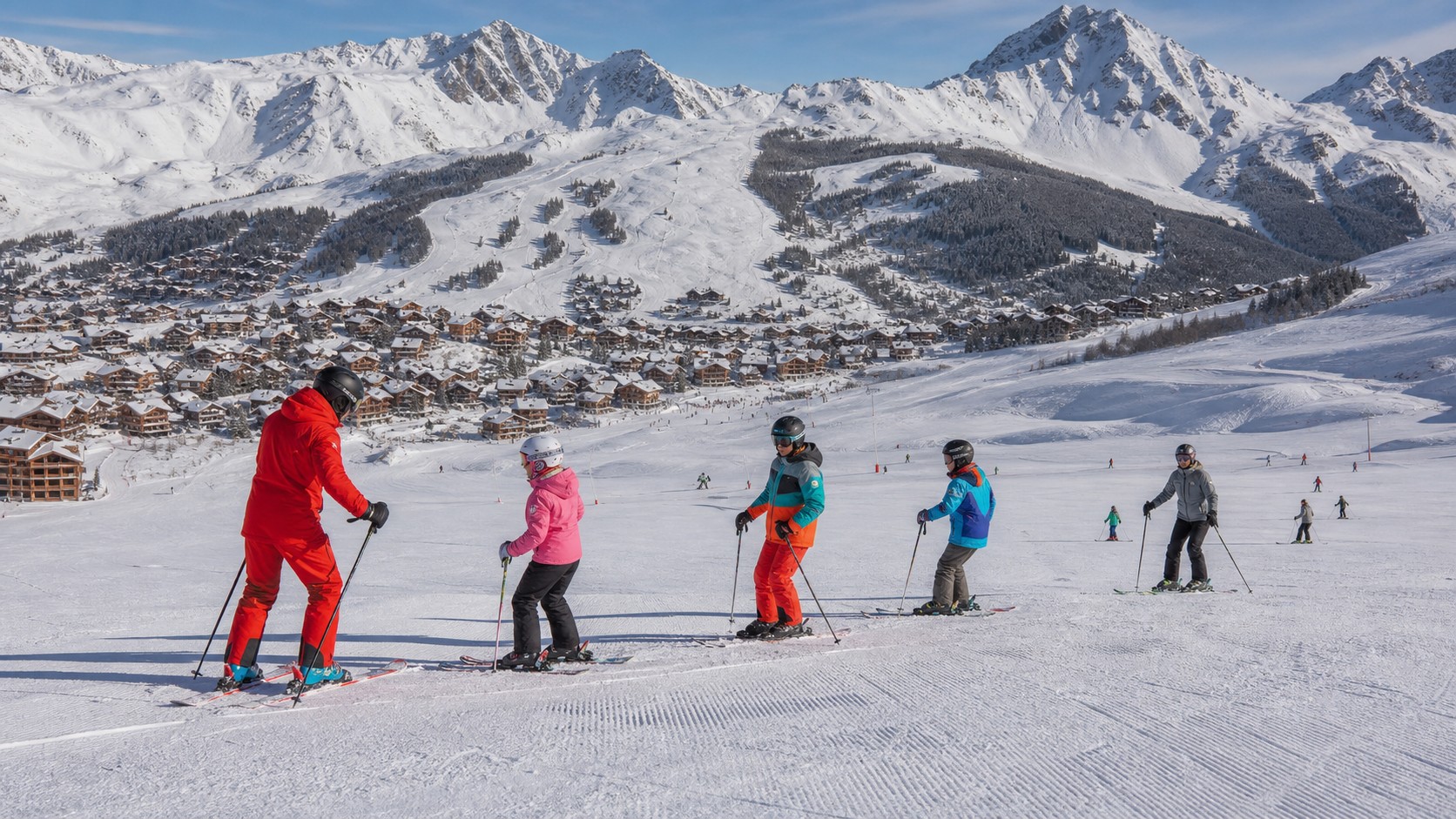
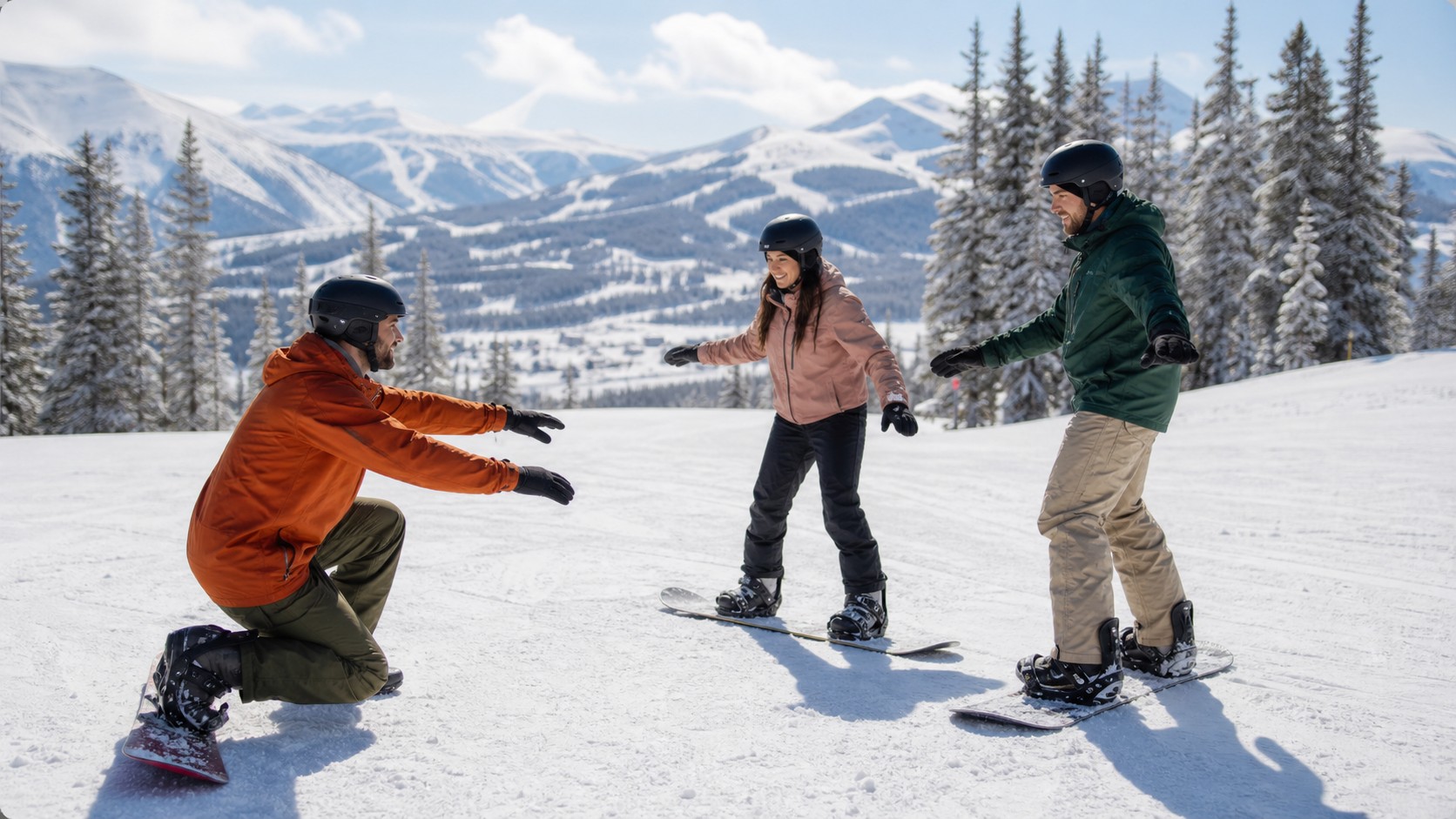
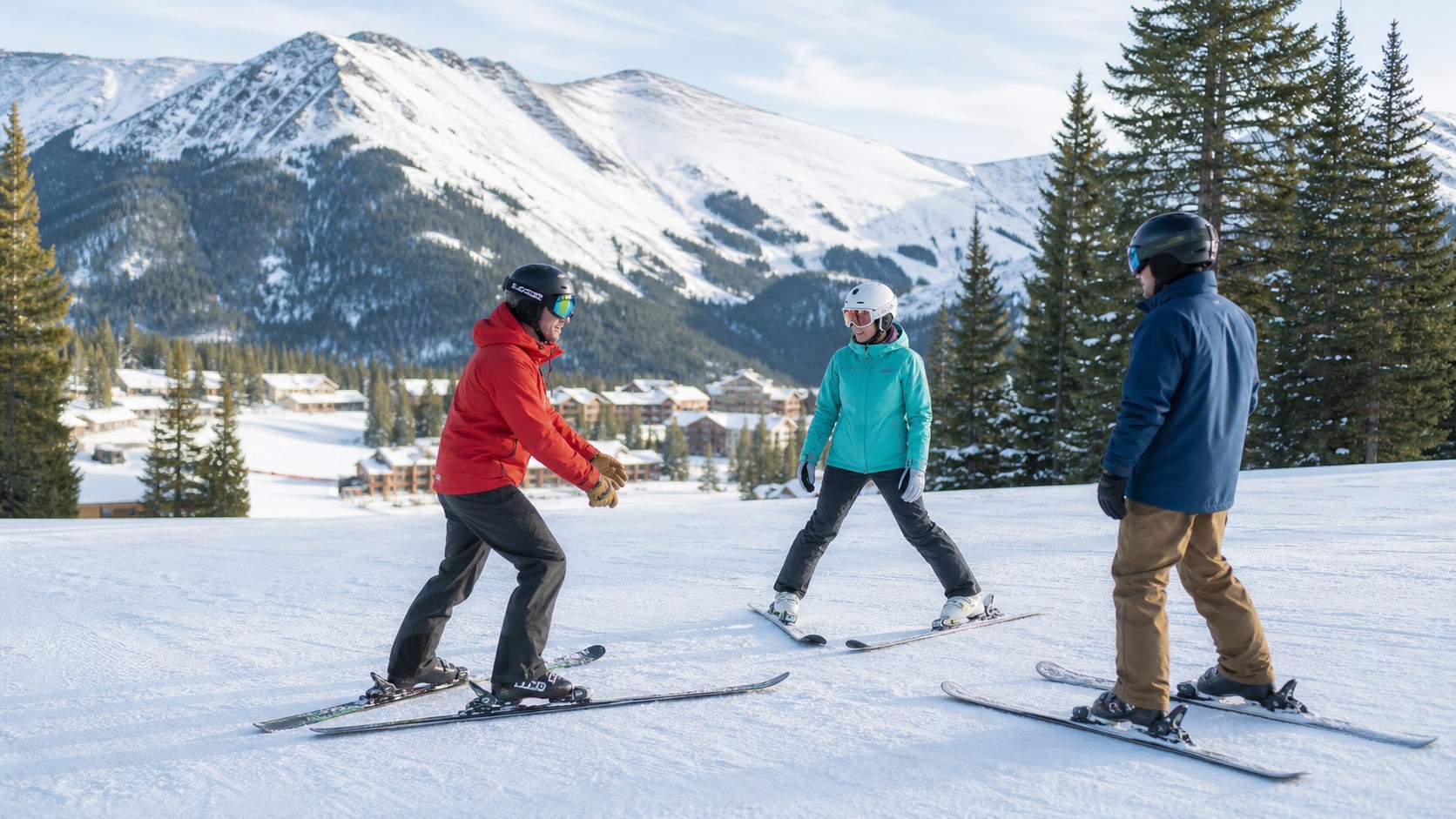
A first ski lesson is one of the best investments a beginner can make. Instructors teach stance, balance, stopping, turning, lift use, speed control, and how to move safely around other skiers. They also notice small habits that friends may miss, such as leaning too far back or twisting the upper body instead of steering with the legs.
Group lessons can be affordable and social, especially for first-timers who like learning with people at the same stage. Private lessons cost more but can help nervous adults, families, or travelers with limited time progress more quickly. Either option is better than spending the first day guessing.
Friends can mean well and still teach poorly. An experienced skier may forget how much explanation a beginner needs, or may drag a learner onto terrain that feels easy to them but frightening to someone new. Protecting the friendship can be another reason to hire an instructor.
A good instructor does not simply send beginners downhill. They build a sequence: flat-ground movement, gentle gliding, stopping, small turns, linked turns, and terrain progression. That sequence keeps confidence from collapsing.
Book lessons early during holidays or peak ski weeks. Beginner slots can fill quickly, and starting with a scheduled lesson gives the whole trip a calmer structure.
Choose Beginner Terrain Carefully
Beginner terrain should be gentle, wide, and separated from fast skiers whenever possible. A good learning area has easy lifts, clear runouts, patient instructors, and enough space to practice without feeling hunted by traffic. The color of a trail is less important than how it feels under your skis.
Not every green run is equally easy. Some are narrow cat tracks, crowded return routes, or flat traverses that frustrate new skiers. Ask ski school or guest services which runs are best for true beginners and which ones to save for later.
The best learning slopes also make stopping feel safe. If a run ends in a crowded lift maze, crosses faster traffic, or funnels into a narrow exit, it may be stressful even if the pitch is gentle. Beginners deserve terrain where mistakes have room.
Terrain progression matters. After the magic carpet or beginner lift, the next slope should introduce slightly longer gliding and turning without adding fear. A resort with several beginner steps is much easier than one where the jump from lesson hill to mountain feels huge.
Choose the terrain that lets you practice the same skill several times. Repetition is what turns skiing from survival into movement.
If a slope makes you defensive, go easier rather than forcing it. Confidence grows faster when challenge stays manageable.
Dress for Warmth, Movement, and Dryness
Cold, wet clothing can ruin a beginner ski day before technique has a chance. Dress in layers: a moisture-wicking base layer, insulating mid-layer, waterproof or water-resistant outer shell, ski socks, gloves or mittens, helmet, goggles, and neck protection. Avoid cotton because it holds moisture and gets cold.
Socks deserve attention. Thick socks may seem warmer, but they can bunch, reduce circulation, and make boots hurt. A proper ski sock is usually thinner, smooth, and designed for boots. Warm feet often come from fit and circulation, not bulk.
Goggles are more than a style choice. Wind, snow glare, flat light, and falling flakes can make beginners tense if they cannot see clearly. Choose lenses suited to the day’s light, and keep them dry rather than wiping the inside aggressively.
Beginners fall more often, sit in snow, and spend time standing still during instruction. Waterproof pants and gloves matter. Hand warmers can help, but they cannot fix poor layering or bad fit.
Dress so you can move. Clothing that is too tight, too bulky, or too warm for the day’s conditions can make learning harder.
Get Boots and Skis Fitted Properly
Ski boots are often the least comfortable part of learning, but they should not be unbearable. A rental technician should ask about ability, height, weight, and comfort, then help fit boots snugly. Toes may lightly touch the front when standing upright and pull back when knees bend. Sharp pain, numbness, or major pressure points should be addressed.
Skis for beginners are usually shorter and easier to turn than advanced skis. You do not need aggressive equipment on day one. The goal is control and forgiveness, not speed or status.
Tell the rental shop you are a true beginner. That helps them set bindings, choose skis, and avoid gear that expects stronger technique. If boots hurt badly after a few runs, go back. Small adjustments can change the day.
Do not judge boot fit while standing upright in the lodge for only a few seconds. Bend your knees, flex forward, buckle gradually, and notice whether pressure feels even. Beginners often overtighten boots out of nervousness, then wonder why their feet go numb.
Helmet use is standard and wise. A comfortable helmet that fits correctly is part of modern skiing, not a sign of fear.
Good gear does not make you instantly skilled, but bad fit can make learning unnecessarily miserable.
Learn Stopping Before Chasing Turns
Stopping is the skill that makes everything else less scary. Many beginners learn a wedge or snowplow first because it creates a stable platform for speed control. The shape may look simple, but it teaches edge awareness, pressure, and confidence.
Turning comes next because it controls speed across the slope. Beginners often point downhill too long, then panic and brake hard. A better pattern is to turn early, finish the turn, and let the skis slow naturally before starting the next one.
Look where you want to go, keep hands forward, and avoid leaning back. The body often wants to sit away from the hill, but skis respond better when you stay balanced over them.
Practice stopping and turning on terrain that feels easy. Skills learned calmly transfer better than habits formed in fear.
Understand Lift Etiquette and Mountain Flow
Lifts can be intimidating for new skiers because they involve timing, other people, and equipment that suddenly needs to move. Start with surface lifts or beginner chairs when possible, and ask an instructor to explain loading and unloading before you try alone.
Chairlifts require simple habits: poles in one hand, tips up, sit when the chair arrives, keep still during the ride, raise the bar when instructed, and glide away from the unloading area. If you fall while unloading, move clear as soon as possible and let lift staff help.
Lift anxiety usually improves after a few calm repetitions. Watch a few chairs before loading, tell the attendant if you are new, and ride with someone patient. The goal is not to look smooth; it is to keep moving predictably.
Mountain flow matters beyond lifts. Do not stop in the middle of a narrow trail, below a roller, or where uphill skiers cannot see you. Look uphill before merging. Give other learners space. Control speed around base areas and lift lines.
Learning etiquette makes you feel less like an outsider. It also keeps the day safer for everyone around you.
Plan the First Ski Trip Around Energy
Beginner skiing is tiring because every movement is new. Legs work hard, boots feel strange, and the brain is processing balance, speed, people, weather, and instructions all at once. Plan shorter ski days than you think you need.
A half-day lesson can be perfect for many first-timers. Add lunch, a few easy practice runs, and a warm place to rest. Trying to ski open-to-close on day one often leads to frustration or injury.
Build the day around warmth and morale. A hot drink, dry gloves, a real lunch break, and a place to sit can reset a beginner more than another forced run. Comfort is not laziness when the body is learning something unfamiliar.
Hydration and food matter in cold weather. Beginners may not feel sweaty, but altitude, exertion, and dry air still affect energy. Take breaks before exhaustion decides for you.
Choose lodging and rentals that reduce friction. A long walk in ski boots can make beginners tired before reaching snow.
A successful first trip leaves you wanting another day, not wishing the trip were over.
Know Common Beginner Mistakes
Many beginner mistakes come from rushing. People skip lessons, choose terrain that is too steep, lean back, stare at their ski tips, wear painful boots, dress poorly, or keep skiing after fatigue has made them sloppy. These mistakes are common and fixable.
Another mistake is comparing yourself to experienced friends. Skiers who grew up on snow may forget how strange the first day feels. Learn with other beginners or in a lesson where the pace matches your body.
Beginners also sometimes treat falling as embarrassment instead of information. Falls happen while the body learns balance, edges, and speed. The useful question is not whether you fell, but why it happened and how to reset calmly.
Do not let pride pick the run. Walking down, taking off skis where safe, asking for help, or returning to easier terrain can be smarter than fighting the mountain.
Progress is rarely smooth. One good run may be followed by an awkward one. That is learning, not failure.
Build Confidence After the First Day
After the first lesson, repeat easy terrain until movements feel calmer. Link turns, stop smoothly, manage speed, and practice getting up after a fall. These basics matter more than reaching a higher lift quickly.
A second lesson can help more than beginners expect. Once you understand the sensations, instruction becomes easier to absorb. Many skiers make their biggest leap on day two or three, not day one.
Ask for one focus at a time. Trying to fix hands, knees, speed, turn shape, pole position, and fear all at once can overload a beginner. One clear cue per run often works better than a flood of advice.
When you do try a slightly harder run, make it an intentional step rather than a dare. Go with an instructor or patient skier, choose good visibility, and return to easier terrain afterward if your form falls apart. Progress should leave you steadier, not rattled.
Celebrate small wins: a smoother stop, a quieter lift unload, a run without panic, warmer feet, or the first turn that feels natural. Those moments are the foundation of future ski trips.
Skiing becomes enjoyable when control and curiosity grow together. Stay patient long enough for the mountain to feel less like a test and more like a place to move.