Beach Privacy Depends on More Than Empty Sand
A hidden beach resort feels completely private when the whole experience protects calm, not just when the beach looks empty in one photograph. True beach privacy depends on room placement, sightlines, public access, boat traffic, tide, vegetation, service style, dining options, noise, and whether guests can enjoy the water without feeling displayed. Some resorts have spectacular coastlines but crowded paths, overlooked plunge pools, or beaches shared by day boats. Others are modest in size yet feel deeply private because villas sit behind palms, coves are naturally screened, staff move quietly, and the rhythm of the property lets guests relax into the shoreline. The best hidden beach resorts do not make privacy feel guarded or artificial. They make it feel easy, as if the beach has opened a quiet pocket around the stay.
A: Practical privacy comes from room placement, natural screening, controlled sightlines, quiet service, and honest beach access conditions.
A: Not always. Local laws may allow public access, so ask how the beach works in practice.
A: Four nights is often ideal when the resort is the main destination and transfers take effort.
A: The best room is usually the one with protected outdoor space, low foot traffic, and minimal visibility from above.
A: It can, especially when excursion boats, engines, music, or water sports enter the cove regularly.
A: Ask about terrace privacy, outdoor showers, private dining, room spacing, beach access, and quiet evening areas.
A: They can be if swimming conditions, paths, room layouts, food, and medical access fit the family.
A: Often yes, but only when the food program has enough quality and variety for the stay length.
A: Use maps, recent guest photos, tide information, reviews, and direct questions about access and sightlines.
A: The beach should feel like a natural extension of the room, not a shared stage guests must compete for.
What Complete Beach Privacy Actually Means
Complete privacy at a beach resort is not the same as isolation. A resort can be far away and still feel exposed if every villa faces a shared path or if outside boats stop in the cove throughout the day. Privacy is a practical quality. It is created by the way rooms, paths, restaurants, beach access, greenery, and service patterns interact. Guests should be able to swim, read, eat, nap, and walk to the water without constantly adjusting to other people’s gaze.
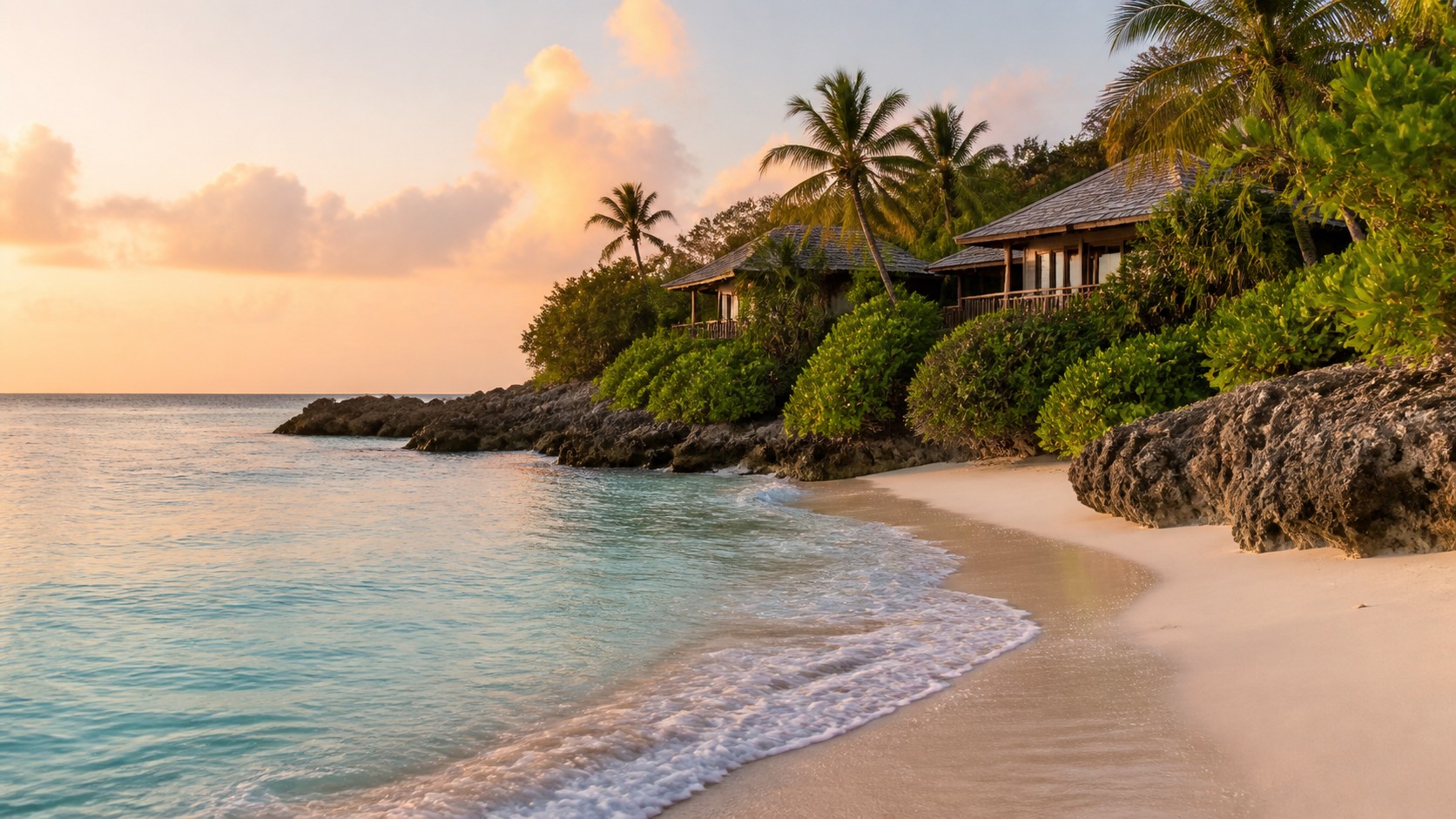
The most private-feeling beach resorts usually combine natural screening with thoughtful design. Rocks, palms, sea grapes, dunes, cliffs, curved coves, and elevation can separate spaces without making guests feel boxed in. The best layouts avoid long straight sightlines. They let the beach remain open while giving each room or villa a protected relationship to it.
This is why smaller resorts often have an advantage, but size alone is not enough. A twenty-room resort can feel busy if all guests use the same narrow beach. A larger property can feel calm if it spreads guests across several coves, pools, restaurants, and walking paths. The question is how the resort distributes attention.
Room Placement Is the First Privacy Test
Before booking, study the room categories more carefully than the general resort photos. The most expensive suite is not always the most private. A beachfront room may be close to foot traffic, restaurant noise, or beach staff. A hillside villa may be quieter but require stairs or carts. A garden room may feel serene if it has dense planting, or disappointing if it faces a service path. Privacy depends on where the room sits in the daily flow of the resort.
Ask which villas are least visible from paths, pools, restaurants, and neighboring terraces. Ask whether plunge pools are overlooked from above. Ask how long it takes to walk to the beach and whether that walk crosses public areas. Resorts that understand privacy can answer these questions plainly. If replies stay vague, that is useful information.
Outdoor bathrooms, showers, and tubs deserve special attention. They often photograph beautifully, but they only feel luxurious when privacy is real. A guest should not need to calculate whether a gardener, neighbor, or passing guest can see into the space. The same is true of terraces. A deck with a perfect view can sit unused if every breakfast feels visible to the walkway below.
Private Beach Is Not Always a Simple Claim
The phrase private beach can mean different things depending on local law, geography, and resort design. In some places, beaches are legally public even when access is difficult. In others, a resort controls the land behind the beach but not the waterline. A cove may feel private in the morning and busy by midday when excursion boats arrive. None of this necessarily ruins a stay, but travelers should understand the reality before booking.
The best beach resorts are transparent about access. They can explain whether outside visitors can arrive by boat, whether locals use the beach, whether vendors pass through, and whether the resort manages loungers, water sports, or quiet zones. A beach does not need to be legally exclusive to feel peaceful, but the guest experience should match the promise.
Look at maps and guest photos. A resort tucked into a curved bay with no easy road access may feel more private than one on a long famous beach, even if both use similar language online.
Tides, Wind, and Water Shape the Feeling
Beach privacy also depends on natural conditions. At low tide, a beautiful lagoon may become too shallow for swimming. At high tide, a narrow beach may disappear. Wind can move guests from one side of an island to another. Seasonal seaweed, rough surf, currents, or boat chop can change whether the beach feels restful or frustrating. These conditions are not flaws; they are part of coastal travel.
The most reliable resorts help guests adapt. They may have several beach areas, a sheltered pool, kayaks, reef walks, shaded decks, or staff who know when each cove is best. A hidden beach resort feels private when the experience remains good even after the sea changes the plan.
Ask seasonal questions before committing to dates. Which months bring the calmest water? Is swimming possible year-round? Does wind affect one side of the property? Are water shoes useful? Is snorkeling tide-dependent? Specific answers matter more than a generic promise of paradise.
Backup spaces matter because coastal privacy is never entirely under human control. A resort with a quiet pool, shaded lounge, protected terrace, garden path, or private deck can preserve the mood when the beach is windy, narrow, or temporarily busy. Without those alternatives, the whole stay depends too heavily on perfect sea conditions.
Boat Traffic Can Change Everything
A beach that looks secluded from land may be busy from the water. Day boats, snorkeling tours, fishing vessels, jet skis, yacht charters, and sunset cruises can bring noise and visibility into an otherwise private cove. This is especially important for resorts in famous island regions, marine parks, or bays known for excursions. Boat traffic does not always make a beach bad, but it changes the privacy equation. A cove can feel like yours at breakfast and like a public attraction by noon.
Read reviews for mentions of boats, music, engines, vendors, or outside guests arriving by sea. Ask whether the resort has quiet hours on the water or any control over mooring near the beach. If privacy is the main reason for the trip, choose a resort where the coastline is naturally protected from constant marine traffic or where the private spaces sit above the busiest waterline.
Service Should Keep the Beach Calm
Beach service can either protect privacy or interrupt it. The best staff notice when guests need towels, water, shade, food, or help with equipment without turning every hour into a conversation. They manage loungers discreetly, keep music controlled, clear dishes quietly, and prevent the beach from feeling like a stage. Good service makes guests feel cared for while leaving them alone enough to hear the sea.
Food and drink service also matters because guests should not have to leave the quiet every time they need something simple. A private-feeling resort might offer beach picnics, shaded lunches, in-villa dining, or a small restaurant close enough to feel easy but not loud enough to dominate the shoreline.
The tone should be flexible. Some travelers want celebration and attention; others want almost no interaction. A strong hidden beach resort can read the difference.
Dining Determines Whether Staying Put Feels Luxurious
At a hidden beach resort, dining has unusual power because guests may not want to leave the property often. The kitchen should make slow days feel complete. Fresh fish, fruit, regional cooking, simple grilled lunches, private dinners, and changing specials can turn the beach into a full vacation rather than a pretty setting with limited options.
Variety is especially important for longer stays. A narrow menu can feel charming for two nights and repetitive by night five. Ask about local dishes, dietary needs, room service, private dining, and whether restaurants require reservations even for in-house guests. Good beach privacy loses some of its magic if every meal becomes a compromise.
The best resorts make meals part of the privacy. Breakfast on a terrace, lunch under shade, dinner near the water, and a quiet nightcap can shape the whole emotional arc of the day. Service timing matters here too. A meal that arrives gracefully lets guests stay inside the beach rhythm instead of constantly shifting back into hotel logistics.
Who Should Choose a Hidden Beach Resort
Hidden beach resorts are ideal for honeymoons, anniversaries, solo recovery trips, quiet family stays, and travelers who want the sea without a social scene. They suit people who are happy with slower days: swimming, reading, walking, eating, napping, and letting the light change. They are less ideal for travelers who want nightlife, shopping, many restaurants, or constant excursions.
Families should check practical details closely. A beach can feel private but have rough surf, steep paths, limited medical access, or rooms unsuitable for small children. Couples should check sightlines and dining privacy. Solo travelers may want a property that feels safe and warm without being socially intense. The best resort is the one whose version of quiet matches the traveler’s actual needs.
How to Verify Privacy Before Booking
Verification starts with recent reviews, guest photos, maps, and direct questions. Look for comments about crowding, boat noise, beach vendors, construction, room visibility, restaurant atmosphere, and staff discretion. Pay attention to negative reviews that describe repeated patterns rather than one-off frustrations. Privacy problems tend to be structural.
Contact the resort with specific scenarios. Ask where to stay if you want the most private terrace. Ask whether the beach is used by outside visitors. Ask if boats anchor nearby. Ask whether any rooms are close to restaurants, pools, or service areas. Ask how the beach changes by tide and season. A good resort will not be offended by these questions; it will recognize that privacy is part of what you are buying.
If the answers are clear, the trip becomes easier before it begins. If they are vague, keep looking. A privacy-focused booking should feel calmer after the conversation, not more dependent on hope.
The Best Private Beach Feeling
The deepest luxury at a hidden beach resort is the feeling that you can stop managing yourself. You do not have to claim a chair early, dress for a scene, compete for a view, or plan around crowds. You can swim, dry off, read, eat, and return to the water without the day becoming a performance.
That feeling is created by dozens of choices: room orientation, beach shape, landscaping, service rhythm, food, sound, access, and honest communication. When those details align, the beach does not merely look private. It feels like a quiet extension of your room, your rest, and the rare permission to let the day be simple.
The best resorts make guests forget the mechanics behind that calm. You notice the water, the shade, the warmth of the sand, and the ease of returning to your own space, not the careful planning that made privacy possible.