A Perfect Road Trip Is Built Around Realistic Days
The perfect road trip is not the one with the most stops, the longest mileage, or the most dramatic route on a map. It is the one where each day feels possible: enough driving to create movement, enough stopping to make the route memorable, enough structure to avoid stress, and enough flexibility for discoveries you could not plan from home. Road trips ask travelers to balance freedom with practical details such as lodging, fuel, weather, parking, food, luggage, safety, and driver fatigue. A beautiful route can become exhausting if every day is overpacked, while a simple drive can become unforgettable when the pace, people, and stops are right.
A: For scenic trips, many travelers enjoy three to five hours of actual driving with time left for stops.
A: Plan anchors and lodging, but keep smaller stops flexible so the trip can respond to weather, mood, and discoveries.
A: Use realistic driving days, two-night stays, rest time, good food planning, and optional stops that can be skipped.
A: Book ahead in popular, remote, seasonal, or lodging-limited areas, and stay flexible where supply is broad.
A: Keep water, snacks, chargers, medication, layers, sunglasses, wipes, maps, and a day bag easy to reach.
A: Add buffer around ferries, borders, mountain roads, bad weather, national parks, and any must-do reservation.
A: Mix groceries, regional meals, picnic stops, and a few researched food anchors without scheduling every bite.
A: The biggest mistake is building days that look efficient on a map but leave no room for real travel.
A: Choose by desired mood, season, road difficulty, lodging, daily driving tolerance, and the people in the car.
A: A perfect road trip balances movement, rest, scenery, food, safety, flexibility, and shared enjoyment.
Start With the Trip Feeling, Not the Map
Before choosing roads, decide what the trip should feel like. Some road trips are about coastlines and viewpoints. Others are about national parks, food towns, family time, music, desert solitude, mountain air, or a slow route between friends. Naming the desired feeling helps you say no to stops that look impressive but do not fit the trip.
This first decision also prevents itinerary copying. A route that works for photographers may frustrate families with young children. A high-mileage national park loop may excite one traveler and exhaust another. The perfect road trip belongs to the people in the car, not to a generic list.
Think about what you want to remember afterward. If the answer is conversation, leave more slow stretches. If the answer is landscapes, build the days around light and viewpoints. If the answer is food, route through towns at meal times instead of arriving after everything closes.
Write down the three things the trip must deliver. Maybe it is hiking, seafood, and ocean views. Maybe it is low stress, short drives, and good coffee. Those priorities become the filter for every later choice.
Design Daily Mileage Around Attention
Daily mileage is where many road trips succeed or fail. A six-hour drive on a fast highway is different from a four-hour scenic road with viewpoints, traffic, curves, and small-town stops. Planning by mileage alone can create days that look reasonable on paper and feel punishing in real life.
For scenic trips, many travelers enjoy three to five hours of actual driving per day. That leaves room for breakfast, short walks, photos, weather delays, roadwork, parking, and spontaneous stops. Some days can be longer, but they should be balanced by easier days afterward.
Driver attention is a resource. Mountain roads, unfamiliar rental cars, left-side driving, city exits, gravel, heat, and darkness all consume more focus than ordinary commuting. A good plan protects the driver as much as the passengers.
Build the route so arrival does not happen late every night. Reaching lodging with daylight left can change the whole mood of a trip.
If a route requires repeated long days, ask whether the trip needs more time, fewer stops, or a different start and end point.
Choose Overnight Stops Strategically
Lodging should support the route, not simply fill gaps between attractions. A hotel near the next morning’s trailhead, ferry, viewpoint, or city exit can save more stress than a cheaper room far away. Location matters most when parking is difficult, roads are slow, or sunrise starts are important.
Two-night stays are one of the best road-trip tools. They let travelers unpack a little, do laundry, explore without moving luggage, and recover from long drives. Even one well-placed two-night stay can keep a trip from feeling like constant transit.
Choose some lodging for function and some for atmosphere. A practical roadside stop before a long drive can be the right call, while a cabin, inn, beach hotel, or mountain lodge may deserve extra time. Not every night has to carry the same emotional weight.
Book ahead when traveling through national parks, remote regions, small coastal towns, holiday periods, or places with limited lodging. Keep more flexibility where towns are frequent and supply is broad.
Read recent reviews for parking, noise, road access, check-in hours, and breakfast timing. Those details matter more on a road trip than on a city break. Easy departures make mornings feel lighter.
Budget Beyond Gas and Hotels
Road-trip budgets often miss the small costs that repeat every day. Parking, tolls, ferries, snacks, coffee, ice, park passes, showers, laundry, attraction fees, roadside meals, rental insurance, one-way fees, and extra fuel in remote areas can all add up.
A good budget separates fixed costs from flexible costs. Lodging, rental cars, insurance, and major activities are fixed early. Food, extra stops, souvenirs, and upgraded rooms can be adjusted during the trip. Knowing the difference reduces anxiety.
Fuel planning matters in remote regions. Do not wait until the tank is nearly empty in desert, mountain, or rural areas. Apps help, but they do not replace common sense when distances are long and service hours are limited.
Leave a small daily cushion. The best road trips usually include one unplanned meal, detour, viewpoint fee, or repair need. Budget room keeps small surprises from feeling like problems.
Plan Food Like It Matters
Food can make a road trip feel generous or chaotic. Plan a loose mix of groceries, casual meals, regional specialties, and picnic stops. Keeping fruit, water, snacks, and simple breakfast items in the car prevents every hunger moment from becoming an emergency.
Research a few food anchors rather than every meal. A bakery, seafood shack, diner, farm stand, market, or local restaurant can give a day its shape. Leave some meals open for discoveries.
Match food plans to the landscape. Remote desert drives may need a stocked cooler, while coastal towns invite flexible seafood stops. Mountain routes may require earlier dinners because kitchens close sooner than expected. Food timing is part of route design.
If traveling with children, dietary restrictions, or long remote stretches, food planning becomes even more important. Check closing days, reservation needs, and whether towns are actually large enough to offer options after dark.
A cooler can be useful, but only if it does not take over the car. Pack for the style of trip you are actually taking, not the imagined version.
Use Navigation Without Becoming Dependent on It
Digital maps are essential, but road trips still need backup thinking. Download offline maps, save lodging addresses, screenshot reservations, and understand the main route before leaving each morning. Signal gaps often appear exactly where you most want directions.
Navigation apps can also make poor scenic decisions. The fastest route may skip the coastal road you came to drive, route you through stressful city traffic, or avoid a small detour that would be worth the time. Review the route instead of accepting every automatic suggestion.
Give passengers a role if they want one. One person can watch fuel, another can track viewpoints, and another can handle food stops or music. Shared navigation makes the car feel less like one driver’s responsibility and more like a small traveling team.
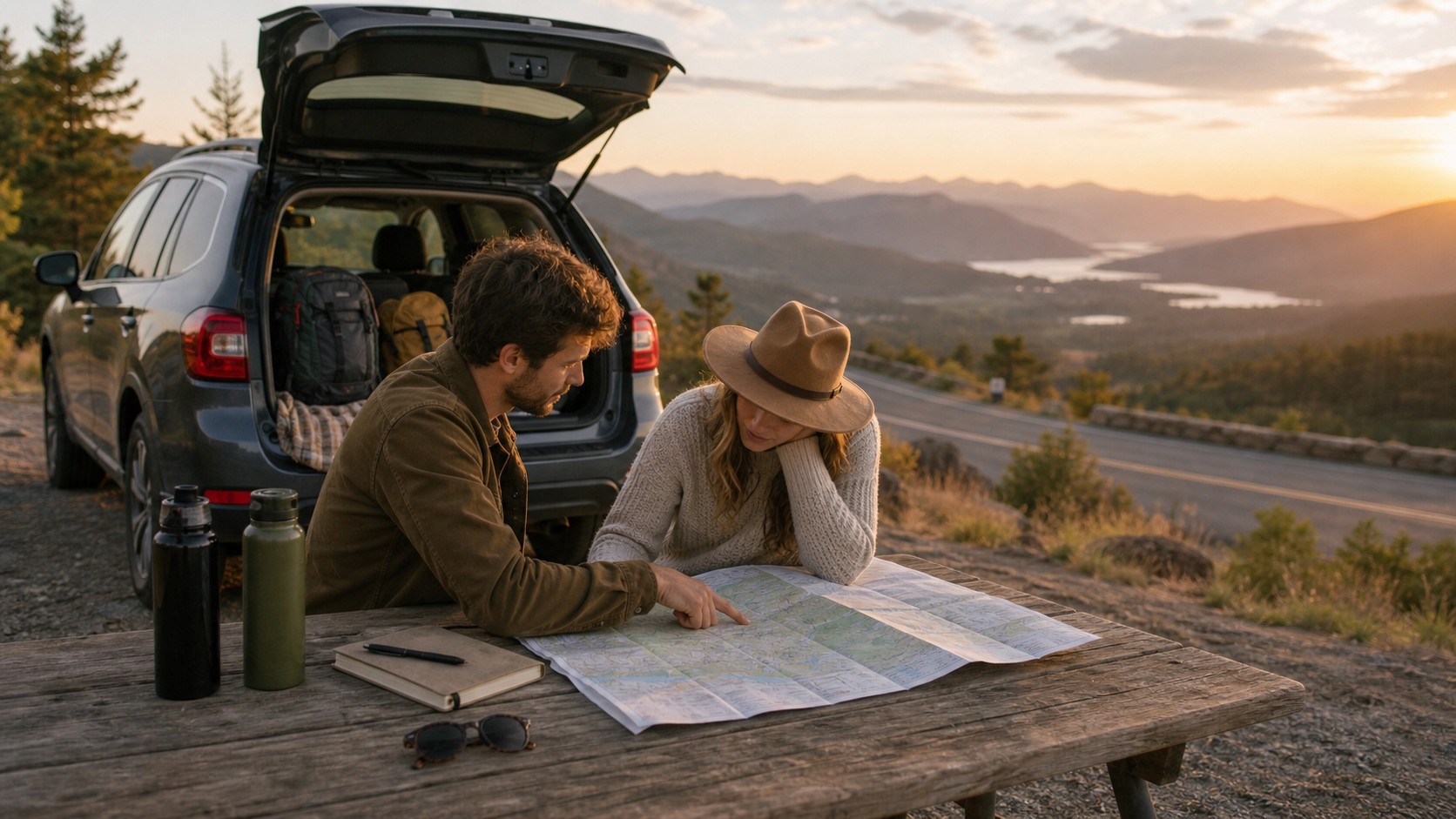
Paper maps or printed route notes can help in remote regions, national parks, and international trips. They also make it easier for passengers to understand the day and share navigation responsibility.
Before each drive, check weather, closures, fuel, and the estimated arrival time with stops included. Ten minutes of morning planning can save hours later and protect everyone’s patience.
Pack the Car for Daily Use
A road-trip car should be packed for access, not just storage. Keep water, snacks, medication, chargers, jackets, sunglasses, wipes, trash bags, and a day bag within reach. Items needed at every stop should not be buried under suitcases.
Separate overnight luggage from daily gear. That way one person can grab a camera, rain jacket, swimsuit, or hiking shoes without unpacking the whole trunk. Soft bags are often easier than rigid suitcases in smaller rentals.
Comfort items matter because the car becomes a temporary living space. A small pillow, playlists, downloaded podcasts, sunglasses, hand sanitizer, and a reusable grocery bag can improve daily mood.
Keep valuables out of sight and avoid leaving important documents in the car when parked for long stops. Road-trip freedom still needs ordinary security habits.
Build Flexibility Into the Itinerary
Flexibility should be designed, not improvised after stress appears. Add buffer time around ferries, weather-prone roads, national parks, border crossings, and long scenic days. Build a few optional stops into each day so you can drop them without feeling like the trip failed.
Rest days are not wasted days. They allow laundry, slow meals, short local walks, car cleanup, and recovery. Travelers who rest well notice more when the route becomes dramatic again later on.
Use anchors instead of rigid timelines. A ferry, lodging check-in, dinner reservation, or sunset viewpoint can hold the day together while everything around it remains adjustable. That structure gives freedom a shape without squeezing the life out of it.
Every trip needs a few non-negotiables and many negotiables. Book the places that truly matter, then let smaller stops move around. This keeps the trip stable without turning it rigid.
The best detours usually happen because the schedule has room. A viewpoint, market, beach, trail, or small town can only become a memory if you are not racing the clock.
Keep Safety Ordinary and Consistent
Road-trip safety is mostly a set of ordinary habits. Do not drive tired. Avoid unnecessary night driving in unfamiliar places. Check tires and fuel. Follow local rules. Share driving if possible. Keep emergency numbers, insurance information, and roadside assistance details accessible.
Weather deserves respect. Heat, snow, fog, wind, smoke, flash floods, and coastal storms can all change a route. Check forecasts and road reports, especially before remote or mountain sections.
International trips add rental rules, toll systems, driving-side changes, and unfamiliar signage. Give yourself an easier first day rather than leaving the airport and immediately tackling the hardest road.
Good safety planning should make the trip feel freer, not more anxious. The point is to reduce avoidable surprises so the good surprises have room. A calm driver is one of the best road-trip upgrades for everyone in the car.
Let the Road Trip Stay Human
The people in the car matter as much as the route. Talk honestly about music, stops, bathroom breaks, driving turns, budget comfort, quiet time, and what happens when someone needs a slower day. Road trips make small preferences visible.
A perfect road trip has a rhythm that fits the group. Some travelers want sunrise hikes; others want slow mornings. Some love roadside museums; others care about views. The itinerary should include enough shared priorities and enough kindness to handle differences.
Check in before irritation becomes the soundtrack. A five-minute conversation about hunger, tiredness, heat, or too much time in the car can rescue a day before it turns sour. The best planning includes space for people to be human.
Take photos, but do not turn every stop into documentation. Eat somewhere unplanned. Pull over safely when the light changes. Let one or two places surprise you.
A road trip succeeds when the route gives you stories, not just completed miles. The map matters, but the mood inside the car matters more every day.