America’s Best Scenic Drives Reward Travelers Who Slow Down
The best scenic drives in the United States are not only roads with pretty views. They are routes where geology, weather, history, wildlife, small towns, overlooks, forests, deserts, coastlines, and national parks all shape the day. Some drives are famous because they climb into mountains, some because they follow the edge of the ocean, and others because they cross landscapes that feel too wide to understand at highway speed. A great scenic drive depends on season, road conditions, daylight, pullouts, traffic, and the patience to stop before the best view has already passed. From the Blue Ridge Parkway to Going-to-the-Sun Road, Pacific Coast Highway, Utah’s red-rock byways, and Alaska’s open highways, the right drive depends on the kind of America you want to see.
A: Many travelers would name Blue Ridge Parkway, Pacific Coast Highway, Going-to-the-Sun Road, or Utah's Scenic Byway 12 depending on season and taste.
A: Blue Ridge Parkway, New England routes, and other Appalachian drives are strong fall choices when timing is right.
A: Going-to-the-Sun Road, Beartooth Highway, Blue Ridge Parkway, and many Colorado or Alaska routes offer strong mountain scenery.
A: Pacific Coast Highway, Overseas Highway, Hana Highway, and sections of Oregon or Maine coastline are excellent ocean-focused drives.
A: Some require reservations, timed entry, shuttle planning, or seasonal road openings, so official updates matter.
A: Plan enough time for pullouts, short walks, meals, weather, and traffic rather than relying on nonstop drive time.
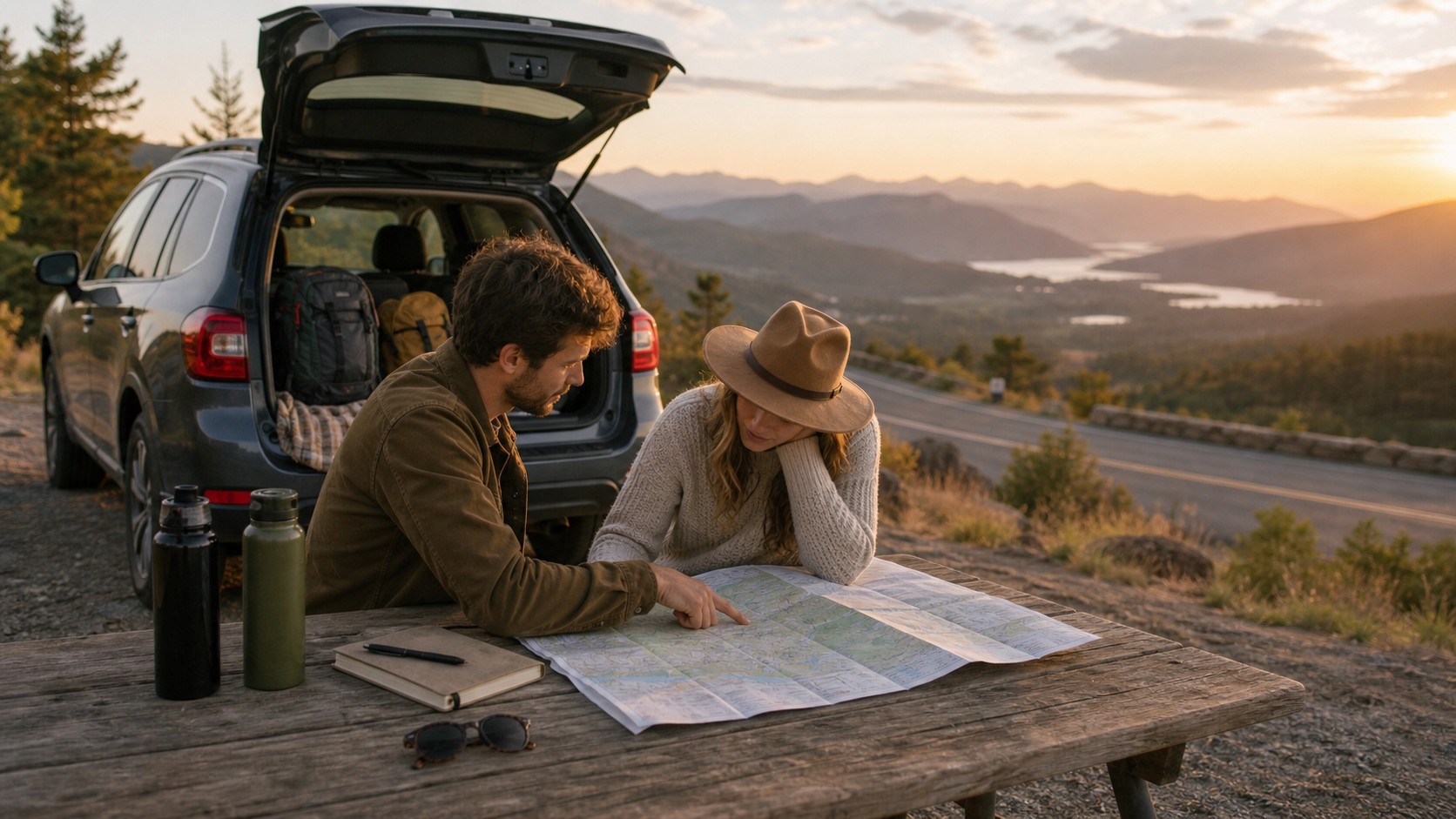
A: Bring layers, water, snacks, offline maps, chargers, sunglasses, park passes, and a small day bag.
A: Start early, travel shoulder seasons, stay near key sections, and include lesser-known stops.
A: The biggest mistake is rushing the route so much that the scenery becomes something you pass rather than experience.
A: Choose by region, season, road comfort, lodging, closures, and whether you want coast, mountains, desert, forest, or history.
Blue Ridge Parkway for Long Mountain Rhythm
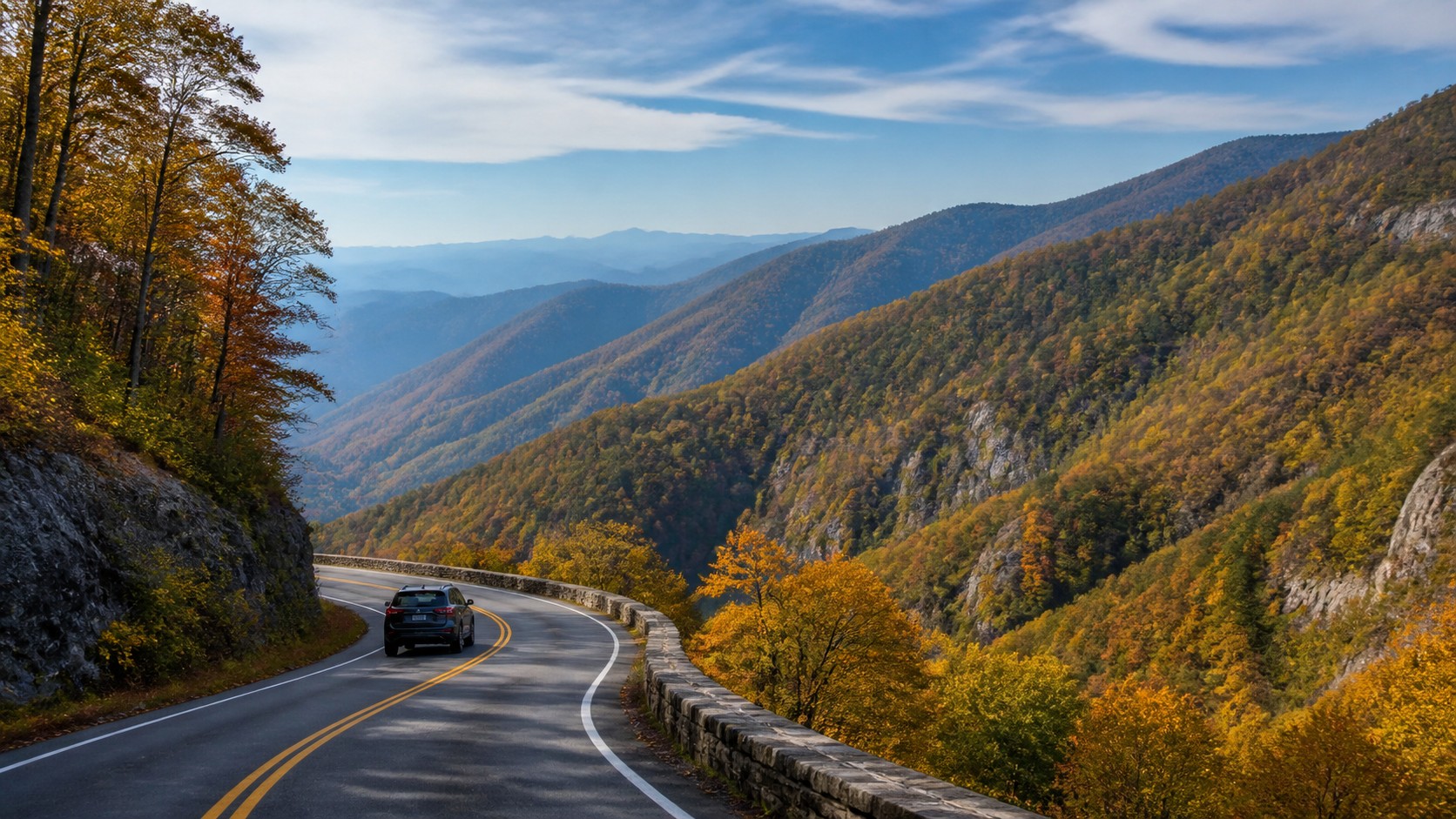
The Blue Ridge Parkway is one of the country’s great scenic drives because it is built for rhythm rather than speed. The road moves along the Appalachian highlands through Virginia and North Carolina, linking overlooks, forests, historic sites, hiking trails, and mountain towns. It is a drive that asks travelers to slow down.
Fall color is famous, but the parkway is rewarding in more than one season. Spring wildflowers, summer haze, crisp autumn ridges, and quiet winter sections all change the mood. Weather and closures can affect high elevations, so checking current conditions matters.
Because the parkway has many access points, it works well for travelers who do not want an all-or-nothing trip. You can build a weekend around one region, connect it with Great Smoky Mountains or Shenandoah, or use it as a quieter alternative to faster interstate travel.
The best way to experience the parkway is in sections. Trying to consume the whole route too quickly can make the overlooks blur together. A few well-chosen bases near Asheville, Boone, Roanoke, or Shenandoah can turn the drive into a deeper mountain trip.
Choose this route for layered ridges, gentle curves, hiking access, and a classic eastern mountain road-trip feeling.
Pacific Coast Highway for Ocean Edge Driving
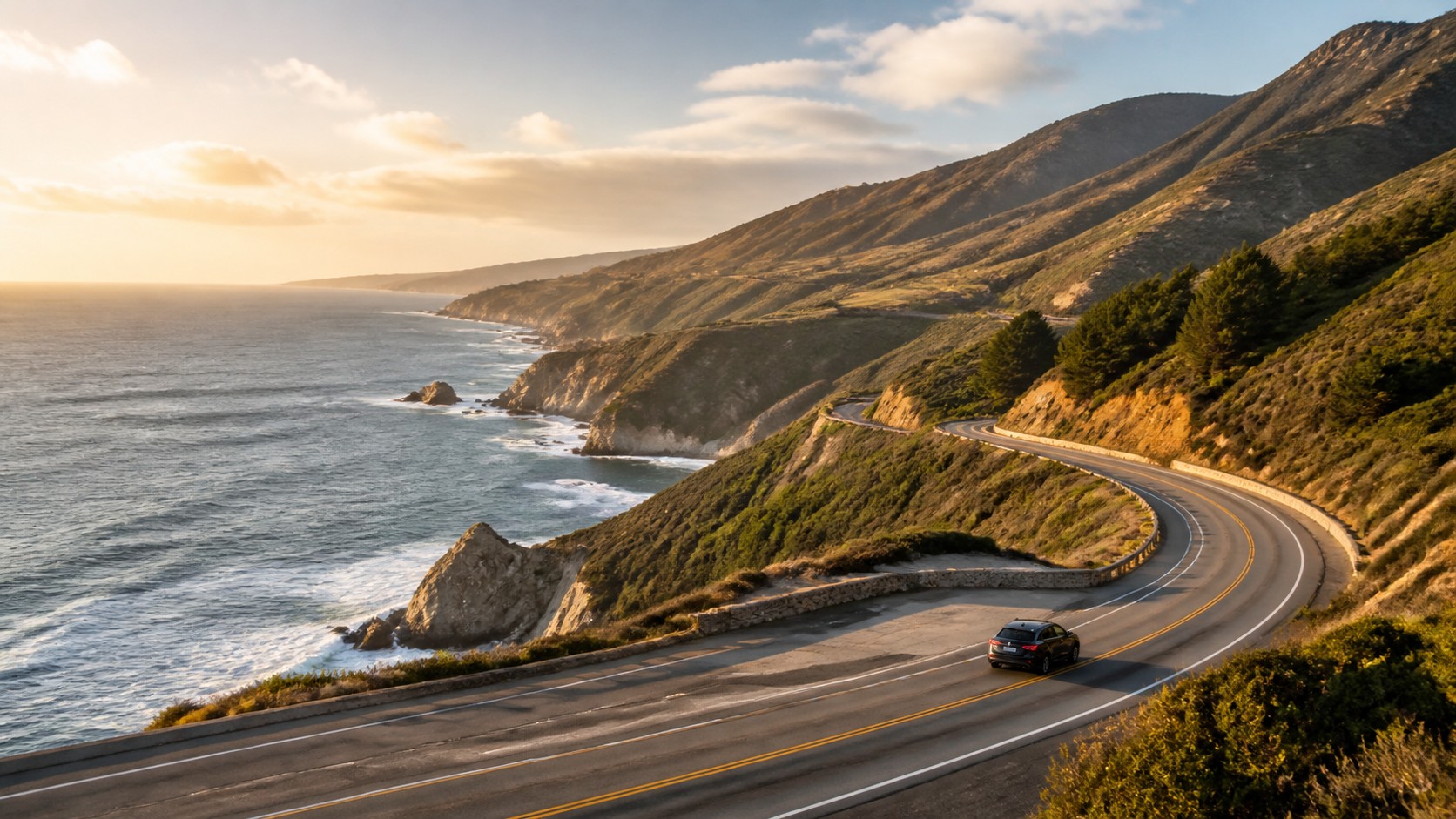
California’s Pacific Coast Highway is the American coastal drive many travelers picture first. Cliffs, surf, beaches, bridges, cypress trees, fog, and seaside towns give the route its identity. The Big Sur coast is especially powerful because the road feels suspended between mountains and the Pacific.
This drive requires flexibility. Storm damage, closures, fog, traffic, and lodging demand can all reshape plans. Travelers should check road conditions before committing to a specific section and avoid racing through the coast in a single exhausted day.
The best trips build around fewer miles and better timing. Morning light, late afternoon pullouts, state park walks, seafood stops, and overnight stays near scenic stretches make the road feel less like a commute between cities.
Pacific Coast Highway is best for travelers who want dramatic ocean scenery, road-trip legend, and a route where every curve can become a viewpoint.
It also rewards restraint. Some of the finest moments are quiet stops without a famous name attached.
Going-to-the-Sun Road for Alpine Scale
Going-to-the-Sun Road in Glacier National Park is one of the most spectacular mountain drives in the United States. It crosses alpine terrain, glacial valleys, waterfalls, cliffs, and high viewpoints in a compact but intense route. The road feels engineered to reveal scale.
Its short season and popularity make planning essential. Snow clearing, timed-entry systems, construction, parking, shuttle options, and weather can all affect access. Travelers should check official park updates rather than relying on old assumptions.
The drive also asks for attention from passengers and drivers in different ways. Passengers may want constant views, while drivers need focus on curves, drop-offs, traffic, and parking. If the driver wants to enjoy the scenery fully, a shuttle or guided option can be a wise choice too.
This is not a drive to improvise casually in peak season. Start early, understand parking constraints, and consider shuttle or tour options if driving narrow alpine roads sounds stressful.
Choose Going-to-the-Sun Road when you want a dramatic national park drive with mountain intensity, but give the logistics as much respect as the scenery.
Utah Scenic Byways for Red-Rock Variety
Utah offers some of the most visually distinct scenic drives in the country. Scenic Byway 12, routes near Capitol Reef, Monument Valley approaches, canyon country roads, and drives linking national parks can move through red rock, slickrock, desert plateaus, forests, arches, cliffs, and wide western sky.
The strength of Utah driving is variety. One day can include high desert, canyon overlooks, small towns, and trailheads. The next can feel completely different. Travelers should plan around heat, water, park crowds, and the temptation to pack too many parks into one loop.
The light changes the landscape dramatically. Sunrise and late afternoon can make cliffs glow, while midday heat may be better used for lunch, museum stops, shaded walks, or scenic sections that do not require long exposure. Planning around light makes the same road feel more alive.
Scenic Byway 12 is especially strong for travelers who want a road that feels like a destination. It rewards pullouts, short hikes, and overnight stops rather than a hurried pass-through.
Utah is best for travelers who love geology, color, national parks, and landscapes that change with the light.
Good planning includes realistic hiking time. A scenic drive becomes richer when you step out of the car, but too many trail plans can overwhelm the day.
Overseas Highway for Water and Island Movement
Florida’s Overseas Highway is unlike most American scenic drives because the road moves across water. Bridges, islands, mangroves, turquoise shallows, fishing towns, and open horizons create a sense of floating through the Florida Keys. The drive is more about atmosphere than elevation or wilderness.
Traffic can be slow, and the route is best when travelers accept that pace. Key Largo, Islamorada, Marathon, Bahia Honda, and Key West can all shape different versions of the trip. Stopping for water activities, seafood, sunsets, and state parks makes the journey more satisfying.
The best Keys drive is not only the final arrival in Key West. Snorkeling stops, state parks, casual meals, bridge views, and quiet water moments give the route texture. Travelers who pause along the chain usually understand the drive better.
Weather and hurricane season matter. Travelers should watch forecasts, book carefully during busy periods, and avoid assuming every mile will feel quiet.
Choose the Overseas Highway for warm-water scenery, island rhythm, and a road trip that feels more tropical than continental.
Beartooth Highway for High-Elevation Drama
The Beartooth Highway between Montana and Wyoming is a high-elevation drive known for switchbacks, alpine plateaus, lakes, snowfields, and sweeping views. It is often used as a dramatic approach to Yellowstone, but it deserves attention as its own scenic experience.
Because of elevation, the season is limited and weather can change quickly. Snow, wind, and closures are part of the planning reality. Travelers should check current conditions before driving and avoid treating it like an ordinary mountain highway.
The road suits travelers who love big views, cool air, and a sense of crossing above the usual landscape. It can feel thrilling, but drivers should be comfortable with mountain roads.
Choose Beartooth when you want alpine drama and are willing to let weather decide the final plan with patience and extra layers in the car.
Hana Highway for Tropical Patience
Maui’s Hana Highway is famous for curves, bridges, rain forest, waterfalls, coastal views, and the slow rhythm of the island’s windward side. It is not a drive for speed or checking off every stop. It is a route that rewards patience and respect for local life.
Travelers should plan carefully around road etiquette, parking, private property, flash-flood risk, and the strain of narrow curves. Starting early can help, but being considerate matters more than beating every other visitor to a viewpoint.
The best Hana trips choose a few meaningful stops rather than trying to do everything. Waterfalls, beaches, gardens, food stands, and coastal walks all need time. A guided tour can be a good choice for travelers who would rather look around than drive.
Choose the Hana Highway for lush scenery and slow discovery, not for easy mileage. The road is most rewarding when courtesy shapes the day.
Alaska Highways for Space and Wild Distance
Alaska’s scenic drives are defined by scale. The Seward Highway, Richardson Highway, Denali-area routes, and other drives can include mountains, glaciers, tundra, coastline, rivers, wildlife, and weather that makes distances feel immense. These roads show travelers a wilder version of scenic driving.
Planning should be practical. Fuel, road conditions, construction, wildlife crossings, daylight, rental rules, and limited services matter. A route that looks simple can take longer when every view asks for a stop.
Wildlife awareness is part of the driving experience. Moose, bears, caribou, and smaller animals may appear near roads, and sudden stops by other travelers can create hazards. Scenic patience should never replace safe following distance or attention to the road.
The Seward Highway is especially accessible for travelers who want a powerful drive from Anchorage toward water, mountains, and the Kenai Peninsula. Longer routes require more time and comfort with remote travel.
Choose Alaska when you want scenic driving with space, weather, and a genuine sense of distance at the edge of comfort.
Historic and Cultural Drives With a Different Kind of Scenery
Not every scenic drive is only about wilderness. Route 66 sections, Natchez Trace Parkway, Great River Road, and other historic routes offer towns, music, food, old road culture, river landscapes, and stories built over generations. The scenery is human as well as natural.
These drives reward travelers who stop often and ask what happened here. A small museum, diner, battlefield, river overlook, or old motel sign can carry more meaning than a dramatic mountain view if the trip is built around story.
The best cultural drives are planned with curiosity. Choose sections carefully, read before going, and leave time for conversations and local businesses. A slower day can reveal more story than another hundred miles.
Choose historic routes when you want the road to connect places, people, and memory rather than only scenery itself.
How to Choose a U.S. Scenic Drive
Start with region and season. Fall points toward the Blue Ridge Parkway and New England routes. Summer opens many high mountain roads. Winter may favor desert drives, coastal roads, or southern routes. Spring can bring wildflowers, waterfalls, and unpredictable weather.
Then consider road difficulty, traffic, lodging, park entry rules, closures, and how often you want to stop. A scenic drive should not feel like a daily endurance test. The best routes let drivers stay alert and passengers stay engaged.
Build the day around light and breaks. Scenic roads are often best early or late, while midday can work for hikes, meals, museums, or short town stops. Give famous viewpoints time, but leave room for unnamed places too.
The best scenic drive is the one that fits your season, comfort, and curiosity. America has enough beautiful roads that you do not need to force the wrong one into your plans.