Choose a Food City Through Its Neighborhood Experience
A rewarding street-food city gives you something to enjoy around the meal: a market routine, a public street to explore, or a neighborhood that makes returning appealing. This selection compares four cities through those settings rather than presenting a compulsory itinerary for every food traveler. Yaowarat in Bangkok offers a focused evening-food research area; Taipei lets you compare the timing of distinct market visits; George Town connects hawker interests with an urban stay; and Mexico City’s Lorenzo Boturini provides a taco-focused street example. Choose through the neighborhood experience and food preparations that interest you, then assess actual venues and current arrangements individually. The purpose differs from a broad dish shortlist: it is to find an area where eating and time in the city support one another. A manageable radius leaves more attention for the surroundings and the meal than a holiday built around repeated transfers between isolated recommendations.
A: Compare the neighborhood setting, eating period, movement, and usable stay time rather than a headline dish alone.
A: Choose a defined area and count its approach, eating sequence, and return before adding another stop.
A: It provides a specific market context that can be researched alongside the surrounding area and intended visit period.
A: Suitable public exploration can connect neighborhood context with comfortable meals and return visits.
A: A defined area can give the food visit a clearer practical purpose than an all-city circuit.
A: Reaching the area, orienting, waiting, ordering, eating, and returning or continuing afterward.
A: It supports repeated food journeys and makes quieter or earlier return choices easier.
A: The route, language, commercial format, tastings, transport, and other participation arrangements.
A: Assess the actual preparation and requirements, and choose another option when an important detail cannot be confirmed.
A: Its complete neighborhood day fits the travelers' curiosity, appetite, pace, and practical arrangements.
Bangkok: Begin With a Defined Food Neighborhood
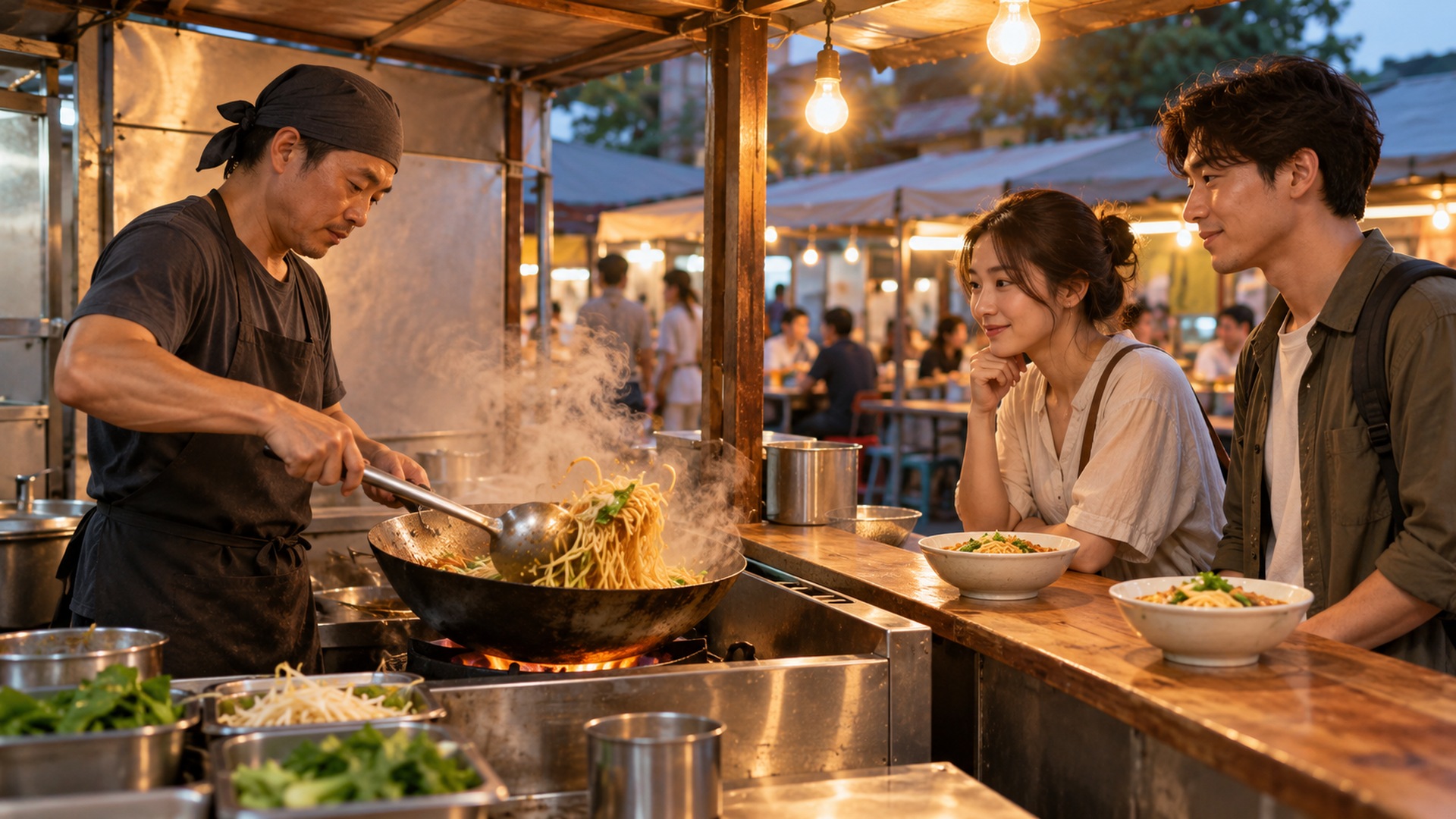
Begin Bangkok research with the kind of Yaowarat evening you want. The Tourism Authority of Thailand’s dated neighborhood food feature describes guay jub with peppery soup and crispy pork, and a different wonton-noodle preparation at White Dragon Noodle. Those examples reveal a real food distinction within the area without requiring you to visit both in one sitting. Treat the feature as background and check current venue information separately, especially hours and ingredients. Choose one main food interest, then leave time to orient yourself and eat comfortably. A defined neighborhood can provide variety without making the evening a sequence of compulsory purchases.
Choose the purpose of the visit before naming several stalls. You may want an introductory guided experience, a particular food interest, or simply time to explore an appropriate public area around one meal. Those formats require different amounts of planning. Keep the actual sequence connected to the interest you want to pursue.
Taipei: Connect Market Time With an Area Visit
Taipei offers a useful choice between neighborhood rhythms rather than one generic night-market experience. The official Dalong Street page connects food with the Dalongdong historical area, making a surrounding public visit part of the research. For a different eating focus, Taipei City Government’s Ningxia feature identifies oyster omelet among the market’s preparations. Choose the area and period that interest you rather than assuming both markets need to occupy the same day. Confirm the particular venues and actual order independently. The point is to connect a food interest with a setting you want to spend time in, not treat a market name as evidence of uniform menus or service.
George Town: Let the Urban Setting Join the Food Route
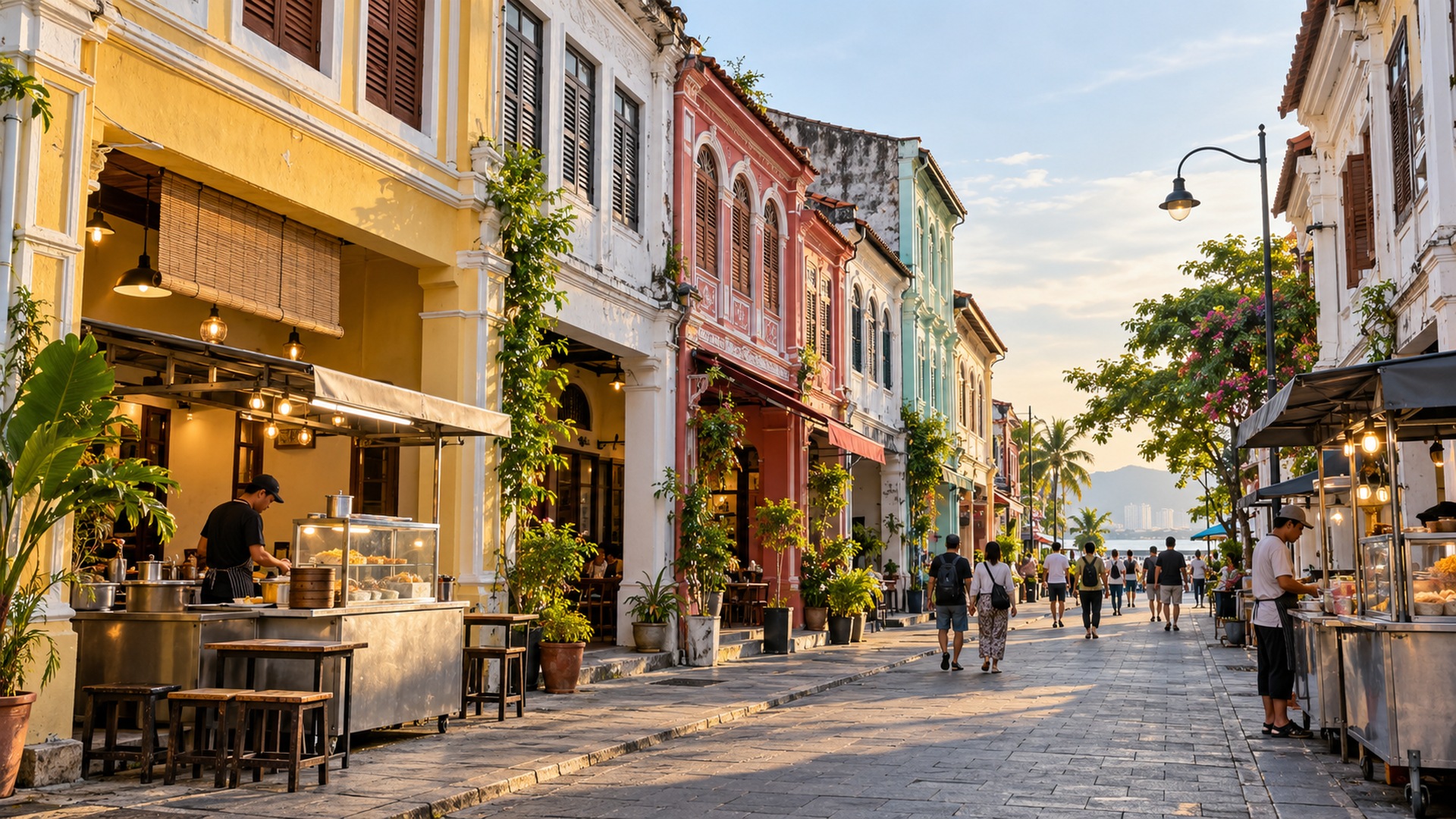
Chulia Street gives a George Town food stay a concrete area to investigate. Penang Global Tourism’s street-food material includes a Chulia Street curry-mee example, while its broader food guidance identifies other hawker areas around the city. Use that preparation to anchor one eating period and compare how the accommodation, public exploration, and return fit around it. A noodle interest and an urban-history interest can share a day without every interval becoming another meal. Check current venue information and ingredients, and keep residential and working spaces outside any assumption that the neighborhood exists as a visitor performance.
Use the neighborhood as the organizing unit. Identify the room, eating areas, and public places you would enjoy, then look at the movement between them. A compact route can provide more usable time than several distant food recommendations. Keep the day connected to the city you came to experience.
Respect ordinary residential and working spaces during exploration. A picturesque area may still involve private lives and daily routines. Follow current local guidance and choose appropriate public settings. The food holiday should remain considerate of the people around it.
Mexico City: Research One Food-Focused Street
Mexico City’s official Lorenzo Boturini information describes a street associated with taco stops. This illustrates a more focused research approach than treating the whole city as one eating route. Investigate the particular places and current arrangements that interest you. Assess preparation and requirements individually rather than rely on an area’s reputation. A defined street or neighborhood can give the visit a clearer practical purpose.
Keep Walking and Eating Comfortable Together
Count movement, orientation, waiting, ordering, and eating within the outing. A sequence that looks short on a map can still take a meaningful part of the day. Keep the plan suitable for the group’s actual pace. Add another stop only when it improves the experience.
Use rest and ordinary exploration between substantial eating periods. You may prefer one meal followed by a suitable public visit rather than continuous sampling. Let appetite remain part of the decision. A food-centered day should feel comfortable from beginning to end.
Assess Food Choices Independently of a City’s Fame
Use current relevant food and water guidance and consider the actual preparation you encounter. Communicate important requirements clearly before ordering. A well-known street or market does not guarantee that every choice suits your circumstances. Choose an alternative when a necessary detail cannot be confirmed. Careful selection belongs within an enjoyable neighborhood visit.
Understand the People Working Around the Visit
Follow the real queue, collection, and payment routine. Leave space where staff and customers need to move. Ask before photographing a person or their work. A neighborhood food setting continues to function beyond your itinerary.
Enjoy a conversation without expecting it to become a cultural performance. A vendor may have time for a useful brief answer and then need to continue working. Accept the encounter at its actual scale. Considerate participation helps the area remain comfortable for everyone using it.
Compare Complete City Stays
Include accommodation, transport, meals, suitable guiding if desired, and the journey to the city when estimating the trip. Ask for current prices for your own dates and group. Inexpensive individual foods do not necessarily make the whole stay inexpensive. A fair comparison uses the complete holiday.
Read the inclusions of any food experience carefully. Check whether tastings and local movement belong within the quote. Keep important exclusions visible. The price should be connected to the practical format you intend to enjoy.
Discuss shared expenses and personal choices with companions. Different appetite, food interests, or activity preferences can create different individual spending. Agree on the arrangements that commit the group. Clear expectations support a relaxed food-city stay.
Give the City Time to Become More Than a List
Leave suitable public exploration between meals and allow returning to an area that interests you. Notice the setting without assuming a brief visit explains every aspect of the city. A food encounter can open curiosity about a neighborhood’s wider context. Follow that interest through appropriate local information.
Keep the group’s actual enjoyment central to the route. You may prefer fewer stops and more time in one place. Use discretionary hours to make that adjustment. A focused food-city visit can feel richer than a circuit dominated by constant movement.
Let a Discovery Earn a Return Visit
A return visit also changes how you judge a recommendation. On the first evening, a place may stand out because it is lively or visually striking. On the second, you can notice whether its food, service arrangement, and surrounding walk actually suit your holiday. This gives personal preference more weight than the first impression alone. Keep one unassigned meal period so that a discovery can earn another visit through enjoyment.
Choose the Urban Food Experience You Would Enjoy Repeating
Describe one full day in each finalist: the base, the food area, the public exploration, and the return. Compare the appeal and practical effort of those days. Bangkok, Taipei, George Town, and Mexico City offer different starting points for this research. The useful distinction is how the neighborhood experience fits the travelers.
Choose a manageable area and a practical base, then check the current details that make the plan work. Let food interest and city curiosity reinforce each other. You can leave with memorable meals because the route provided enough room to appreciate the setting around them. That is a strong reason to choose a street-food city for a thoughtful visit.